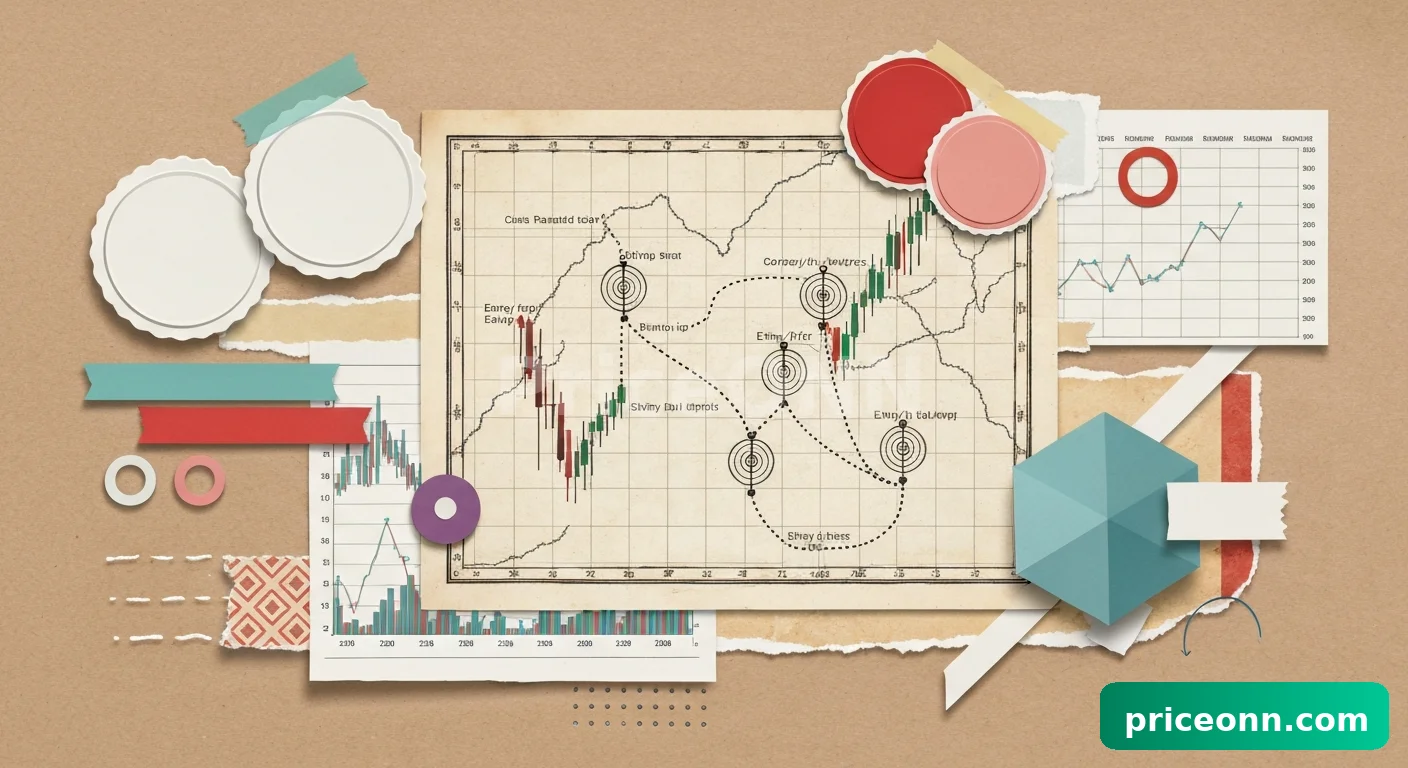
綱引きを想像してみてください。一方では買い手が価格を押し上げ、もう一方では売り手が押し下げています。ワイコフメソッドは、ロープを分析し、作用する力を理解し、最終的にどちらが勝つかを予測するようなものです。市場サイクルを理解し、潜在的な取引機会を特定するための強力なツールです。
What is the Wyckoff Method?
The Wyckoff Method is a technical analysis approach developed by Richard Wyckoff in the early 20th century. It's based on the idea that markets are driven by the actions of large, sophisticated investors, often referred to as "smart money" or "composite man." The method aims to identify these actions and understand their impact on price movements. It focuses on analyzing price and volume to determine the balance between supply and demand, and ultimately, to predict future price trends. It is not just about recognizing patterns but understanding the underlying forces that create those patterns.
Wyckoff Method: A technical analysis approach that seeks to understand market cycles and identify accumulation and distribution phases by analyzing price action and volume.
Why Does the Wyckoff Method Matter?
Understanding the Wyckoff Method matters because it provides a framework for interpreting market behavior that goes beyond simple chart patterns. It allows traders to see the "big picture" and understand the motivations behind price movements. By identifying accumulation and distribution phases, traders can position themselves to profit from the subsequent price trends. Ignoring these phases can lead to misinterpreting market signals and making poor trading decisions. The method emphasizes disciplined analysis and risk management, encouraging traders to make informed decisions rather than relying on gut feelings or speculation. Knowing when to enter, and more importantly, when *not* to enter a trade is a critical skill the Wyckoff Method can help develop.
How the Wyckoff Method Works; Accumulation Phase
The accumulation phase is when smart money quietly buys assets, often without causing a significant price increase. This phase typically occurs after a downtrend, as the market prepares for a potential uptrend. Recognizing this phase early can provide significant advantages. Scalpers might use the early signs of accumulation to take quick long positions, while swing traders might look for confirmation signals to enter longer-term trades. Long-term investors might start building their positions gradually during this phase.
Here's a breakdown of the key events in the accumulation phase:
- Preliminary Support (PS): Initial buying emerges, providing some support after a prolonged downtrend. Volume increases slightly.
- Selling Climax (SC): A sharp price decline with high volume as panic selling occurs. This event often marks the bottom of the downtrend.
- Automatic Rally (AR): A significant price rebound after the selling climax, driven by short covering and initial buying interest.
- Secondary Test (ST): A retest of the selling climax level to gauge the strength of the support. Volume should be lower than the selling climax.
- Spring: A temporary price dip below the support level, designed to shake out weak hands before the uptrend begins. This event can be difficult to identify in real-time.
- Test: Further testing of supply, often occurring at higher lows. Volume should continue to diminish.
- Sign of Strength (SOS): A rally above a previous high, indicating that demand is now in control.
- Last Point of Support (LPS): A final pullback to support before the price begins a sustained uptrend.
How the Wyckoff Method Works; Distribution Phase
The distribution phase is the opposite of accumulation. It's when smart money quietly sells assets, often without causing a significant price decline. This phase typically occurs after an uptrend, as the market prepares for a potential downtrend. Spotting this phase is equally crucial, as it signals the end of bullish momentum. Scalpers might look for shorting opportunities, swing traders might tighten their stops or exit positions, and long-term investors might consider reducing their exposure.
Here's a breakdown of the key events in the distribution phase:
- Preliminary Supply (PSY): Initial selling emerges, providing some resistance after a prolonged uptrend. Volume increases slightly.
- Buying Climax (BC): A sharp price increase with high volume as enthusiastic buying occurs. This event often marks the top of the uptrend.
- Automatic Reaction (AR): A significant price decline after the buying climax, driven by profit-taking and initial selling interest.
- Secondary Test (ST): A retest of the buying climax level to gauge the strength of the resistance. Volume should be lower than the buying climax.
- Upthrust (UT): A temporary price spike above the resistance level, designed to trap late buyers before the downtrend begins.
- Test: Further testing of demand, often occurring at lower highs. Volume should continue to diminish.
- Sign of Weakness (SOW): A decline below a previous low, indicating that supply is now in control.
- Last Point of Supply (LPSY): A final rally to resistance before the price begins a sustained downtrend.
Wyckoff Method; Practical Examples
Let's consider a hypothetical example of the accumulation phase in the stock of Company XYZ.
Example 1: Accumulation
After a prolonged downtrend, the stock price finds preliminary support at $50 (PS) with slightly increased volume. A selling climax (SC) occurs at $45 with high volume as panic selling sets in. The price then rallies automatically (AR) to $55. A secondary test (ST) revisits the $45 level with lower volume, confirming the support. A spring occurs when the price briefly dips to $43, shaking out weak hands. The price then shows signs of strength (SOS) by rallying above a previous high of $58. Finally, the price pulls back to a last point of support (LPS) at $56 before beginning a sustained uptrend.
Example 2: Distribution
Now, let's consider a hypothetical example of the distribution phase in the price of Crude Oil.
After a prolonged uptrend, the price shows preliminary supply (PSY) signs at $80 with slightly increased volume. A buying climax (BC) occurs at $85 with high volume as enthusiastic buying peaks. The price then reacts automatically (AR) to $75. A secondary test (ST) revisits the $85 level with lower volume, confirming the resistance. An upthrust (UT) occurs when the price briefly spikes to $87, trapping late buyers. The price then shows signs of weakness (SOW) by declining below a previous low of $72. Finally, the price rallies to a last point of supply (LPSY) at $78 before beginning a sustained downtrend.
Common Mistakes and Misconceptions
One common mistake is trying to force the Wyckoff Method onto every chart, regardless of market conditions. The method works best in markets with clear accumulation and distribution phases. Another mistake is misinterpreting the events within each phase. For example, mistaking a temporary pullback for a sign of weakness or an upthrust for a breakout. It's crucial to analyze volume in conjunction with price action to avoid these errors. Many beginners also fail to appreciate the time it can take for accumulation and distribution phases to play out. These phases can last for weeks or even months, requiring patience and discipline.
Trying to apply the Wyckoff Method to every chart without considering market conditions. The method is most effective in markets with clear accumulation and distribution phases.
Wyckoff Method and Correlation Analysis
Understanding how the Wyckoff Method interacts with broader market correlations can significantly enhance its effectiveness. For instance, during an accumulation phase in equities, a weakening US Dollar Index (DXY) might provide additional confirmation, as a weaker dollar often supports risk assets. Conversely, during a distribution phase, a strengthening DXY could signal increased selling pressure. Bond yields can also offer clues. Rising bond yields during an accumulation phase might indicate increasing confidence in economic growth, supporting the potential uptrend. Falling yields during a distribution phase could suggest a flight to safety, further validating the downtrend. Furthermore, monitoring commodity prices, particularly oil, can provide insights. Rising oil prices during accumulation might reflect increasing demand, while falling prices during distribution could signal weakening economic activity. By integrating these correlations, traders can gain a more comprehensive understanding of market dynamics and improve the accuracy of their Wyckoff analysis.
Practical Tips for Using the Wyckoff Method
Here are some practical tips for using the Wyckoff Method effectively:
- Practice identifying the events in each phase: Use historical charts to practice identifying the preliminary support/supply, selling/buying climax, automatic rally/reaction, secondary tests, spring/upthrust, and signs of strength/weakness.
- Analyze volume in conjunction with price action: Volume is a critical component of the Wyckoff Method. Pay close attention to how volume changes during each event.
- Be patient: Accumulation and distribution phases can take time to play out. Don't rush into trades before you have confirmation.
- Use the method in conjunction with other technical analysis tools: The Wyckoff Method can be used in conjunction with other tools, such as trendlines, moving averages, and Fibonacci retracements, to confirm your analysis.
- Manage your risk: Always use stop-loss orders to limit your potential losses.
Practice Exercise
Find a historical chart of a stock or currency pair. Try to identify a clear accumulation or distribution phase. Mark the key events (PS, SC, AR, ST, Spring/UT, SOS/SOW, LPSY/LPSY). Analyze the volume during each event. Based on your analysis, predict the subsequent price trend. Then, compare your prediction to what actually happened. Repeat this exercise with multiple charts to improve your skills.
Frequently Asked Questions
What is the difference between accumulation and distribution?
Accumulation is when smart money buys assets before a price increase, while distribution is when smart money sells assets before a price decrease. Accumulation typically occurs after a downtrend, and distribution typically occurs after an uptrend.
How can I identify a spring or upthrust?
A spring is a temporary price dip below the support level during accumulation, while an upthrust is a temporary price spike above the resistance level during distribution. Both events are designed to shake out weak hands before the trend reverses.
Is the Wyckoff Method suitable for all markets?
The Wyckoff Method is most effective in markets with clear accumulation and distribution phases. It may not be as useful in highly volatile or range-bound markets.
Can the Wyckoff Method be used for day trading?
Yes, the Wyckoff Method can be used for day trading, but it requires a good understanding of the method and the ability to analyze price action and volume quickly. Scalpers can benefit from identifying short-term accumulation and distribution patterns.