
Forex Başlangıçları İçin Bilinmesi Gereken 15 Mum Çizgisi Modeli
Mum çizgisi modellerinin sırlarını keşfedin! Fiyat grafikleri okumayı öğrenin ve potansiyel ticaret fırsatlarını belirleyin. Yeni başlayanlar için kılavuz.
Have you ever looked at a forex price chart and felt like you were reading a foreign language? Those seemingly random lines and bars actually tell a story – a story of supply and demand, fear and greed. Candlestick patterns are a visual representation of this story, offering clues about potential future price movements. Learning to interpret these patterns is a fundamental skill for any aspiring forex trader.
- Understand the basic building blocks of candlestick patterns and what they represent.
- Learn to identify 15 key candlestick patterns and their potential implications for price movement.
- Develop a framework for incorporating candlestick analysis into your overall trading strategy.
- Recognize the limitations of candlestick patterns and the importance of combining them with other forms of analysis.
What Are Candlestick Patterns?
Imagine you're watching a tug-of-war. Each pull of the rope, each shift in momentum, tells you something about who's winning. Candlestick patterns are similar – they visually represent the battle between buyers (bulls) and sellers (bears) over a specific period. Each candlestick encapsulates the opening, closing, highest, and lowest prices for that period, giving you a snapshot of the price action.
Candlestick Pattern: A visual representation of price movements for a specific period, formed by the open, close, high, and low prices. The shape and relationship between these prices create patterns that can suggest potential future price direction.
Think of it like this: a long-bodied candlestick indicates strong buying or selling pressure, while a short-bodied candlestick suggests indecision or consolidation. The wicks (or shadows) extending above and below the body represent the price extremes reached during that period.
Decoding the Anatomy of a Candlestick
Before diving into specific patterns, let's break down the anatomy of a single candlestick:
- Body: The thick part of the candlestick, representing the range between the opening and closing prices.
- Wick/Shadow: The thin lines extending above and below the body, representing the highest and lowest prices reached during the period.
- Color: Typically, a bullish (buying) candlestick is green or white, indicating that the closing price was higher than the opening price. A bearish (selling) candlestick is red or black, indicating that the closing price was lower than the opening price.
Understanding these components is crucial for interpreting the information conveyed by candlestick patterns.
15 Key Candlestick Patterns Every Beginner Should Know
Here are 15 of the most important candlestick patterns, divided into bullish (suggesting a potential price increase) and bearish (suggesting a potential price decrease) categories:
Bullish Patterns
- Hammer: A small body at the top of the candlestick with a long lower wick. Indicates a potential reversal of a downtrend.
The Hammer formation consists of a small body, usually near the top of the trading range, and a long lower wick that is at least twice the length of the body.
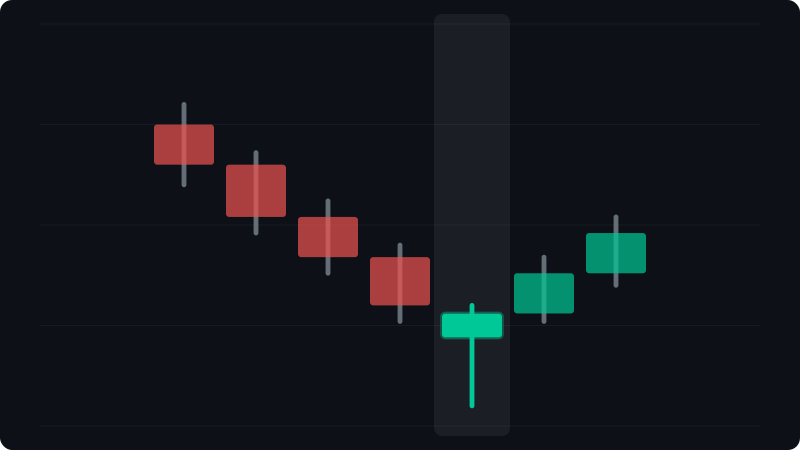
This pattern suggests that although sellers initially pushed the price lower, buyers stepped in and drove the price back up, potentially signaling a shift in momentum.
- Inverted Hammer: Similar to the Hammer, but with a long upper wick and a small body at the bottom. Also indicates a potential reversal of a downtrend.
The Inverted Hammer has a small body near the low of the trading range and a long upper wick. This shows that buyers tried to push the price higher, but sellers ultimately resisted.
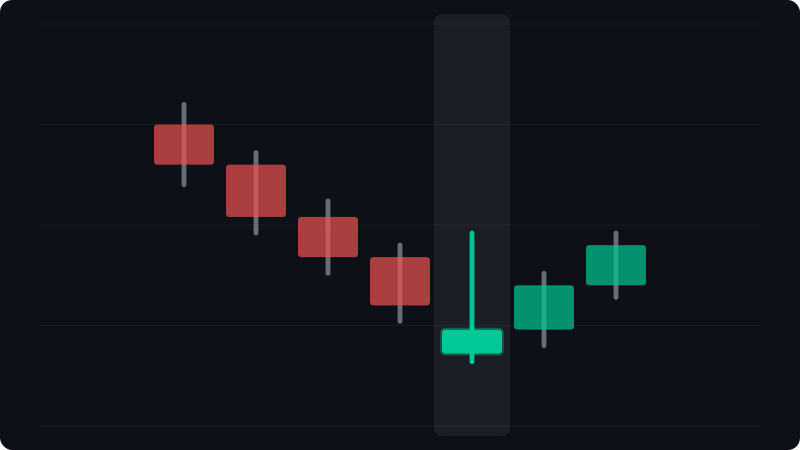
However, the fact that buyers were able to push the price up at all can be a bullish sign.
- Bullish Engulfing: A small bearish candlestick followed by a larger bullish candlestick that completely engulfs the previous candlestick. Indicates strong buying pressure.
The Bullish Engulfing pattern occurs when a large bullish candle "engulfs" a smaller bearish candle. This means the bullish candle's body completely covers the bearish candle's body.
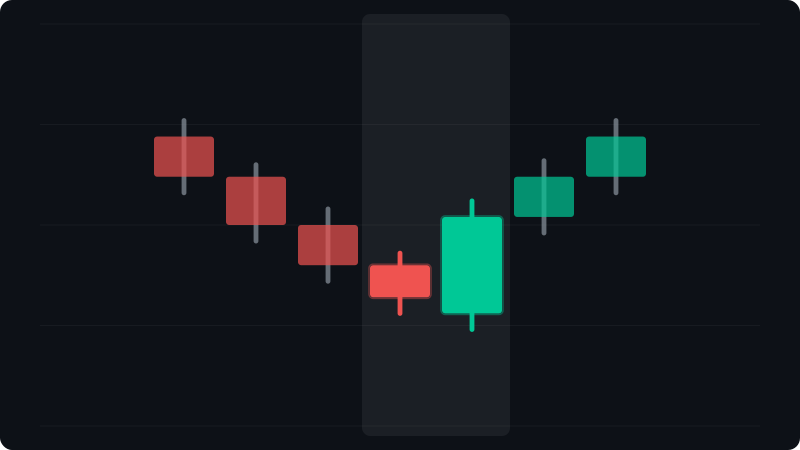
This is a strong signal that buyers have taken control of the market.
- Piercing Line: A bearish candlestick followed by a bullish candlestick that opens lower but closes more than halfway up the previous candlestick's body. Suggests a potential reversal of a downtrend.
The Piercing Line pattern consists of a bearish candle followed by a bullish candle that opens significantly lower than the previous close but then rallies to close more than halfway up the body of the bearish candle.
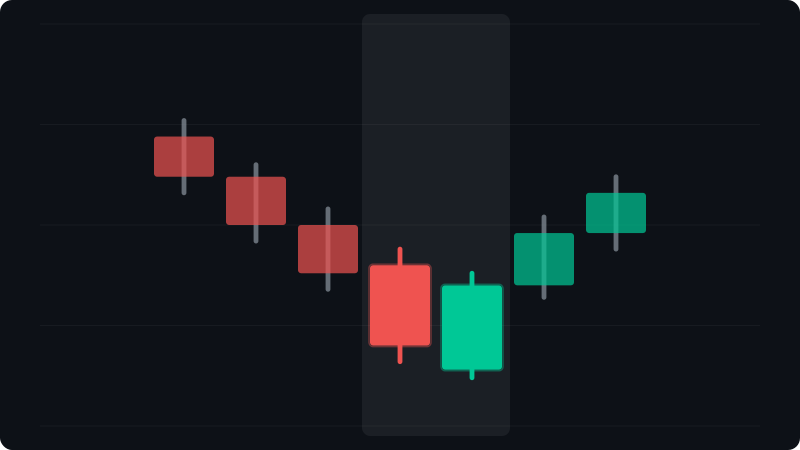
This shows that buyers are gaining strength and are able to push the price higher.
- Morning Star: A three-candlestick pattern consisting of a large bearish candlestick, a small-bodied candlestick (either bullish or bearish), and a large bullish candlestick. Indicates a potential reversal of a downtrend.
The Morning Star is a three-candle pattern that signals a potential bottom. It starts with a large bearish candle, followed by a small-bodied candle (which can be bullish or bearish) that gaps down. The third candle is a large bullish candle that closes well into the body of the first candle.
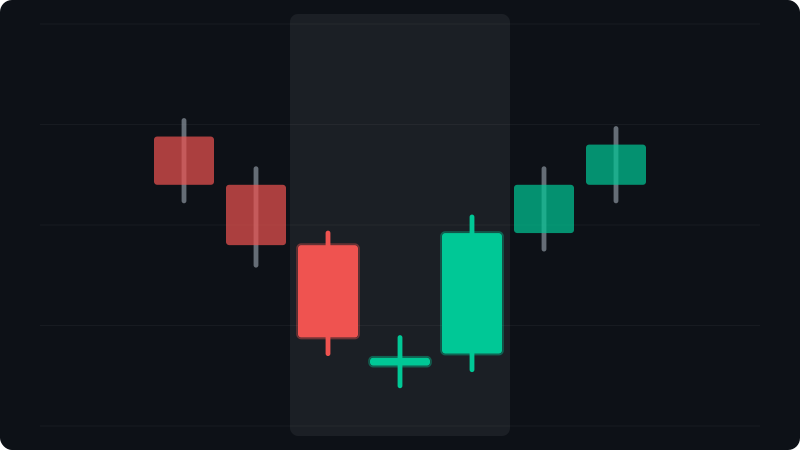
This pattern suggests that the downtrend is losing momentum and a new uptrend may be forming.
- Three White Soldiers: Three consecutive bullish candlesticks with small or no wicks, each closing higher than the previous. Indicates a strong uptrend.
The Three White Soldiers pattern consists of three consecutive bullish candles, each with a higher close than the previous candle. Ideally, these candles should have small or no wicks.
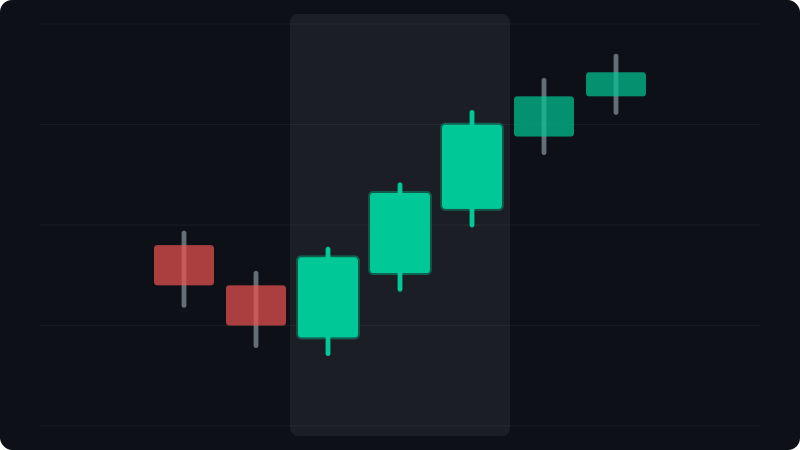
This is a very strong signal that buyers are in complete control of the market.
Bearish Patterns
- Hanging Man: A candlestick with a small body at the top and a long lower wick, appearing at the top of an uptrend. Indicates a potential reversal of an uptrend.
The Hanging Man looks identical to the Hammer, but it appears at the top of an uptrend. The long lower wick suggests that sellers are starting to gain control.
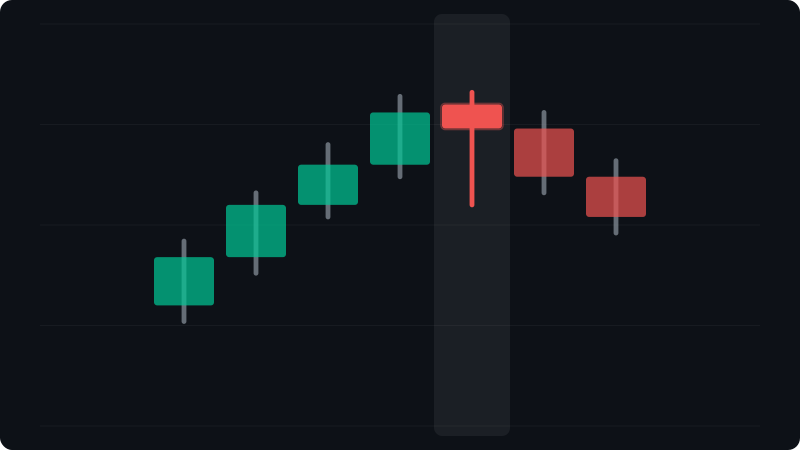
This pattern is a warning sign that the uptrend may be coming to an end.
- Shooting Star: A candlestick with a small body at the bottom and a long upper wick, appearing at the top of an uptrend. Indicates a potential reversal of an uptrend.
The Shooting Star is the bearish version of the Inverted Hammer. It has a small body near the low of the trading range and a long upper wick.
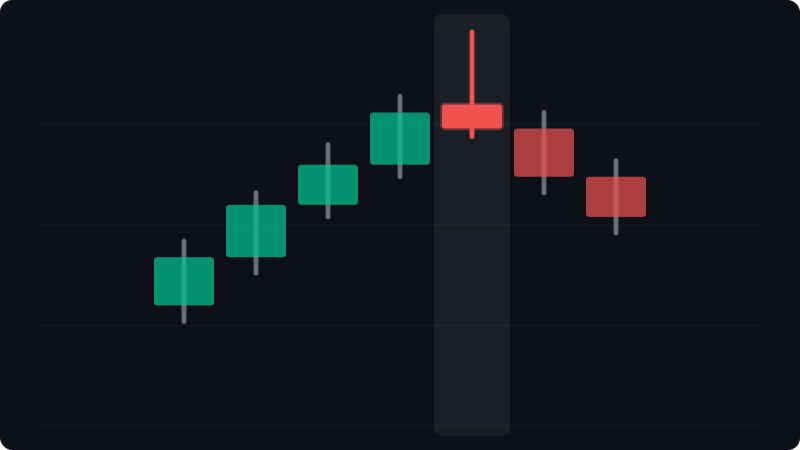
This pattern suggests that buyers tried to push the price higher, but sellers stepped in and drove the price back down, signaling a potential shift in momentum.
- Bearish Engulfing: A small bullish candlestick followed by a larger bearish candlestick that completely engulfs the previous candlestick. Indicates strong selling pressure.
The Bearish Engulfing pattern is the opposite of the Bullish Engulfing pattern. A large bearish candle "engulfs" a smaller bullish candle.
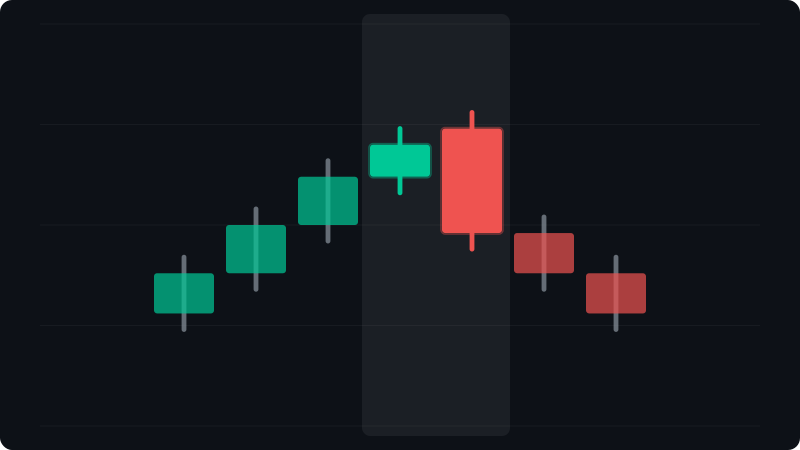
This is a strong signal that sellers have taken control of the market.
- Dark Cloud Cover: A bullish candlestick followed by a bearish candlestick that opens higher but closes more than halfway down the previous candlestick's body. Suggests a potential reversal of an uptrend.
The Dark Cloud Cover pattern consists of a bullish candle followed by a bearish candle that opens higher than the previous close but then falls to close more than halfway down the body of the bullish candle.
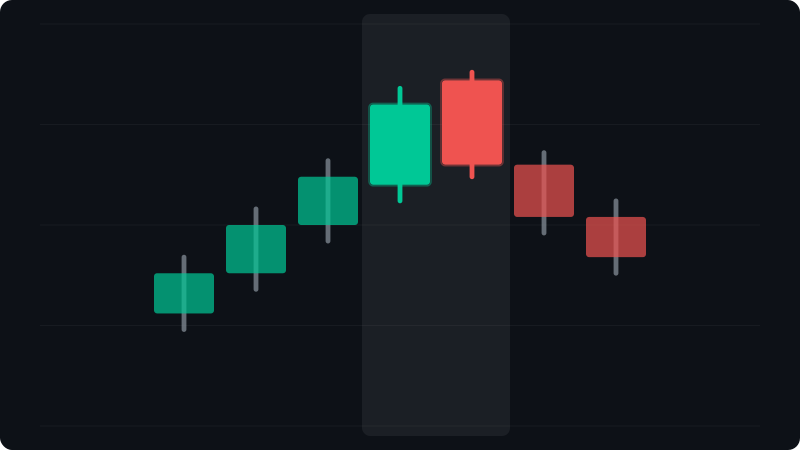
This shows that sellers are gaining strength and are able to push the price lower.
- Evening Star: A three-candlestick pattern consisting of a large bullish candlestick, a small-bodied candlestick (either bullish or bearish), and a large bearish candlestick. Indicates a potential reversal of an uptrend.
The Evening Star is the bearish version of the Morning Star. It's a three-candle pattern that signals a potential top. It starts with a large bullish candle, followed by a small-bodied candle (which can be bullish or bearish) that gaps up. The third candle is a large bearish candle that closes well into the body of the first candle.
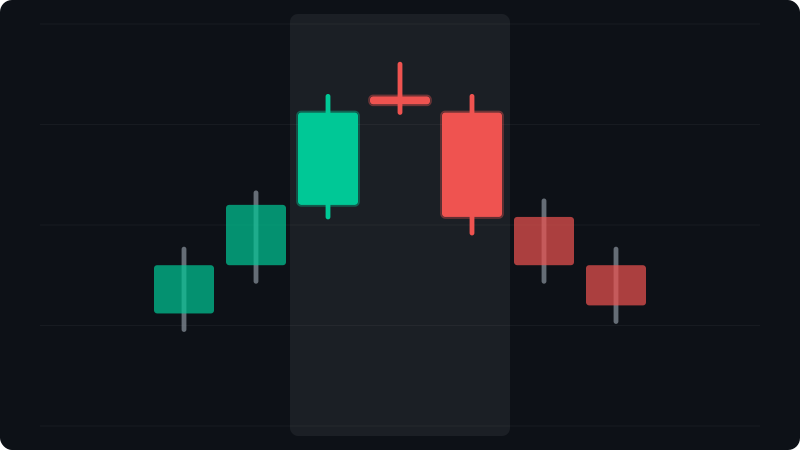
This pattern suggests that the uptrend is losing momentum and a new downtrend may be forming.
- Three Black Crows: Three consecutive bearish candlesticks with small or no wicks, each closing lower than the previous. Indicates a strong downtrend.
The Three Black Crows pattern consists of three consecutive bearish candles, each with a lower close than the previous candle. Ideally, these candles should have small or no wicks.
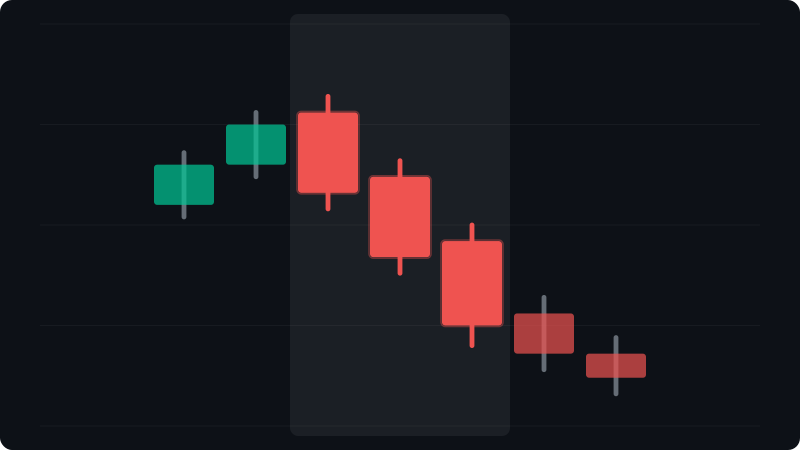
This is a very strong signal that sellers are in complete control of the market.
- Doji: A candlestick where the opening and closing prices are virtually the same, resulting in a very small or non-existent body. Indicates indecision in the market.
A Doji candle forms when the opening and closing prices are nearly identical. This shows a tug-of-war between buyers and sellers that ends in a draw.
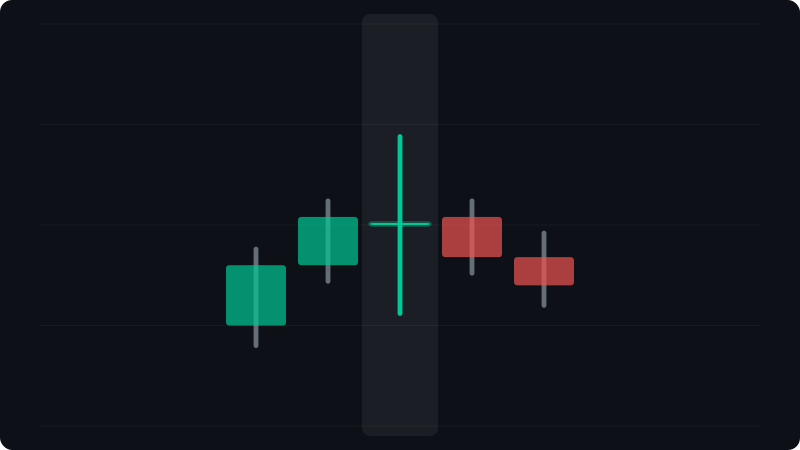
Doji candles often signal potential trend reversals or periods of consolidation.
- Spinning Top: Similar to a Doji, but with a slightly larger body. Also indicates indecision, but potentially less strong than a Doji.
Spinning Tops have small bodies and long upper and lower wicks. Like Doji candles, they represent indecision in the market.
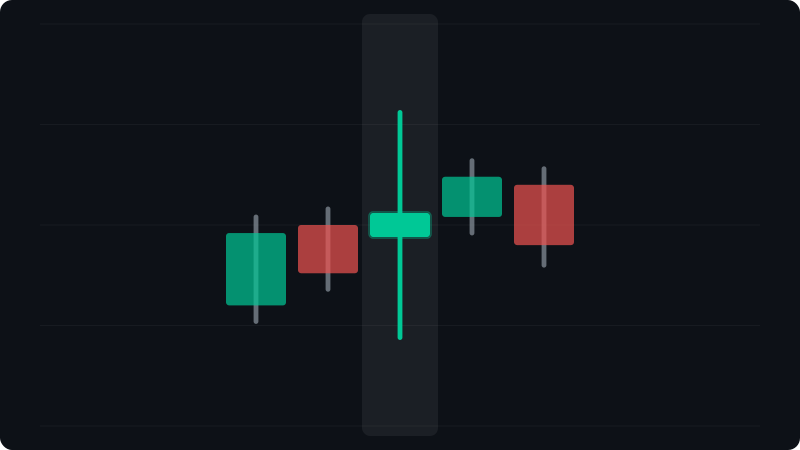
The small body indicates that neither buyers nor sellers were able to gain a significant advantage.
- Marubozu: A candlestick with a very large body and little or no wicks. Indicates strong directional movement. Can be bullish or bearish.
Marubozu candles have long bodies and little to no wicks. A bullish Marubozu indicates strong buying pressure throughout the period, while a bearish Marubozu indicates strong selling pressure.
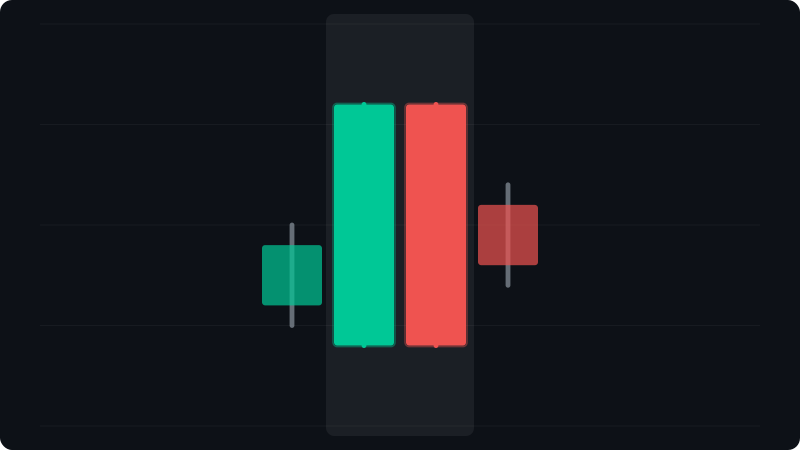
These patterns are powerful signals of momentum in a particular direction.
How to Use Candlestick Patterns in Your Trading
Candlestick patterns are most effective when used in conjunction with other forms of technical analysis, such as trendlines, support and resistance levels, and technical indicators. Here's a step-by-step approach to incorporating candlestick patterns into your trading strategy:
- Identify the Trend: Determine the overall trend of the market using trendlines or moving averages.
- Look for Potential Reversal Zones: Identify key support and resistance levels where price reversals are likely to occur.
- Identify Candlestick Patterns: Look for candlestick patterns that confirm potential reversals or continuations of the trend.
- Confirm with Other Indicators: Use technical indicators, such as the Relative Strength Index (RSI) or Moving Average Convergence Divergence (MACD), to confirm the signals generated by candlestick patterns.
- Manage Risk: Set appropriate stop-loss orders to limit potential losses.
Practical Examples
Let's look at a couple of hypothetical examples to illustrate how candlestick patterns can be used in trading:
Example 1: Bullish Reversal
Imagine you're analyzing the EUR/USD chart and you notice that the price has been in a downtrend for several days. You identify a key support level at 1.0500. As the price approaches this level, you see a Hammer candlestick form. This suggests that the downtrend may be coming to an end and that a bullish reversal is possible. To confirm this signal, you check the RSI, which is showing oversold conditions. Based on this analysis, you decide to enter a long position at 1.0505 with a stop-loss order at 1.0495.
Example 2: Bearish Continuation
Imagine you're analyzing the GBP/USD chart and you notice that the price has been in an uptrend for several weeks. You identify a key resistance level at 1.2500. As the price approaches this level, you see a Bearish Engulfing pattern form. This suggests that the uptrend may be losing momentum and that a bearish continuation is possible. To confirm this signal, you check the MACD, which is showing a bearish divergence. Based on this analysis, you decide to enter a short position at 1.2495 with a stop-loss order at 1.2505.
Common Mistakes and Misconceptions
Relying solely on candlestick patterns without considering other forms of analysis. Candlestick patterns should be used as part of a comprehensive trading strategy, not as a standalone indicator.
Another common mistake is interpreting candlestick patterns in isolation, without considering the overall context of the market. For example, a Hammer candlestick that forms in the middle of a strong downtrend may not be as reliable as a Hammer that forms at a key support level.
Practical Tips for Using Candlestick Patterns
- Practice, Practice, Practice: The more you practice identifying candlestick patterns, the better you'll become at interpreting their signals.
- Use Multiple Timeframes: Analyze candlestick patterns on multiple timeframes to get a more comprehensive view of the market.
- Be Patient: Wait for confirmation signals before entering a trade.
Frequently Asked Questions
Are candlestick patterns always accurate?
No, candlestick patterns are not always accurate. They are simply indicators of potential price movements, and they should be used in conjunction with other forms of analysis to confirm their signals.
Which candlestick patterns are the most reliable?
Some of the most reliable candlestick patterns include the Hammer, Bullish Engulfing, and Evening Star. However, the reliability of a candlestick pattern can vary depending on the market conditions and the timeframe being analyzed.
Can I use candlestick patterns to trade any market?
Yes, candlestick patterns can be used to trade any market, including forex, stocks, and commodities. However, the effectiveness of candlestick patterns may vary depending on the market being traded.
Where can I learn more about candlestick patterns?
There are many resources available online and in libraries that can teach you more about candlestick patterns. PriceONN also offers tools like pip and position size calculators to help you apply these concepts in your trading.
Learning to identify and interpret candlestick patterns is a valuable skill for any forex trader. By understanding the stories that these patterns tell, you can gain a better understanding of market sentiment and make more informed trading decisions. Remember to always combine candlestick analysis with other forms of technical analysis and to manage your risk effectively.