
Decoding the Harami Pattern; A Beginner's Guide to Candlestick Formations
Unlock the secrets of the Harami candlestick pattern! Learn how to identify this potential trend reversal signal and improve your forex trading strategy.
Imagine you're hiking in the mountains. You see a large rock formation, and nestled within it, a smaller, sheltered rock. This visual is similar to what you'll see on a forex chart when a Harami pattern forms. This seemingly simple pattern can offer clues about potential shifts in market momentum.
- The Harami pattern is a two-candlestick formation that can signal a potential trend reversal.
- It consists of a large candle followed by a smaller candle whose body is contained within the body of the first candle.
- Understanding the context in which the Harami appears is crucial for interpreting its potential significance.
- While not a guaranteed predictor, the Harami can be a valuable tool in a trader's arsenal, especially when combined with other indicators and analysis techniques.
Harami Pattern: A two-candlestick pattern in which a small candlestick's body is completely contained within the body of the preceding, larger candlestick. It's often interpreted as a sign of indecision in the market and a potential trend reversal.
What is the Harami Pattern? A Closer Look
The Harami pattern is a two-candlestick formation often found in forex charts. The name 'Harami' comes from the Japanese word for 'pregnant,' which is fitting given the pattern's visual appearance. The first candlestick is a large candle, representing the prevailing trend. The second candlestick is smaller and completely contained within the body of the first. This smaller candle signifies a pause or indecision in the market, potentially indicating a weakening trend.
Think of it like this: a strong runner (the first candle) suddenly slows down and needs to catch their breath (the second candle). This doesn't guarantee they'll stop running altogether, but it's a sign that their momentum has decreased.
Why Does the Harami Pattern Matter?
Understanding the Harami pattern is essential because it can provide early warning signals of potential trend reversals. Spotting a Harami doesn't automatically mean a trend will reverse, but it can prompt you to re-evaluate your positions and look for confirming signals from other indicators. For instance, if you're in a long position and see a bearish Harami forming at a resistance level, it might be time to tighten your stop-loss or consider taking profits.
The Harami pattern matters because it reflects a change in market psychology. The large first candle indicates strong momentum, while the smaller second candle suggests that the buying or selling pressure is waning. This shift in sentiment can lead to a change in the direction of the price.
How the Harami Pattern Works; A Step-by-Step Guide
Here’s a breakdown of how to identify and interpret the Harami pattern:
- Identify the Trend: First, determine the existing trend. Is the market trending upwards (bullish) or downwards (bearish)? The Harami pattern is most significant when it appears at the end of a well-defined trend.
- Look for the Large Candle: Find a large candlestick that confirms the current trend. In an uptrend, this will be a large bullish (typically green or white) candle. In a downtrend, it will be a large bearish (typically red or black) candle.
- Spot the Smaller Candle: Next, look for a smaller candlestick whose body is entirely contained within the body of the previous, larger candle. The color of the smaller candle is less important, but it can provide additional clues. A bullish candle after a downtrend or a bearish candle after an uptrend can strengthen the signal.
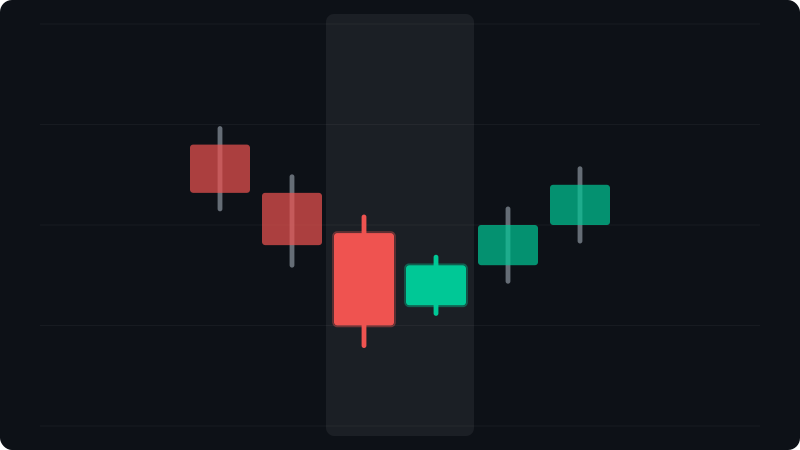
Practical Examples of the Harami Pattern in Action
Let's walk through a couple of hypothetical examples to illustrate how the Harami pattern works:
Example 1: Bullish Harami
Imagine EUR/USD has been in a downtrend for several days. You notice a large bearish candle forming, followed by a smaller bullish candle. The body of the bullish candle is completely contained within the body of the bearish candle. This is a bullish Harami. This suggests that the selling pressure is weakening, and a potential uptrend may be starting. A trader might wait for confirmation, such as a break above a recent high, before entering a long position. The trader might place a stop-loss order just below the low of the bearish candle to limit potential losses.
Example 2: Bearish Harami
Now, let's say GBP/USD has been in an uptrend. A large bullish candle appears, followed by a smaller bearish candle that is entirely contained within the larger candle's body. This is a bearish Harami. This indicates that the buying pressure is decreasing, and a downtrend could be emerging. A trader might look for confirmation, such as a break below a recent low, before entering a short position. The trader could set a stop-loss order just above the high of the bullish candle to manage risk.
These are simplified examples. In real-world trading, you'll want to consider other factors, such as support and resistance levels, other candlestick patterns, and economic news releases, before making any trading decisions.
Common Mistakes and Misconceptions About the Harami Pattern
Beginner traders often make a few common mistakes when using the Harami pattern:
- Treating it as a Guaranteed Reversal: The Harami pattern is not a crystal ball. It simply suggests a potential change in trend. Always look for confirmation from other indicators or price action before acting on the signal.
- Ignoring the Context: The significance of a Harami pattern depends on the market context. A Harami appearing in a choppy, sideways market is less reliable than one appearing at the end of a strong trend.
- Focusing Too Much on the Color of the Candles: While the color of the second candle can provide additional clues, it's not the most important factor. The key is the relationship between the size and position of the two candles.
Practical Tips for Trading with the Harami Pattern
Here are some practical tips to help you use the Harami pattern more effectively:
- Combine with Other Indicators: Use the Harami pattern in conjunction with other technical indicators, such as moving averages, RSI, or MACD, to confirm potential trading signals.
- Look for Confluence: Identify areas where the Harami pattern aligns with other support or resistance levels. This confluence can increase the probability of a successful trade.
- Manage Your Risk: Always use stop-loss orders to limit your potential losses. Place your stop-loss order strategically, based on the specific Harami pattern and the overall market context.
Scalpers might use the Harami pattern on very short timeframes (e.g., 1-minute or 5-minute charts) to identify quick profit opportunities. Swing traders might look for Harami patterns on daily or weekly charts to identify potential trend reversals that could last for several days or weeks. Long-term investors might use the Harami pattern as part of a broader analysis to identify potential entry points for long-term investments.
The Harami pattern can be correlated with other market factors. For example, a bearish Harami forming in EUR/USD might coincide with a strengthening US Dollar Index (DXY) or rising US bond yields. Similarly, a bullish Harami might coincide with a weakening DXY or falling bond yields. You might also see correlations with equities markets. For example, a bullish Harami might occur in a risk-on environment where stock markets are rising. A bearish Harami might occur in a risk-off environment where stock markets are falling.
Frequently Asked Questions
Is the Harami pattern always a reliable signal?
No, the Harami pattern is not always reliable on its own. It's best used in conjunction with other indicators and analysis techniques to confirm potential trading signals. Consider the overall market context and look for confluence with other support or resistance levels.
Does the color of the second candle in a Harami pattern matter?
While the color of the second candle can provide additional clues, it's not the most important factor. The key is the relationship between the size and position of the two candles. A bullish candle following a downtrend or a bearish candle following an uptrend can strengthen the signal.
How can I use the Harami pattern to manage my risk?
Always use stop-loss orders to limit your potential losses. Place your stop-loss order strategically, based on the specific Harami pattern and the overall market context. For example, you might place your stop-loss order just below the low of the large candle in a bullish Harami or just above the high of the large candle in a bearish Harami.
What timeframe is best for trading the Harami pattern?
The Harami pattern can be used on various timeframes, from short-term (e.g., 5-minute charts) to long-term (e.g., daily or weekly charts). The best timeframe depends on your trading style and goals. Scalpers might use it on shorter timeframes, while swing traders might prefer longer timeframes.
The Harami pattern, like any technical analysis tool, is not foolproof. However, by understanding its nuances and using it in conjunction with other analysis techniques, you can increase your chances of success in the forex market. Remember to always manage your risk and trade responsibly.