
The Shooting Star Pattern; Spotting Reversals in Forex
Learn to identify the Shooting Star candlestick pattern. This guide explains its formation, significance, and how to use it in forex trading.
Imagine you're watching a meteor shower. One streak flashes brilliantly across the sky, burning brightly before disappearing. The Shooting Star candlestick pattern in forex is similar – a brief burst of upward movement followed by a sharp decline, often signaling a potential trend reversal.
- The Shooting Star is a bearish reversal candlestick pattern that forms after an uptrend.
- It's characterized by a small body, a long upper shadow, and little to no lower shadow.
- The pattern suggests that buyers attempted to push the price higher, but sellers overwhelmed them, driving the price back down.
- Confirmation from subsequent candlesticks is crucial before acting on a Shooting Star signal.
What is a Shooting Star Pattern?
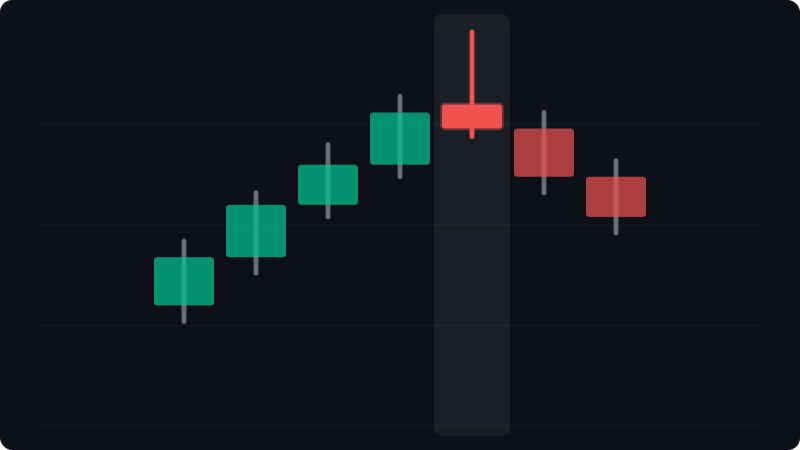
The Shooting Star is a bearish reversal candlestick pattern that appears at the end of an uptrend. It suggests that the upward momentum is weakening and that a potential downtrend may be on the horizon. The pattern gets its name from its resemblance to a shooting star – a bright flash followed by a downward trajectory.
Shooting Star: A single candlestick pattern characterized by a small real body, a long upper shadow (at least twice the length of the body), and a small or nonexistent lower shadow. It occurs after an uptrend and signals a potential bearish reversal.
Key characteristics of a Shooting Star:
- Small Real Body: The distance between the open and close price is small, indicating little price movement between these points.
- Long Upper Shadow: This shows that the price initially moved significantly higher, but then retreated downwards. The upper shadow should be at least twice the length of the real body.
- Little or No Lower Shadow: This indicates that the price didn't move much below the opening price.
- Appears After an Uptrend: The pattern is only valid if it forms after a sustained upward price movement.
Think of it like this: Imagine a tug-of-war where one team (the buyers) has been pulling the rope upwards (the uptrend). Suddenly, the other team (the sellers) gains strength and pulls the rope back down, almost to where it started. The Shooting Star represents this shift in power.
How the Shooting Star Pattern Works
The Shooting Star pattern reflects a battle between buyers and sellers. Here’s a step-by-step breakdown of how it typically unfolds:
- Uptrend in Progress: The price has been steadily rising, indicating strong buying pressure.
- Price Opens and Rises: The candlestick opens, and buyers initially push the price higher, creating the long upper shadow. This shows that buyers were still attempting to continue the uptrend.
- Sellers Take Control: At some point during the period, sellers step in and aggressively drive the price back down. This signifies a shift in sentiment, with sellers overpowering the buyers.
- Price Closes Near the Open: The price closes near the opening price, forming the small real body. This indicates that the sellers were successful in negating the earlier buying pressure.
- Potential Reversal: The Shooting Star suggests that the uptrend may be losing steam and that a downtrend could be starting. However, confirmation is crucial.
Why is confirmation so important? Because the Shooting Star is just a potential signal. It could be a false alarm. Confirmation typically involves waiting for the next candlestick to close below the real body of the Shooting Star. This provides further evidence that sellers have indeed taken control.
Practical Examples of the Shooting Star Pattern
Let’s look at some hypothetical examples to illustrate how the Shooting Star pattern can be used in trading.
Example 1: EUR/USD Downtrend Confirmation
Imagine you're watching the EUR/USD pair on a daily chart. The price has been in an uptrend for several weeks, climbing from 1.0800 to 1.1200. Suddenly, a Shooting Star pattern appears at 1.1200. The candlestick has a small body, a long upper shadow extending to 1.1250, and virtually no lower shadow.
Here’s how you might interpret this:
- Signal: The Shooting Star suggests a potential bearish reversal at 1.1200.
- Confirmation: You wait for the next day's candlestick to close below the real body of the Shooting Star. If it closes at 1.1180, this confirms the bearish signal.
- Potential Trade: You could consider entering a short position (selling EUR/USD) at 1.1180, anticipating a further decline.
Example 2: GBP/JPY Range-Bound Market
Now, consider the GBP/JPY pair, trading in a range between 188.00 and 190.00. The price approaches the upper range limit at 190.00, and a Shooting Star forms. The upper shadow extends to 190.50, and the body is small, closing near 190.00.
Your analysis might look like this:
- Signal: The Shooting Star indicates potential resistance at 190.00 and a possible reversal within the range.
- Confirmation: The next candlestick closes at 189.80, confirming the bearish signal.
- Potential Trade: You could enter a short position at 189.80, targeting the lower range limit around 188.00.
These examples are hypothetical and for illustrative purposes only. Always conduct thorough analysis and manage your risk appropriately before making any trading decisions.
Common Mistakes When Trading the Shooting Star Pattern
Beginners often make mistakes when trading the Shooting Star pattern, leading to losses. Here are some common pitfalls to avoid:
- Ignoring Confirmation: Acting on the Shooting Star signal without waiting for confirmation is a frequent mistake. As mentioned earlier, confirmation is crucial to validate the pattern.
- Trading Against the Prevailing Trend: The Shooting Star is a reversal pattern and is most effective when it appears at the end of a clear uptrend. Trading it in a sideways or choppy market can lead to false signals.
- Not Considering Other Indicators: Relying solely on the Shooting Star pattern without considering other technical indicators or fundamental factors can be risky. Combine it with tools like trendlines, support and resistance levels, and oscillators for a more comprehensive view.
- Poor Risk Management: Not setting appropriate stop-loss orders can result in significant losses if the trade goes against you. Always define your risk tolerance and set stop-loss levels accordingly.
Practical Tips for Trading the Shooting Star Pattern
Here are some practical tips to enhance your trading strategy when using the Shooting Star pattern:
- Look for Confluence: Combine the Shooting Star with other technical indicators or chart patterns to increase the probability of a successful trade. For example, if the Shooting Star forms at a key resistance level or coincides with a bearish divergence on the RSI, the signal is stronger.
- Consider Volume: High volume during the formation of the Shooting Star can add weight to the signal. It indicates that there is strong selling pressure behind the reversal.
- Backtest Your Strategy: Before trading the Shooting Star pattern with real money, backtest your strategy on historical data to assess its effectiveness. This will help you understand its win rate, risk-reward ratio, and optimal trading parameters.
- Adapt to Market Conditions: The effectiveness of the Shooting Star pattern can vary depending on market conditions. In highly volatile markets, false signals may be more common. Adjust your trading approach accordingly.
Quick Quiz
Test your understanding of the Shooting Star pattern with these questions:
- What are the key characteristics of a Shooting Star candlestick pattern?
- Why is confirmation important when trading the Shooting Star pattern?
- Name three common mistakes beginners make when trading the Shooting Star pattern.
- How can you improve your trading strategy when using the Shooting Star pattern?
Answers:
- A small real body, a long upper shadow, and little to no lower shadow, appearing after an uptrend.
- Confirmation helps to validate the pattern and reduce the risk of false signals.
- Ignoring confirmation, trading against the prevailing trend, and not considering other indicators.
- Look for confluence, consider volume, backtest your strategy, and adapt to market conditions.
Frequently Asked Questions
Is the Shooting Star pattern always a reliable signal?
No, the Shooting Star pattern is not always reliable on its own. It's a potential signal that needs confirmation from subsequent candlesticks or other technical indicators. Market context and volume should also be considered.
Can the Shooting Star pattern be used on all timeframes?
Yes, the Shooting Star pattern can be used on various timeframes, from short-term charts (e.g., 15-minute, hourly) to longer-term charts (e.g., daily, weekly). However, the reliability of the pattern may vary depending on the timeframe.
What is the difference between a Shooting Star and an Inverted Hammer?
Both patterns have a small body and a long upper shadow, but they appear in different contexts. The Shooting Star appears after an uptrend and signals a potential bearish reversal, while the Inverted Hammer appears after a downtrend and signals a potential bullish reversal.
How do I set a stop-loss order when trading the Shooting Star pattern?
A common approach is to place the stop-loss order slightly above the high of the Shooting Star candlestick. This helps to limit your potential losses if the price continues to move upwards against your trade.