
Modèles de Triangle : Guide Débutant sur les Formations Chartistes
Découvrez les modèles de triangles symétriques, ascendants et descendants dans le trading forex. Apprenez à les identifier et à les utiliser pour des opportunités de trading.
Avez-vous déjà remarqué comment parfois, les mouvements de prix semblent se comprimer dans une fourchette de plus en plus étroite avant une forte sortie ? Ces formations pourraient être des modèles de triangle, et les comprendre peut vous donner un avantage sur le marché des changes. Tout comme reconnaître des formes familières dans les nuages, identifier des modèles de triangle sur un graphique de prix peut offrir des indices sur les mouvements de prix futurs potentiels.
- Les modèles de triangle sont des modèles de continuation qui peuvent signaler des sorties potentielles sur le marché des changes.
- Les triangles symétriques indiquent une période de consolidation sans tendance claire, tandis que les triangles ascendants et descendants suggèrent respectivement des biais haussiers et baissiers.
- Comprendre les modèles de triangle peut aider les traders à identifier des points d'entrée et de sortie potentiels et à gérer le risque de manière plus efficace.
Qu'est-ce que les Modèles de Triangle ?
Les modèles de triangle sont des formations graphiques qui se produisent lorsque le prix d'un actif évolue dans une fourchette de plus en plus étroite, formant une forme de triangle. Ces modèles sont généralement des modèles de continuation, ce qui signifie qu'ils suggèrent que la tendance existante reprendra probablement après la complétion du modèle. Cependant, ils peuvent également agir comme des modèles de retournement dans certains cas. Il existe trois principaux types de modèles de triangle : symétrique, ascendant et descendant.
Modèle de Triangle : Une formation graphique caractérisée par des lignes de tendance convergentes, indiquant une période de consolidation avant une sortie potentielle.
Pensez à cela comme un ressort enroulé : le prix accumule de l'énergie alors qu'il se consolide dans le triangle, et finalement, cette énergie doit être libérée sous forme de sortie. Reconnaître ces modèles peut vous aider à anticiper les mouvements de prix potentiels et à planifier vos échanges en conséquence. Imaginez un tirage à la corde où aucune des parties ne prend le dessus, mais la corde se tend de plus en plus. La rupture éventuelle de la corde signale un gagnant clair.
Pourquoi les Modèles de Triangle sont-ils Importants ?
Les modèles de triangle sont importants car ils peuvent fournir des informations précieuses sur le sentiment du marché et les mouvements futurs potentiels des prix. En identifiant ces modèles sur un graphique, les traders peuvent anticiper des sorties potentielles et planifier leurs transactions en conséquence. Cela peut conduire à des décisions de trading plus éclairées et potentiellement à des bénéfices plus élevés. De plus, les modèles de triangle peuvent aider les traders à gérer le risque en fournissant des niveaux clairs pour placer des ordres stop-loss.
Comprendre ces modèles, c'est comme avoir une feuille de route pour les mouvements de prix potentiels. Cela vous permet de vous préparer à différents scénarios et d'ajuster votre stratégie de trading en conséquence. Par exemple, si vous repérez un triangle ascendant, vous pourriez anticiper une sortie haussière et vous positionner pour tirer parti du potentiel mouvement à la hausse. À l'inverse, un triangle descendant pourrait signaler une sortie baissière, vous incitant à envisager de vendre l'actif.
Types de Modèles de Triangle
Triangle Symétrique
Un triangle symétrique est caractérisé par deux lignes de tendance convergentes, la ligne de tendance supérieure s'inclinant vers le bas et la ligne de tendance inférieure s'inclinant vers le haut. Ce modèle indique une période de consolidation où ni les acheteurs ni les vendeurs ne contrôlent le marché. Le prix rebondit essentiellement entre ces lignes de tendance, formant une forme de triangle. Une sortie peut se produire dans n'importe quelle direction, donc il est important d'attendre une confirmation avant d'entrer dans une transaction.
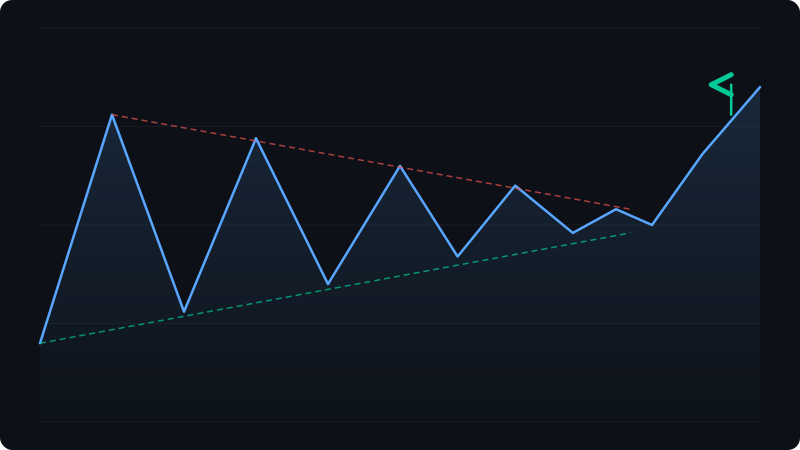
Imaginez deux forces opposées se poussant l'une contre l'autre, réduisant progressivement la fourchette de mouvement. Finalement, une force dépassera l'autre, menant à une sortie. La clé est d'attendre la sortie pour confirmer la direction dans laquelle le prix est susceptible d'évoluer.
Triangle Ascendant
Un triangle ascendant est caractérisé par une ligne de tendance supérieure plate et une ligne de tendance inférieure inclinée vers le haut. Ce modèle est généralement considéré comme un modèle haussier, car il suggère que les acheteurs deviennent plus agressifs tandis que les vendeurs maintiennent leur position à un niveau de prix spécifique. La ligne de tendance supérieure plate agit comme un niveau de résistance, et il est probable que le prix le dépasse finalement.
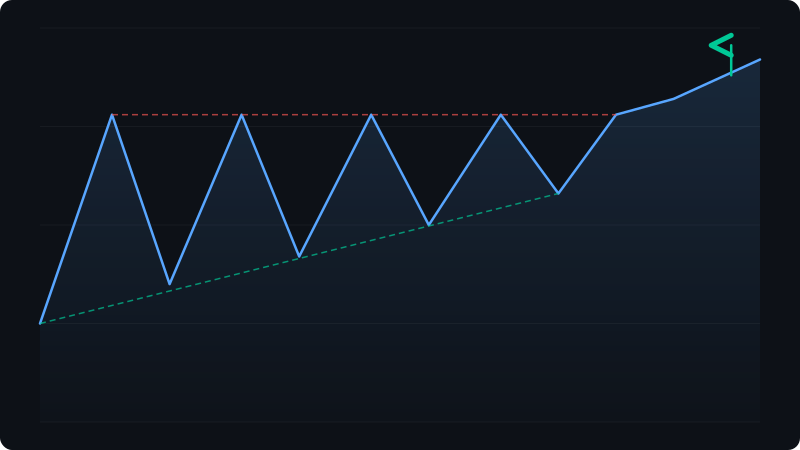
Pensez-y comme à un barrage retenant de l'eau : le niveau de l'eau (prix) continue de monter, exerçant de plus en plus de pression sur le barrage (résistance). Finalement, la pression deviendra trop grande, et le barrage cédera, entraînant une flambée des prix. Les traders recherchent souvent une sortie au-dessus du niveau de résistance plat comme signal d'achat.
Triangle Descendant
Un triangle descendant est caractérisé par une ligne de tendance inférieure plate et une ligne de tendance supérieure inclinée vers le bas. Ce modèle est généralement considéré comme un modèle baissier, car il suggère que les vendeurs deviennent plus agressifs tandis que les acheteurs maintiennent leur position à un niveau de prix spécifique. La ligne de tendance inférieure plate agit comme un niveau de support, et il est probable que le prix le franchisse finalement.
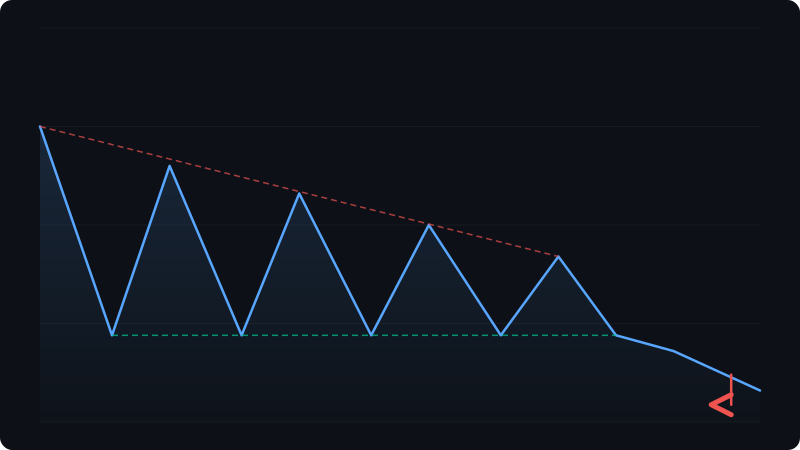
Imaginez un bâtiment avec une fondation affaiblie : le bâtiment (prix) s'enfonce progressivement, exerçant de plus en plus de stress sur la fondation (support). Finalement, la fondation s'effondrera, entraînant une chute du prix. Les traders recherchent souvent une sortie en dessous du niveau de support plat comme signal de vente.
Comment Trader les Modèles de Triangle
Le trading des modèles de triangle implique d'identifier le modèle sur un graphique, d'attendre une sortie, puis d'entrer dans une transaction dans la direction de la sortie. Voici un guide étape par étape :
- Identifiez le Modèle de Triangle : Recherchez des lignes de tendance convergentes qui forment une forme de triangle. Déterminez s'il s'agit d'un triangle symétrique, ascendant ou descendant.
- Attendez une Sortie : Une sortie se produit lorsque le prix se déplace de manière décisive au-dessus de la ligne de tendance supérieure (pour les triangles ascendants et symétriques) ou en dessous de la ligne de tendance inférieure (pour les triangles descendants et symétriques).
- Confirmez la Sortie : Recherchez la confirmation de la sortie, comme une augmentation du volume ou un mouvement fort dans la direction de la sortie.
- Entrez dans la Transaction : Entre dans une position longue si la sortie est au-dessus de la ligne de tendance supérieure, ou une position courte si la sortie est en dessous de la ligne de tendance inférieure.
- Définissez un Ordre Stop-Loss : Placez un ordre stop-loss juste en dessous du niveau de sortie (pour les positions longues) ou juste au-dessus du niveau de sortie (pour les positions courtes).
- Définissez un Objectif : Une méthode courante pour définir un objectif consiste à mesurer la hauteur du triangle à son point le plus large, puis à projeter cette distance à partir du point de sortie dans la direction de la sortie.
Exemples Pratiques
Examinons quelques exemples hypothétiques pour illustrer comment les modèles de triangle peuvent être tradés :
Exemple 1 : Triangle Ascendant
Supposons que vous analysez le graphique EUR/USD et que vous repérez un triangle ascendant en formation. La ligne de tendance supérieure est plate à 1.1000, et la ligne de tendance inférieure s'incline vers le haut. Vous attendez une sortie au-dessus de 1.1000, et vous voyez un fort mouvement à la hausse avec un volume accru. Vous entrez dans une position longue à 1.1005. Vous définissez un ordre stop-loss juste en dessous du niveau de sortie à 1.0995. La hauteur du triangle à son point le plus large est de 100 pips, donc vous projetez un objectif de 1.1100 (1.1000 + 100 pips). Cet exemple illustre une opportunité haussière potentielle identifiée grâce au modèle de triangle ascendant.
Exemple 2 : Triangle Descendant
Supposons que vous analysez le graphique GBP/JPY et que vous repérez un triangle descendant en formation. La ligne de tendance inférieure est plate à 150.00, et la ligne de tendance supérieure s'incline vers le bas. Vous attendez une sortie en dessous de 150.00, et vous voyez un fort mouvement à la baisse avec un volume accru. Vous entrez dans une position courte à 149.95. Vous définissez un ordre stop-loss juste au-dessus du niveau de sortie à 150.05. La hauteur du triangle à son point le plus large est de 150 pips, donc vous projetez un objectif de 148.50 (150.00 - 150 pips). Cet exemple illustre une opportunité baissière potentielle repérée en utilisant la formation de triangle descendant.
Erreurs et Méprises Courantes
Une erreur fréquente consiste à entrer dans une transaction avant que la sortie ne soit confirmée. Il est important d'attendre un mouvement décisif au-dessus ou en dessous des lignes de tendance, accompagné d'un volume accru. Une autre erreur est de ne pas définir d'ordre stop-loss, ce qui peut entraîner des pertes significatives si le prix évolue contre vous.
Une idée reçue courante est que les modèles de triangle mènent toujours à une continuation de la tendance existante. Bien que cela soit souvent le cas, les modèles de triangle peuvent également agir comme des modèles de retournement dans certaines situations. Il est important de considérer le contexte global du marché et d'autres indicateurs techniques avant de prendre une décision de trading.
Conseils Pratiques
- Utilisez Plusieurs Périodes : Analysez les modèles de triangle sur plusieurs périodes pour mieux comprendre la tendance globale et les niveaux de sortie potentiels.
- Combinez avec d'Autres Indicateurs : Utilisez d'autres indicateurs techniques, tels que les moyennes mobiles, le RSI et le MACD, pour confirmer la validité du modèle de triangle et de la sortie potentielle.
- Gérez le Risque : Définissez toujours un ordre stop-loss pour limiter vos pertes potentielles.
- Soyez Patients : Attendez une sortie confirmée avant d'entrer dans une transaction. Ne vous précipitez pas et risquez une sortie feinte.
Questions Fréquemment Posées
Qu'est-ce qu'une fausse sortie ?
Une fausse sortie se produit lorsque le prix dépasse une ligne de tendance mais revient rapidement à la direction initiale. Cela peut piéger les traders qui entrent dans une transaction prématurément. Attendez toujours une confirmation avant d'entrer dans une transaction.
Comment puis-je calculer l'objectif pour un modèle de triangle ?
Mesurez la hauteur du triangle à son point le plus large, puis projetez cette distance à partir du point de sortie dans la direction de la sortie. Cela donne un objectif potentiel pour le mouvement de prix.
Les modèles de triangle sont-ils toujours fiables ?
Non, les modèles de triangle ne sont pas toujours fiables. Comme tout outil d'analyse technique, ils peuvent donner de faux signaux. Il est important d'utiliser d'autres indicateurs et de considérer le contexte général du marché avant de prendre une décision de trading.
Les modèles de triangle peuvent-ils être utilisés sur toutes les périodes ?
Oui, les modèles de triangle peuvent être utilisés sur toutes les périodes, des graphiques à court terme aux graphiques à long terme. Cependant, la fiabilité du modèle peut varier en fonction de la période. Les modèles à long terme tendent à être plus fiables que les modèles à court terme.
Comprendre les modèles de triangle est une compétence précieuse pour tout trader forex. En apprenant à identifier ces formations et en appliquant les principes exposés dans ce guide, vous pouvez améliorer vos décisions de trading et potentiellement augmenter vos bénéfices. N'oubliez pas de toujours gérer le risque et de combiner les modèles de triangle avec d'autres indicateurs techniques pour une analyse plus complète.