
Can AI Agents Finally Manage Crypto Wallets Seamlessly?
Market Context
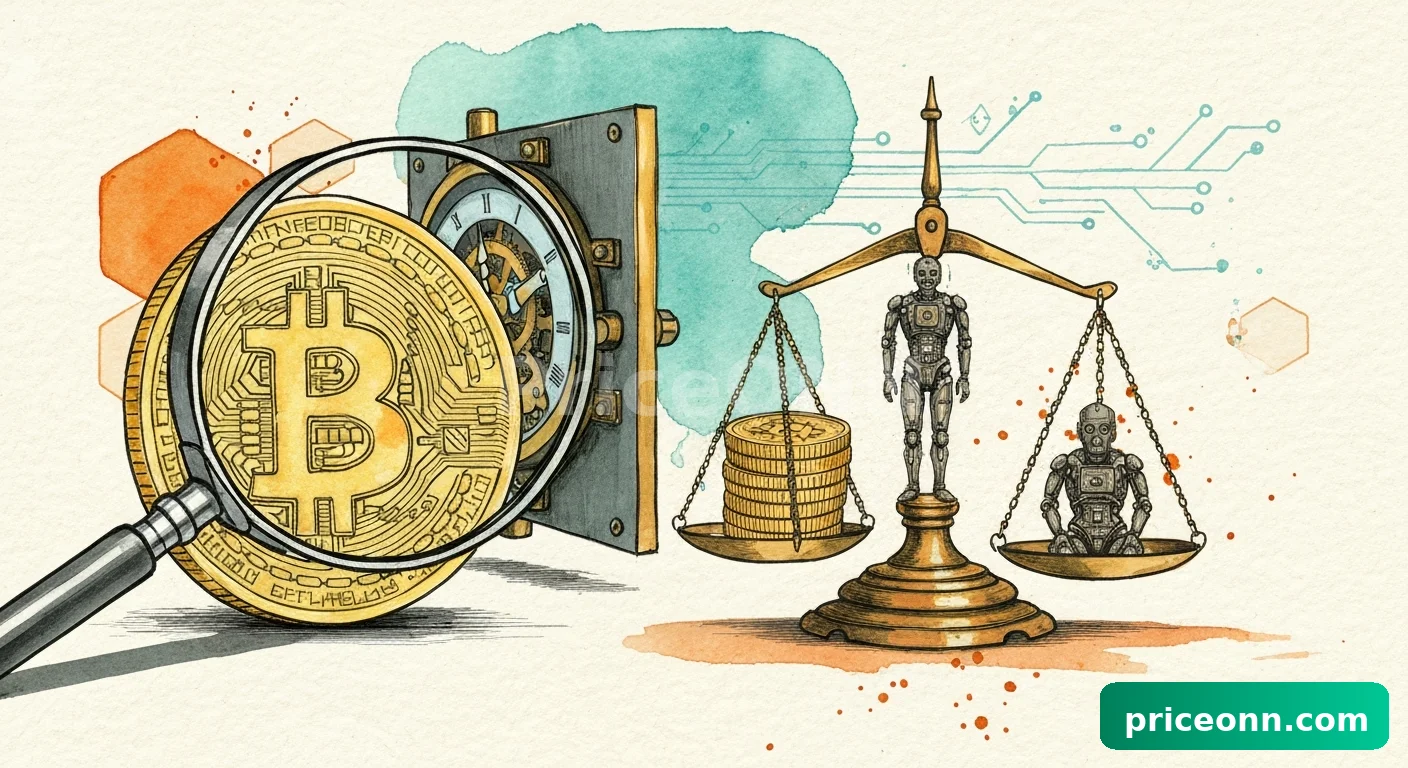
The burgeoning field of artificial intelligence agents is encountering a significant hurdle: managing digital assets. Historically, AI agents interacting with the cryptocurrency space have faced challenges due to fragmented wallet systems, requiring separate key management and fund allocation for each application. This inefficiency has limited their ability to operate autonomously and securely across different blockchain networks.
A recent development from MoonPay seeks to address this by introducing an open-source wallet standard specifically designed for AI agents. This framework provides a unified approach for these agents to hold funds and execute transactions across various blockchains, moving away from the current model of disconnected accounts and complex key management. The standard, unveiled recently, aims to streamline operations by allowing agents to access and utilize a single pool of funds rather than juggling multiple individual wallets.
Analysis & Drivers
The core innovation lies in its approach to private key management and transaction security. Unlike previous attempts that focused primarily on transaction rails, this new standard prioritizes the secure storage and signing of transactions. Private keys are kept in an encrypted local vault and are only used for signing transactions within an isolated process, preventing them from being exposed to the AI agent's main runtime environment. This is a critical step towards enabling AI agents to handle financial assets with a reduced risk profile.
Furthermore, the standard incorporates policy controls, allowing users to define spending limits and restrictions before any transaction is authorized. This feature is crucial for governance and risk mitigation, ensuring that AI agents operate within predefined financial boundaries. The modular design, available on developer platforms like GitHub, npm, and PyPI, makes it adaptable for various use cases and easier for developers to integrate. Several prominent companies, including PayPal, OKX, and Circle, alongside various blockchain foundations, have contributed to the specification, signaling broad industry interest in enabling AI-driven financial interactions.
Trader Implications
For traders and developers in the cryptocurrency space, this new standard could signify a paradigm shift. The ability for AI agents to manage funds and execute transactions more efficiently and securely opens up possibilities for more sophisticated decentralized applications (dApps) and automated trading strategies. Traders should monitor the adoption rate of this standard, as wider implementation could lead to increased liquidity and new trading opportunities driven by AI agents.
Key levels to watch will be the integration of this standard into major dApps and trading platforms. A successful rollout could see AI agents becoming more active participants in DeFi, potentially influencing price action through automated arbitrage, liquidity provision, or complex order execution. The emphasis on policy controls also suggests a move towards more regulated and predictable AI-driven financial activities, which could foster greater institutional interest in the crypto market.
Outlook
The release of this open-source wallet standard marks a significant step toward realizing the potential of AI agents in the cryptocurrency ecosystem. If widely adopted, it could pave the way for truly autonomous financial agents capable of managing assets and executing complex strategies across multiple blockchains. Future developments will likely focus on expanding chain support, enhancing security protocols, and refining policy control features. The coming months will be crucial in determining how quickly developers and platforms integrate this standard, potentially unlocking a new era of AI-powered decentralized finance.
Frequently Asked Questions
What problem does MoonPay's new wallet standard solve for AI agents?
It solves the issue of fragmented wallet management for AI agents, which historically required separate key management and fund allocation for each application. The new standard allows AI agents to use a single, unified pool of funds across different blockchains, simplifying operations and enhancing security.
How does the standard enhance the security of AI agent transactions?
The standard enhances security by storing private keys in an encrypted local vault and signing transactions within an isolated process, preventing direct exposure of keys to the AI agent's runtime. It also includes policy controls for spending limits and restrictions, adding a layer of user-defined governance.
What are the potential implications for crypto traders if this standard gains traction?
Widespread adoption could lead to increased AI agent participation in DeFi, potentially driving new automated trading strategies, arbitrage opportunities, and enhanced liquidity. This could introduce new market dynamics and influence price action across various cryptocurrencies.
Track markets in real-time
Empower your investment decisions with AI-powered analysis, technical indicators and real-time price data.
Join Our Telegram Channel
Get breaking market news, AI analysis and trading signals delivered instantly to your Telegram.
Join Channel


PriceONN