EUR/USD extends losses as US-Iran war boosts US Dollar demand

The Eurozone's Central Bank: A Primer
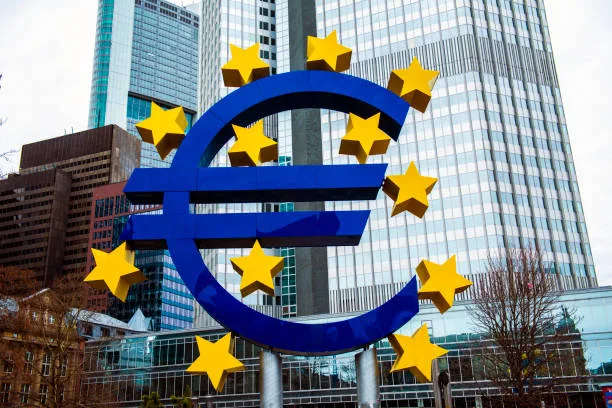
Located in Frankfurt, Germany, the European Central Bank (ECB) acts as the central bank for the Eurozone nations. Its core responsibilities include setting benchmark interest rates and steering monetary policy across the region. The ECB's primary goal is to ensure price stability, targeting an inflation rate of approximately 2%. To achieve this, the ECB primarily adjusts interest rates. Typically, higher interest rates tend to strengthen the euro, while lower rates can weaken it.
The ECB's Governing Council, comprised of the heads of national central banks from Eurozone countries and six permanent members, including the ECB President, currently Christine Lagarde, convenes eight times annually to make monetary policy decisions.
Unconventional Measures: Quantitative Easing and Tightening
In situations where standard interest rate adjustments prove insufficient, the ECB can resort to Quantitative Easing (QE). This involves the ECB creating new euros to purchase assets, predominantly government or corporate bonds, from banks and other financial institutions. QE typically exerts downward pressure on the euro's value.
QE serves as a last-resort tool, deployed when simply lowering interest rates fails to achieve the desired level of price stability. The ECB previously implemented QE during the Great Financial Crisis of 2009-2011, again in 2015 when inflation remained stubbornly low, and most recently during the Covid-19 pandemic. Quantitative tightening (QT) represents the opposite of QE. It's implemented after a period of QE, once the economy begins to recover and inflation starts to rise.
During QT, the ECB halts further bond purchases and ceases reinvesting the principal payments received from maturing bonds already held on its balance sheet. This action is generally considered positive, or bullish, for the euro.
Reading Between the Lines: What's at Stake Now?
The current weakness in the euro, exacerbated by geopolitical uncertainty, highlights the complex interplay between monetary policy and external events. A stronger dollar, fueled by safe-haven demand, puts downward pressure on the EUR/USD exchange rate. Traders should closely monitor upcoming ECB communications for any hints of policy adjustments in response to these developments.
This situation has implications beyond just currency markets. For example, European equities could face headwinds if a stronger dollar makes them less competitive internationally. Conversely, companies with significant dollar-denominated revenues might benefit. Sovereign bond yields within the Eurozone could also experience volatility, particularly in countries with higher debt levels.
Key levels to watch in EUR/USD include recent lows that, if broken, could signal further downside. On the upside, any sustained rally would likely require a significant shift in either ECB policy expectations or a de-escalation of geopolitical tensions. Be aware that risk sentiment remains a key driver for now.
The real question is whether the ECB will maintain its current course, or whether external pressures will force a change in strategy.
Track markets in real-time
Empower your investment decisions with AI-powered analysis, technical indicators and real-time price data.
Join Our Telegram Channel
Get breaking market news, AI analysis and trading signals delivered instantly to your Telegram.
Join Channel