New Chemistry Breakthrough Could Challenge China’s Rare Earth Dominance
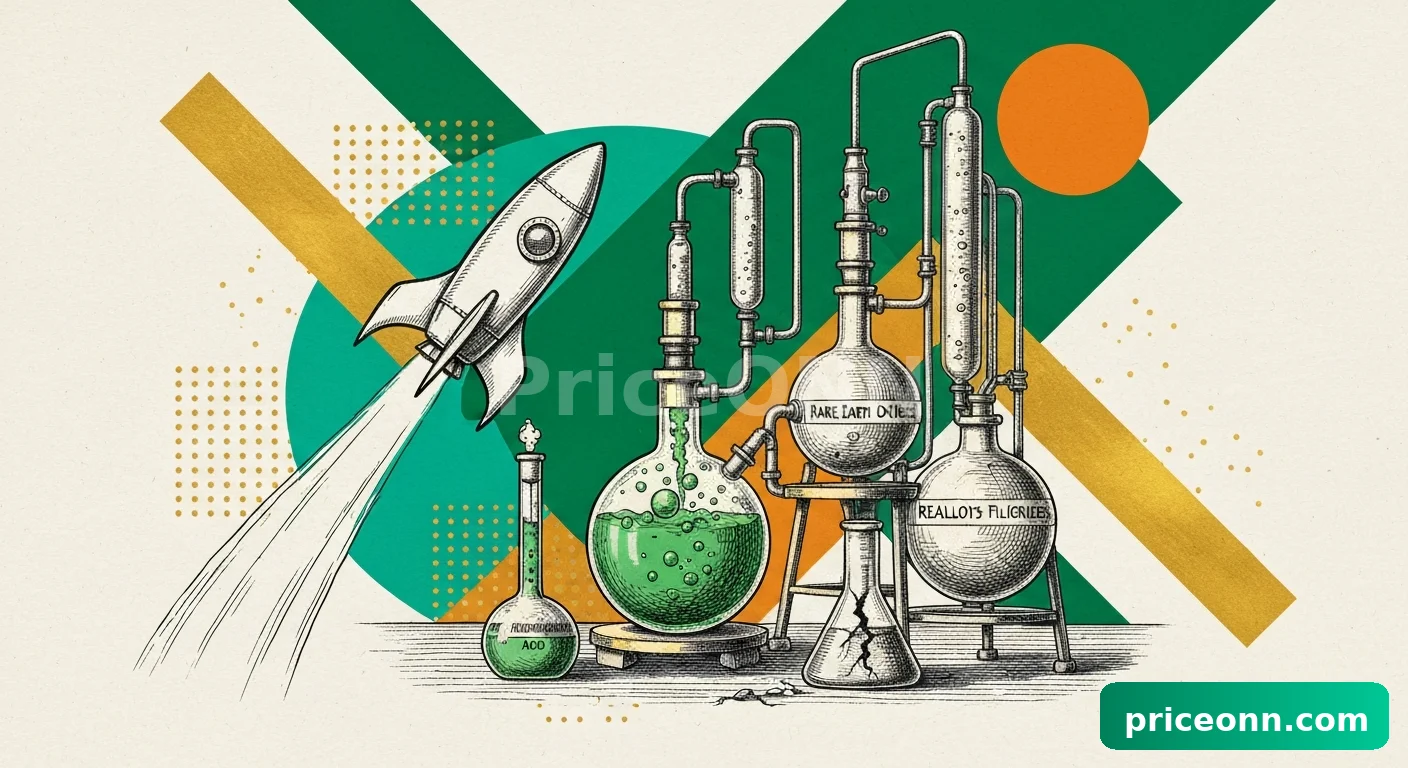
A Critical Mineral Milestone Achieved
With the United States facing a looming scarcity of essential rare earth elements vital for its defense apparatus, a significant advancement has emerged from REalloys Inc. (: ALOY). This company, a key player in bolstering America's domestic supply of critical raw materials, announced the successful demonstration of a novel technique for producing rare earth fluorides. Remarkably, this new process bypasses the use of hydrofluoric acid, a notoriously dangerous chemical historically central to rare earth processing. This breakthrough addresses a crucial bottleneck in the creation of rare earth metals, the very building blocks for high-performance permanent magnets powering everything from advanced fighter jets and missile systems to robotics, electric vehicles, and sophisticated computing infrastructure.
The timing of this development is particularly striking, coinciding with a projected 2027 embargo on Chinese-origin rare earth materials. This impending restriction stems from urgent efforts by the U.S. and its allies to re-establish rare earth processing capabilities, a sector long dominated and strategically controlled by Beijing. For decades, the global supply chain has been heavily reliant on China, creating significant vulnerabilities.
Rebuilding the Domestic Magnet Supply Chain
Only a handful of North American enterprises are actively working to reconstruct this vital industrial capacity. REalloys stands among them, operating a metallization platform in Euclid, Ohio. From this facility, the company transforms rare earth oxides into finished metals and specialized magnet alloys, catering to manufacturers integral to the defense industrial base and other advanced technology sectors. The newly developed fluorination technology represents a significant expansion of this capability, pushing operations further upstream in the production pipeline.
Independent laboratory verification has confirmed that REalloys' hydrofluoric acid-free process yields metallization-grade rare earth fluoride feedstock. Crucially, the oxygen content measured at a mere 0.34 weight percent, substantially below the typical 1 percent threshold required for effective rare earth metal production. Lipi Sternheim, CEO of REalloys, stated, "Hydrofluoric acid has been necessary for rare earth metallization, until now. We believe this breakthrough can significantly reduce the environmental burden, safety risks, and costs traditionally associated with this critical step of rare earth processing while helping enable cleaner rare earth metal production in the United States."
Rare earth fluorides serve as the intermediate material essential for producing metals like dysprosium, terbium, and neodymium. These elements are indispensable for enhancing the strength of permanent magnets found in modern defense systems, aerospace platforms, and cutting-edge industrial technologies. If this process can be scaled effectively, it promises to eliminate one of the most hazardous chemical stages in rare earth metal manufacturing, while simultaneously augmenting North America's capacity to produce these strategically vital materials.
The Accelerating Rare Earth Squeeze
For years, the Western world's strategy for tackling rare earth dependency primarily focused on mining and separation processes. Facilities like Mountain Pass have recommenced operations, and new separation plants have begun to emerge across North America, enabling domestic production of oxides like neodymium-praseodymium. However, oxides alone do not power modern economies or defense systems; it is the rare earth metals and their alloys that are the true enablers. This gap, from oxide to usable metal, is precisely what REalloys is addressing.
The journey from raw oxide to a functional component, such as a missile guidance system magnet or a wind turbine generator, involves complex metallurgical conversion. This transformation, often referred to as metallization, represents a significant industrial bottleneck. It requires highly controlled reduction reactions, specialized high-temperature furnaces, and sophisticated process control systems to maintain consistent yields and purity across various rare earth elements. Outside China, very few facilities have ever operated this critical stage at a substantial scale.
The global demand for rare earth materials is projected to escalate dramatically in the coming decades, driven by the simultaneous expansion of electrification, defense modernization, and advanced manufacturing. Projections suggest demand could double or triple by the 2030s and increase severalfold by mid-century. Concurrently, China is increasingly consuming its own rare earth output, with approximately 60 percent now absorbed domestically by burgeoning industries such as electric vehicle manufacturing and consumer electronics. This shrinking surplus available for export signifies a fundamental shift in the global market dynamics.
What Smart Money Is Watching
The tightening supply and escalating demand have repositioned companies involved in rare earth extraction, processing, and downstream integration. Firms like MP Materials (NYSE: MP), Lynas Rare Earths (OTC: LYSDY), and USA Rare Earth (: USAR) are no longer viewed merely as commodity producers but as critical infrastructure components in a supply chain undergoing significant political and industrial pressure. The market is entering a new era, characterized by sharply rising demand and a dwindling supply buffer, leaving the West with considerable vulnerabilities.
This vulnerability was underscored in past instances where China restricted rare earth exports, sending immediate shockwaves through global supply chains. Industrial consumers, from automotive giants to electronics manufacturers, struggled to secure essential materials. The implications extend far beyond defense contractors. Electric vehicle motors rely on rare earth elements for efficiency, while the rapid expansion of cloud computing and artificial intelligence infrastructure fuels demand for advanced cooling systems and automation equipment, all dependent on rare earth magnets.
The U.S. defense procurement rules set to take effect on January 1, 2027, will outright ban Chinese-origin rare earth materials from the American defense supply chain at every level. This mandates that defense contractors must secure qualified, non-Chinese sources. The emergence of companies like REalloys, developing cleaner and more efficient production methods, becomes paramount in this race to secure future supply chains. This technological leap could not only restore critical supply but also foster a more environmentally responsible rare earth industry within North America.
Track markets in real-time
Empower your investment decisions with AI-powered analysis, technical indicators and real-time price data.
Join Our Telegram Channel
Get breaking market news, AI analysis and trading signals delivered instantly to your Telegram.
Join Channel