
Is Robinhood's $1.5B Buyback Enough to Counter Geopolitical Headwinds?

Shares in trading platform Robinhood (HOOD) have slumped to their lowest point of 2026, closing Tuesday at $69.08, down 4.7% on the day. This downturn reflects a broader market sell-off affecting tech and cryptocurrency stocks, exacerbated by escalating geopolitical instability. In response to the pressure, Robinhood’s board has approved a substantial $1.5 billion share repurchase program, signaling confidence from management despite current market challenges.
Market Context
The current market environment is characterized by significant volatility, with geopolitical events casting a long shadow over asset prices. Tech and crypto-related stocks, often seen as riskier assets, are bearing the brunt of this uncertainty. Robinhood's stock has seen a steep decline, shedding nearly 39% year-to-date and falling 54.7% from its October 2025 peak of $152.46. This performance mirrors a broader macroeconomic concern, with analysts pointing to the ongoing conflict in the Middle East, particularly involving Iran, as a key drag on market sentiment.
In a bid to bolster shareholder value and signal its financial strength, Robinhood announced its $1.5 billion share buyback program, slated to be executed over the next three years. This initiative includes $1.1 billion in new authorization, supplemented by funds rolled over from a previous program. Additionally, the company secured a new $3.25 billion revolving credit facility with JPMorgan Chase, enhancing its liquidity and financial flexibility. Despite these measures, the stock saw a slight recovery to $70.90 in after-hours trading, indicating a potential tug-of-war between the buyback news and ongoing market pressures.
Analysis & Drivers
The decision to implement a significant share buyback at a time of considerable stock price weakness is a clear indication that Robinhood's leadership believes its shares are undervalued. This strategy is often employed to return capital to shareholders and can provide a floor for stock prices, especially when coupled with strong underlying business fundamentals. However, the effectiveness of this buyback in the current climate is debatable. The primary drivers of the stock's decline are external macroeconomic and geopolitical factors, which a share repurchase program alone cannot entirely offset.
The broader defense sector, conversely, is experiencing a surge in interest. Reports indicate that the heightened operational tempo in regions like the Middle East is rapidly depleting U.S. military stockpiles of advanced munitions. This has exposed a critical vulnerability in the defense supply chain, particularly regarding the domestic production of essential components like rare-earth magnets, which are heavily reliant on Chinese processing. Companies like Lockheed Martin and Northrop Grumman, alongside specialized firms focusing on metallurgy, are seeing increased focus as the Pentagon seeks to re-establish "supply sovereignty" and reduce reliance on foreign sources before a potential 2027 defense procurement ban on Chinese-origin materials.
Trader Implications
For traders of Robinhood (HOOD), the immediate focus will be on whether the $1.5 billion buyback can provide sustained support against the prevailing bearish market sentiment. Key levels to watch include the year-to-date low around $69.00, which acted as immediate support. A break below this could signal further downside risk, potentially targeting psychological levels closer to $60.00. Conversely, a decisive move above the $75.00 resistance level, coupled with positive market-wide sentiment, could signal a short-term recovery. Traders should monitor broader market trends, especially in the tech and crypto sectors, as well as any further geopolitical developments.
The divergence between the headwinds facing tech-focused companies like Robinhood and the tailwinds benefiting defense contractors presents a complex trading landscape. Investors looking for safety and growth may continue to rotate towards defense stocks, driven by increased government spending and strategic supply chain reconfigurations. For HOOD, the buyback is a positive signal, but its ultimate success hinges on a stabilization of the broader market and a de-escalation of geopolitical tensions. The company's ability to execute its strategic vision and maintain customer growth amidst market uncertainty will be crucial.
Outlook
The near-term outlook for Robinhood remains heavily tied to the broader market's direction and geopolitical stability. While the share buyback and enhanced credit facility provide a degree of financial resilience, the stock is unlikely to mount a significant recovery without a general improvement in market sentiment. Investors will be looking for signs of easing tensions in the Middle East and a more stable macroeconomic outlook. The company's upcoming earnings reports will also be critical in demonstrating its operational performance and ability to navigate these challenging conditions. For now, the focus remains on whether the buyback can defend the $69.00 support level.
Frequently Asked Questions
What is the total value of Robinhood's share buyback program?
Robinhood has approved a $1.5 billion share repurchase program. This program is authorized to be carried out over the next three years and includes $1.1 billion in new capacity.
Why did Robinhood's stock fall to its lowest level this year?
The stock fell to its lowest point of the year, closing at $69.08, due to a broad market downturn impacting tech and crypto stocks, exacerbated by geopolitical headwinds and concerns surrounding the conflict in the Middle East.
What are the implications of the defense supply chain issues for investors?
The fragility of the defense supply chain, particularly concerning rare-earth metals processed in China, is driving increased investment interest in U.S. defense contractors. Companies focused on domestic production and supply chain resilience, like Lockheed Martin and Northrop Grumman, are seen as potential beneficiaries, with a mandated 2027 procurement ban on Chinese materials looming.
Track markets in real-time
Empower your investment decisions with AI-powered analysis, technical indicators and real-time price data.
Join Our Telegram Channel
Get breaking market news, AI analysis and trading signals delivered instantly to your Telegram.
Join Channel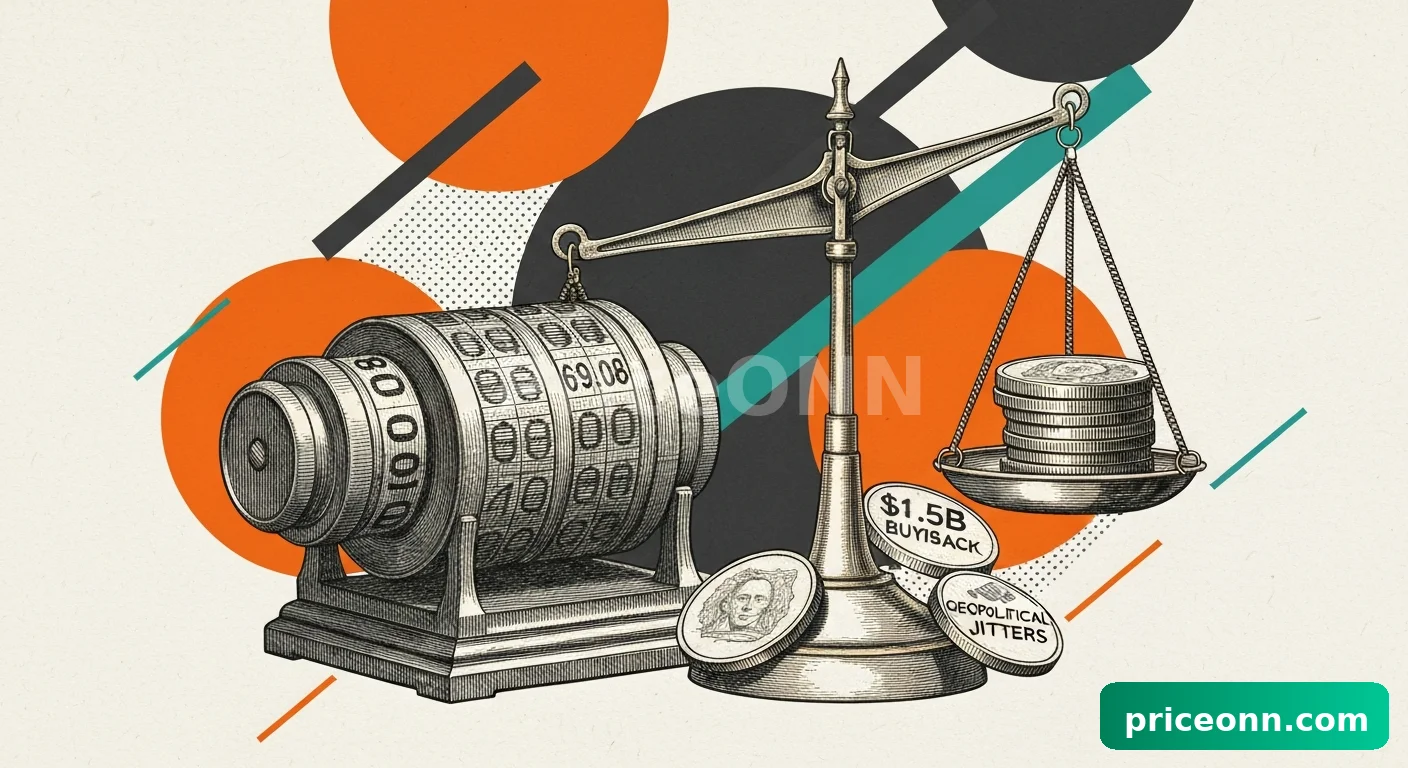

PriceONN