
Morning Star & Evening Star Patterns; Spotting Reversal Signals
Learn how to identify Morning Star and Evening Star candlestick patterns, powerful indicators of potential trend reversals in forex trading.
Imagine you're driving down a long, straight road. You see a sign indicating a sharp turn ahead. That sign gives you time to prepare, adjust your speed, and navigate the curve safely. In forex trading, candlestick patterns like the Morning Star and Evening Star act as similar warning signs, signaling potential trend reversals and giving you time to adjust your strategy.
- Morning Star and Evening Star are candlestick patterns that signal potential trend reversals.
- The Morning Star is a bullish reversal pattern that appears at the bottom of a downtrend.
- The Evening Star is a bearish reversal pattern that appears at the top of an uptrend.
- Understanding these patterns can help you make more informed trading decisions and manage risk effectively.
What are Morning Star and Evening Star Patterns?
The Morning Star and Evening Star are both three-candlestick patterns that suggest a potential reversal of the current trend. The Morning Star signals a possible shift from a downtrend to an uptrend, while the Evening Star indicates a possible move from an uptrend to a downtrend. These patterns are valuable tools for traders looking to identify potential entry and exit points in the market.
Candlestick Pattern: A visual representation of price movements over a specific time period, forming recognizable shapes that traders use to predict future price action.
Think of it like this: imagine a tug-of-war. The Morning Star appears when one team (the bears) has been pulling hard for a while, but suddenly their strength wanes, and a small period of uncertainty appears before the bulls take over. The Evening Star is the opposite – the bulls lose their grip, a moment of indecision occurs, and then the bears seize control.
How the Morning Star Pattern Works
The Morning Star is a bullish reversal pattern that appears at the bottom of a downtrend. It consists of three candlesticks:
- A large bearish (downward) candlestick: This candle continues the existing downtrend. It shows strong selling pressure.
- A small-bodied candlestick: This can be either bullish or bearish, and it represents indecision in the market. It gaps down from the first candlestick, indicating that the selling pressure is weakening. The small body indicates that neither buyers nor sellers are in control.
- A large bullish (upward) candlestick: This candle confirms the reversal. It closes above the midpoint of the first candlestick, signaling that buyers are now in control.
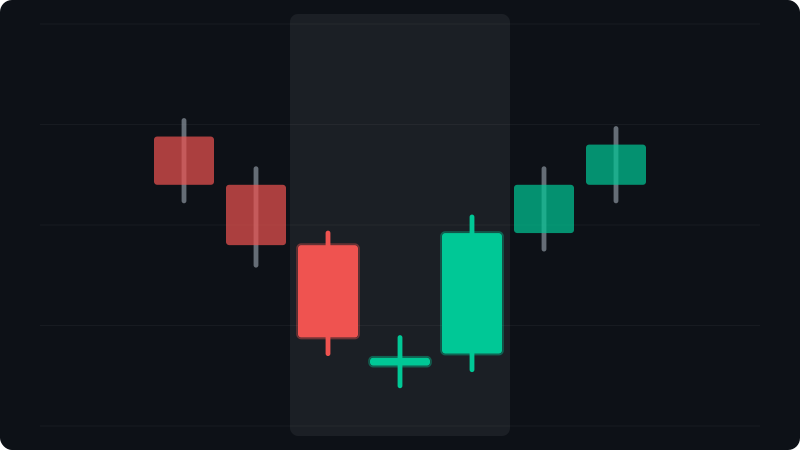
The size and color of the middle candlestick are not as important as its position. What matters is that it represents a period of consolidation and uncertainty before the buyers step in. The larger the bullish candlestick, the stronger the reversal signal.
For example, imagine a stock has been declining for several days. A large red candlestick appears, followed by a small doji (a candlestick with a very small body) that gaps down. The next day, a large green candlestick appears, closing well above the midpoint of the first red candlestick. This would be a Morning Star pattern, suggesting that the stock is likely to reverse its downtrend and start moving higher.
How the Evening Star Pattern Works
The Evening Star is the bearish counterpart to the Morning Star. It appears at the top of an uptrend and signals a potential reversal to a downtrend. It also consists of three candlesticks:
- A large bullish (upward) candlestick: This candle continues the existing uptrend. It shows strong buying pressure.
- A small-bodied candlestick: This can be either bullish or bearish, and it represents indecision in the market. It gaps up from the first candlestick, indicating that the buying pressure is weakening.
- A large bearish (downward) candlestick: This candle confirms the reversal. It closes below the midpoint of the first candlestick, signaling that sellers are now in control.
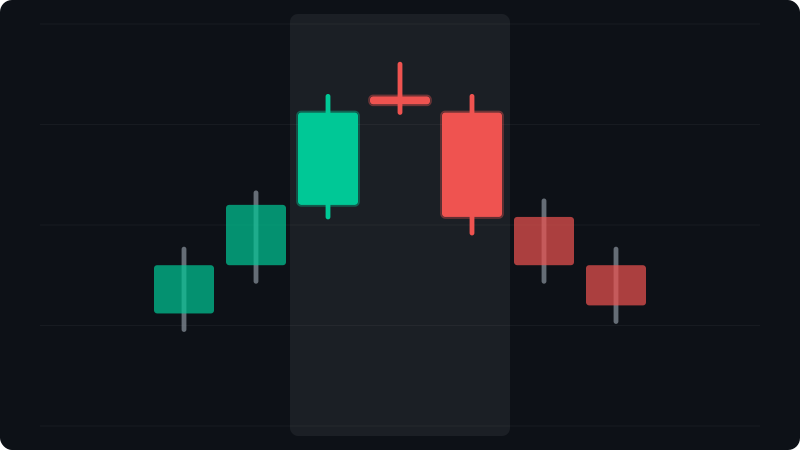
Similar to the Morning Star, the middle candlestick's color isn't crucial. The key is the gap up and the indication of uncertainty. The larger the bearish candlestick, the stronger the reversal signal.
Let's say a currency pair has been rising steadily. A large green candlestick forms, followed by a small spinning top candlestick that gaps up. The next day, a large red candlestick appears, closing well below the midpoint of the first green candlestick. This is an Evening Star pattern, suggesting the currency pair is likely to reverse its uptrend and start moving lower.
Practical Examples of Morning and Evening Star Patterns
Let's look at some hypothetical examples to illustrate how these patterns might appear in a trading scenario.
Example 1: Morning Star in EUR/USD
Imagine you are watching the EUR/USD currency pair. It has been in a downtrend for the past week. Suddenly, you observe the following three candlesticks:
- A large bearish candlestick.
- A small-bodied doji candlestick that gaps down.
- A large bullish candlestick that closes above the midpoint of the first candlestick.
This pattern suggests a Morning Star formation. A trader might interpret this as a signal to enter a long (buy) position, anticipating a reversal of the downtrend. However, it's always wise to confirm with other indicators before making a trade.
Example 2: Evening Star in GBP/JPY
Now, consider the GBP/JPY currency pair, which has been in an uptrend. You notice these three candlesticks forming:
- A large bullish candlestick.
- A small-bodied spinning top candlestick that gaps up.
- A large bearish candlestick that closes below the midpoint of the first candlestick.
This pattern indicates an Evening Star formation. A trader might see this as a signal to enter a short (sell) position, expecting a reversal of the uptrend. Again, confirmation from other indicators is crucial.
Common Mistakes and Misconceptions
One common mistake is relying solely on candlestick patterns without considering other technical indicators or fundamental analysis. Candlestick patterns are best used in conjunction with other tools to increase the probability of a successful trade.
Treating candlestick patterns as foolproof signals. They are indicators, not guarantees. Always confirm with other analysis.
Another misconception is that all Morning Star and Evening Star patterns are created equal. The strength of the signal depends on factors such as the size of the candlesticks, the volume of trading, and the overall market context.
For instance, a Morning Star pattern that forms with high trading volume and a large bullish candlestick is generally considered a stronger signal than one that forms with low volume and a small bullish candlestick.
Practical Tips for Trading with Morning and Evening Stars
Here are some practical tips to enhance your trading strategy when using Morning Star and Evening Star patterns:
- Confirm with other indicators: Use indicators like RSI, MACD, or Fibonacci retracement levels to confirm the potential reversal.
- Consider the overall trend: Look at the bigger picture. Is the pattern forming in line with the overall trend, or is it a counter-trend signal?
- Manage your risk: Always use stop-loss orders to limit your potential losses. Place your stop-loss below the low of the Morning Star pattern or above the high of the Evening Star pattern.
- Practice on a demo account: Before trading with real money, practice identifying and trading these patterns on a demo account to gain experience and confidence.
Why These Patterns Matter for Your Trading Journey
Understanding candlestick patterns like the Morning Star and Evening Star is a crucial step in becoming a successful forex trader. These patterns provide valuable insights into market sentiment and potential trend reversals, allowing you to make more informed trading decisions and manage your risk effectively.
By mastering these patterns and incorporating them into your trading strategy, you can improve your ability to identify profitable trading opportunities and increase your chances of success in the forex market. Remember, continuous learning and practice are key to achieving your trading goals.
Correlation Analysis
Understanding how the Morning Star and Evening Star patterns correlate with other market factors can significantly enhance your trading strategy. Here's a look at how these patterns interact with the DXY (US Dollar Index), bond yields, equities, and oil:
DXY (US Dollar Index): The DXY measures the value of the U.S. dollar against a basket of six major currencies. A Morning Star pattern in a currency pair like EUR/USD might be confirmed by a weakening DXY, indicating broad dollar weakness. Conversely, an Evening Star pattern in EUR/USD could coincide with a strengthening DXY.
Bond Yields: Changes in bond yields can reflect investor sentiment and economic expectations. For example, a Morning Star pattern in a currency pair might align with falling bond yields, suggesting a flight to safety and increased demand for bonds. An Evening Star could coincide with rising yields, indicating increased risk appetite.
Equities: Equity markets often move in tandem with currency markets. A Morning Star pattern in a currency pair could be supported by a bullish trend in equity markets, indicating overall positive sentiment. An Evening Star might align with a bearish trend in equities.
Oil: As a commodity, oil prices can influence currency values, particularly for commodity-linked currencies. A Morning Star pattern in a currency pair like CAD/USD (Canadian Dollar vs. US Dollar) might be confirmed by rising oil prices, boosting the Canadian dollar. An Evening Star could coincide with falling oil prices.
Frequently Asked Questions
How reliable are Morning Star and Evening Star patterns?
They are not 100% reliable. They are indicators that suggest potential reversals, but they should always be used in conjunction with other technical analysis tools and risk management strategies.
Can these patterns be used on all timeframes?
Yes, but their reliability can vary depending on the timeframe. Longer timeframes (e.g., daily, weekly) tend to produce more reliable signals than shorter timeframes (e.g., 5-minute, 15-minute).
What is the best way to confirm a Morning Star or Evening Star pattern?
Look for confirmation from other indicators, such as RSI, MACD, or Fibonacci retracement levels. Also, consider the overall trend and market context.
What should I do if I see a potential Morning Star or Evening Star pattern?
First, confirm the pattern with other indicators. Then, develop a trading plan that includes entry and exit points, as well as a stop-loss order to manage your risk.