
Unlock Forex Insights; A Beginner's Guide to Candlestick Charts
Have you ever wondered how to decipher those colorful bars on a forex chart? Learn how Japanese candlestick charts reveal market sentiment and potential price movements.
Have you ever looked at a forex chart and felt overwhelmed by the sea of red and green bars? These aren't just random lines; they're Japanese candlestick charts, a powerful tool for understanding market sentiment and predicting potential price movements. Candlesticks offer a visual representation of price action, providing traders with valuable insights into buying and selling pressure. In this guide, we'll demystify candlestick charts, explaining how they work, what they reveal, and how you can use them to make more informed trading decisions. Think of it as learning a new language – the language of the markets.
- Understand the basic components of a candlestick: body, wicks, open, close, high, and low.
- Learn how to interpret different candlestick patterns to gauge market sentiment.
- Discover how candlestick charts can be used in conjunction with other technical analysis tools.
- Appreciate the historical context and evolution of candlestick charting techniques.
What is a Candlestick Chart?
A candlestick chart is a type of financial chart that displays the high, low, open, and closing prices for a security or currency pair during a specific period. Unlike a simple line chart that only shows the closing price, candlestick charts provide a more comprehensive view of price action, revealing the intensity of buying and selling pressure. They originated in 18th-century Japan, used by rice traders to track prices and market sentiment. Steve Nison introduced them to the Western world in his book "Japanese Candlestick Charting Techniques". The history of candlesticks provides a fascinating glimpse into how traders have sought to understand market psychology for centuries.
Candlestick: A visual representation of price movement over a specific time period, displaying open, close, high, and low prices.
Imagine you're watching a tug-of-war. The candlestick body represents the main struggle between buyers and sellers during the period. The wicks (or shadows) show how far the price stretched in either direction before the period ended. A long body indicates strong buying or selling pressure, while short wicks suggest less volatility during the period.
How Does a Candlestick Work?
Each candlestick represents price movement over a specific timeframe, such as one minute, one hour, one day, or one week. The candlestick's shape and color provide insights into the price action during that period. Understanding the components of a candlestick is fundamental to interpreting the chart.
- The Body: The real body represents the range between the opening and closing prices. If the closing price is higher than the opening price, the body is typically colored green (or white). This indicates a bullish (buying) period. If the closing price is lower than the opening price, the body is colored red (or black), indicating a bearish (selling) period.
- The Wicks (Shadows): The wicks, also known as shadows or tails, extend above and below the body. The upper wick represents the highest price reached during the period, while the lower wick represents the lowest price. Long wicks indicate significant price volatility during the period.
- Open and Close Prices: The open price is the price at which the period began, and the close price is the price at which it ended. These prices define the endpoints of the candlestick body.
- High and Low Prices: The high price is the highest price reached during the period, and the low price is the lowest price reached. These prices define the endpoints of the candlestick wicks.
Think of a candlestick as a story of the battle between buyers and sellers. The body tells you who won the main part of the fight (bulls or bears), and the wicks show you how intense the struggle was at different points during the period. A candlestick with a long body and short wicks suggests a decisive victory for either the buyers or sellers, while a candlestick with a short body and long wicks indicates a more indecisive battle.
Interpreting Candlestick Patterns
Candlestick patterns are formations of one or more candlesticks that suggest potential future price movements. These patterns are based on historical price action and market psychology. Recognizing these patterns can give traders an edge in anticipating market trends.
- Doji: A Doji occurs when the opening and closing prices are virtually the same. This results in a candlestick with a very small or non-existent body. Dojis indicate indecision in the market and can signal a potential trend reversal.
- Hammer and Hanging Man: These patterns have small bodies and long lower wicks. A Hammer occurs at the end of a downtrend and suggests a potential bullish reversal. A Hanging Man occurs at the end of an uptrend and suggests a potential bearish reversal. The key difference is the preceding trend.
- Engulfing Patterns: A bullish engulfing pattern occurs when a small bearish (red) candlestick is followed by a larger bullish (green) candlestick that completely engulfs the previous candlestick's body. This suggests strong buying pressure and a potential uptrend. A bearish engulfing pattern is the opposite, with a small bullish candlestick followed by a larger bearish candlestick that engulfs the previous body, signaling selling pressure and a potential downtrend.
- Morning Star and Evening Star: These are three-candlestick patterns that signal potential trend reversals. A Morning Star occurs at the end of a downtrend and consists of a large bearish candlestick, followed by a small-bodied candlestick (often a Doji), and then a large bullish candlestick. An Evening Star occurs at the end of an uptrend and consists of a large bullish candlestick, followed by a small-bodied candlestick, and then a large bearish candlestick.
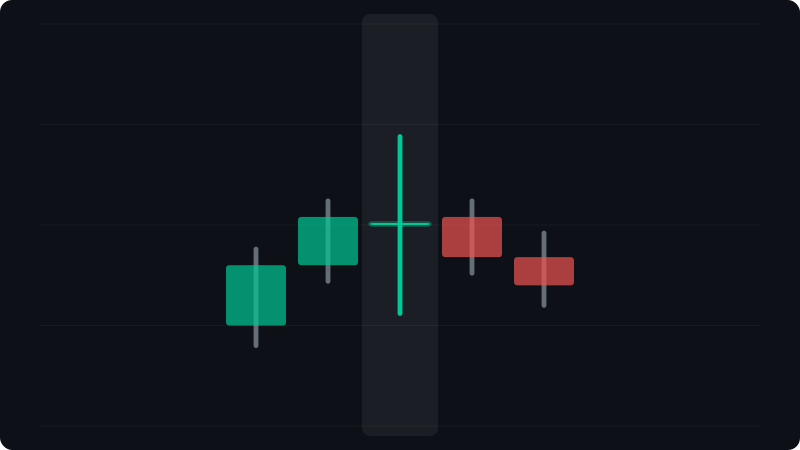
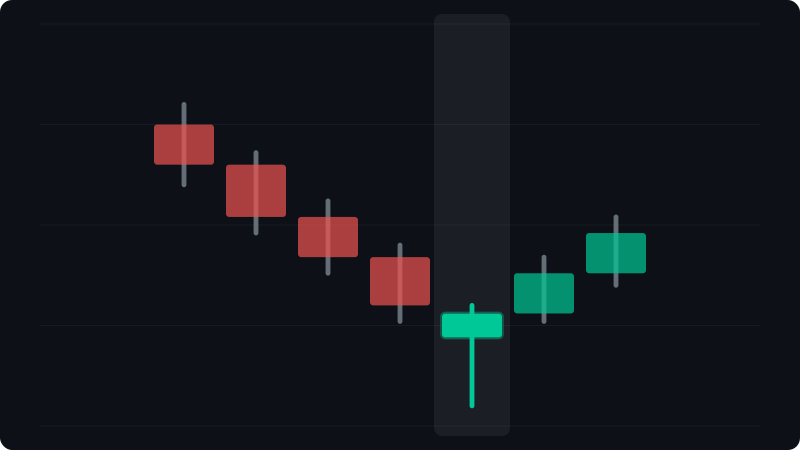
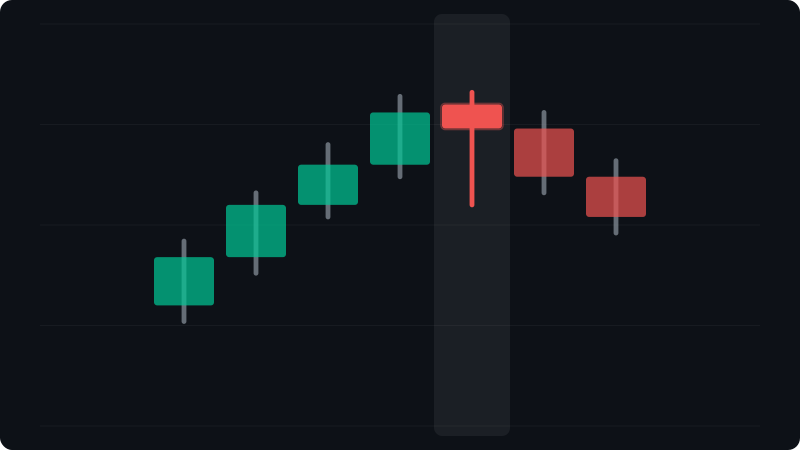
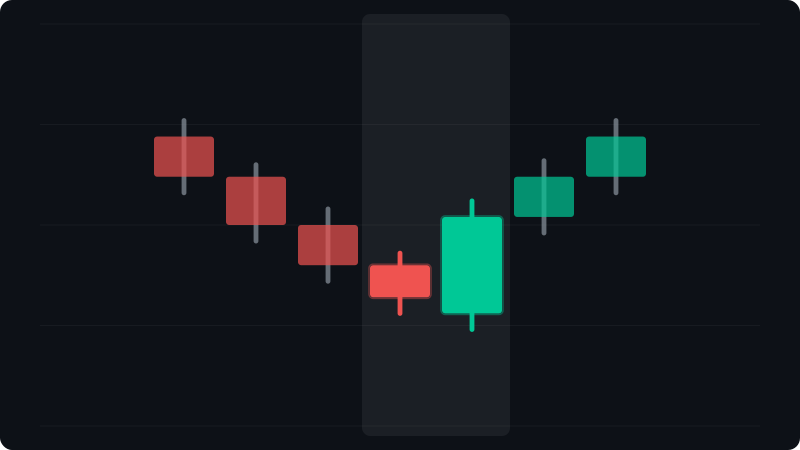
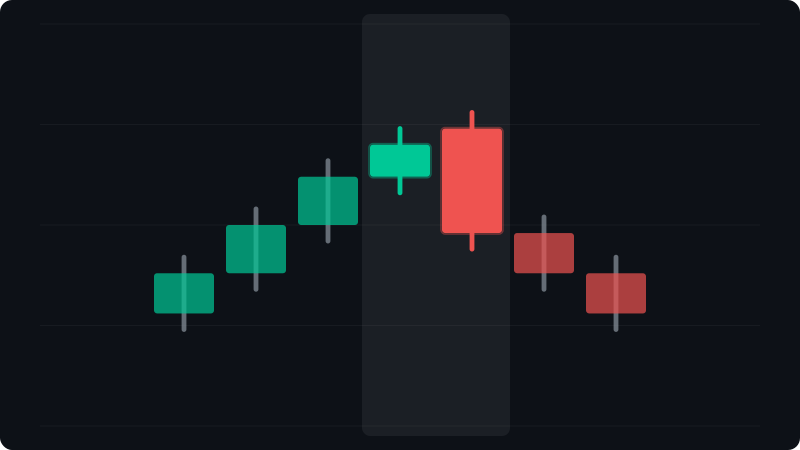
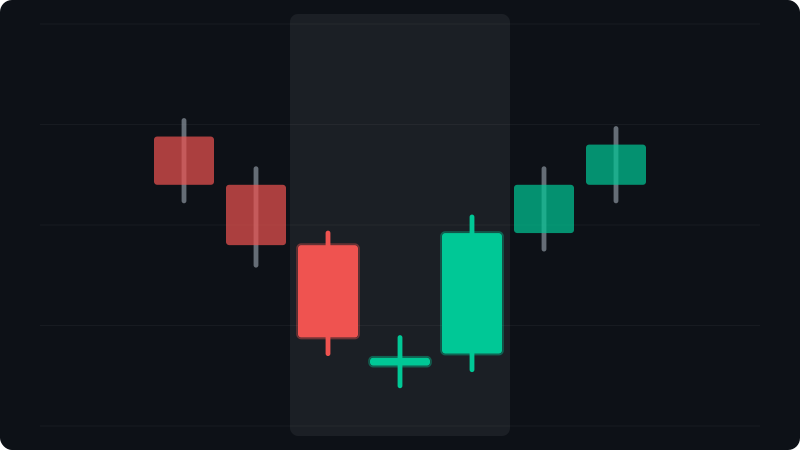
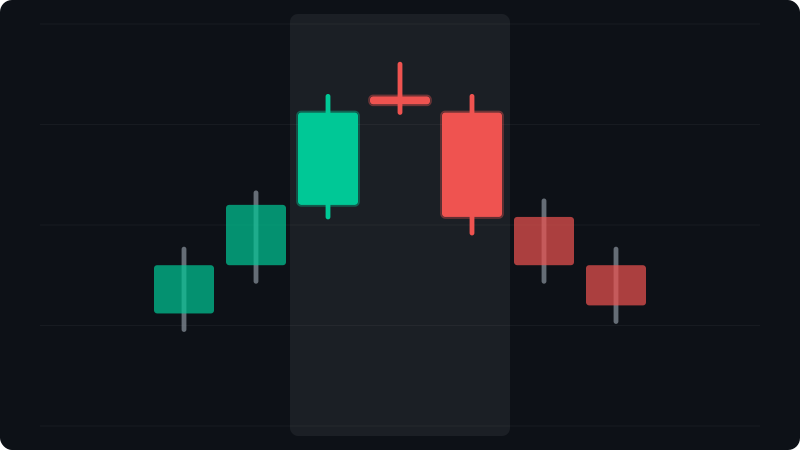
These are just a few examples of the many candlestick patterns that traders use. Each pattern has its own unique characteristics and implications for future price movement. It's important to remember that no pattern is foolproof, and it's always wise to confirm candlestick signals with other technical indicators and analysis techniques.
Practical Examples
Let's walk through a couple of hypothetical examples to illustrate how candlestick charts can be used in trading. Remember, these are simplified scenarios for educational purposes and don't constitute trading advice.
Example 1: Spotting a Bullish Engulfing Pattern
Imagine you're watching the EUR/USD currency pair on an hourly chart. You notice a small red candlestick, followed by a much larger green candlestick that completely engulfs the red candlestick's body. This is a bullish engulfing pattern. Based on this pattern, you might anticipate a potential uptrend. To confirm this signal, you could look at other indicators, such as the Relative Strength Index (RSI) or Moving Averages. If the RSI is below 30 (oversold) and the price is above a key moving average, it further strengthens the bullish signal. Scalpers might use this pattern on a 5-minute chart for quick profits. Swing traders would look for this pattern on a daily chart to capture a larger move. Long-term investors might use it on a weekly chart to identify potential long-term buying opportunities.
Example 2: Recognizing a Doji
Suppose you're analyzing the GBP/JPY currency pair on a daily chart. You observe a Doji candlestick, where the opening and closing prices are nearly identical. This indicates indecision in the market. If this Doji occurs after a prolonged uptrend, it could signal a potential trend reversal to the downside. If it occurs after a downtrend, it could signal a potential reversal to the upside. To confirm this signal, you could look for a break below the low of the Doji (for a bearish reversal) or a break above the high of the Doji (for a bullish reversal). Also, consider the broader market context. For example, if the DXY (Dollar Index) is strengthening, it might put downward pressure on GBP/JPY, increasing the likelihood of a bearish reversal. Conversely, if bond yields are falling, it could support a bullish reversal. Equity market performance and oil prices can also influence currency pairs, so it's important to consider these correlations.
Common Mistakes and Misconceptions
Beginners often make mistakes when interpreting candlestick charts. Here are some common pitfalls to avoid:
Relying solely on candlestick patterns without considering other technical indicators or fundamental analysis. Candlestick patterns are just one piece of the puzzle. Always confirm signals with other tools and analysis techniques.
Ignoring the timeframe. A candlestick pattern on a 5-minute chart might not be as significant as the same pattern on a daily or weekly chart. Consider the timeframe relevant to your trading style.
Over-analyzing every candlestick. Not every candlestick is significant. Focus on patterns that occur at key support and resistance levels or in conjunction with other technical signals.
A common misconception is that candlestick patterns are foolproof predictors of future price movement. In reality, they are simply indicators of potential price direction. It's crucial to manage risk and use stop-loss orders to protect your capital.
Practical Tips for Using Candlestick Charts
- Start with the Basics: Master the fundamentals of candlestick construction and the most common patterns before moving on to more complex formations.
- Practice Regularly: The more you practice identifying and interpreting candlestick patterns, the better you'll become at recognizing them in real-time.
- Use Multiple Timeframes: Analyze candlestick charts on multiple timeframes to get a comprehensive view of price action.
- Combine with Other Tools: Use candlestick charts in conjunction with other technical indicators, such as moving averages, trendlines, and oscillators, to confirm signals.
- Manage Risk: Always use stop-loss orders to protect your capital and manage risk effectively.
Frequently Asked Questions
What is the difference between a candlestick chart and a bar chart?
Both candlestick and bar charts display the high, low, open, and close prices for a given period. However, candlestick charts use color to visually represent the direction of price movement, making it easier to quickly identify bullish and bearish trends. Bar charts typically use vertical lines with small ticks to indicate open and close prices.
Are candlestick patterns always reliable?
No, candlestick patterns are not always reliable. They are simply indicators of potential price direction and should be used in conjunction with other technical indicators and analysis techniques. It's important to manage risk and use stop-loss orders to protect your capital.
How can I practice using candlestick charts?
You can practice using candlestick charts by analyzing historical price data on a demo trading account. This allows you to identify and interpret candlestick patterns without risking real money. You can also use trading simulators or charting software to test your knowledge and skills.
What timeframe should I use for candlestick analysis?
The appropriate timeframe for candlestick analysis depends on your trading style. Scalpers might use 1-minute or 5-minute charts, while day traders might use hourly charts. Swing traders typically use daily or weekly charts, and long-term investors might use monthly charts.
Learning to read Japanese candlestick charts is a valuable skill for any forex trader. By understanding the components of a candlestick and recognizing common patterns, you can gain insights into market sentiment and potential price movements. Remember to use candlestick charts in conjunction with other technical indicators and analysis techniques, and always manage risk effectively. With practice and patience, you can master the art of candlestick charting and improve your trading performance. Happy trading!