Can the Euro Rally as Inflation Cools and China's Economy Rebounds?

The Euro found itself at a crucial juncture as contrasting economic data emerged from two major global economic blocs. In the Eurozone, inflation cooled more than anticipated in March, while across the globe, China's manufacturing sector signaled a robust return to growth. These developments create a dynamic environment for currency markets, particularly for the single currency.
Market Context
Eurozone inflation, as measured by the Harmonized Index of Consumer Prices (HICP), registered a year-on-year increase of 2.5% in March. This figure was notably below the 2.7% forecast by market analysts and represented an acceleration from February's 1.9%. While an acceleration is present, the surprise came from the moderation relative to expectations, suggesting that price pressures might be less persistent than feared.
Meanwhile, in a significant turnaround, China's National Bureau of Statistics (NBS) reported that its Manufacturing Purchasing Managers' Index (PMI) climbed to 50.4 in March. This reading marks a decisive return to expansion territory, a stark contrast to February's contractionary figure of 49. This rebound indicates a pickup in factory activity and suggests renewed economic momentum in the world's second-largest economy.
Analysis & Drivers
The divergence in economic signals presents a mixed bag for market participants. The softer-than-expected inflation in the Eurozone could provide the European Central Bank (ECB) with more room to consider monetary policy adjustments, potentially easing pressure for aggressive rate hikes. While the ECB's target is around 2% inflation, persistent readings above this level have historically prompted tightening. The March figure, though above target, suggests the trend might be shifting downwards relative to forecasts.
On the other hand, China's PMI expansion is a critical development. A strengthening manufacturing sector typically translates to increased demand for raw materials. This has direct implications for commodity-linked currencies such as the Australian Dollar (AUD), which often rallies on positive Chinese economic news. Furthermore, robust Chinese industrial activity can boost global trade sentiment, potentially benefiting export-oriented economies and influencing broader market risk appetite.
Trader Implications
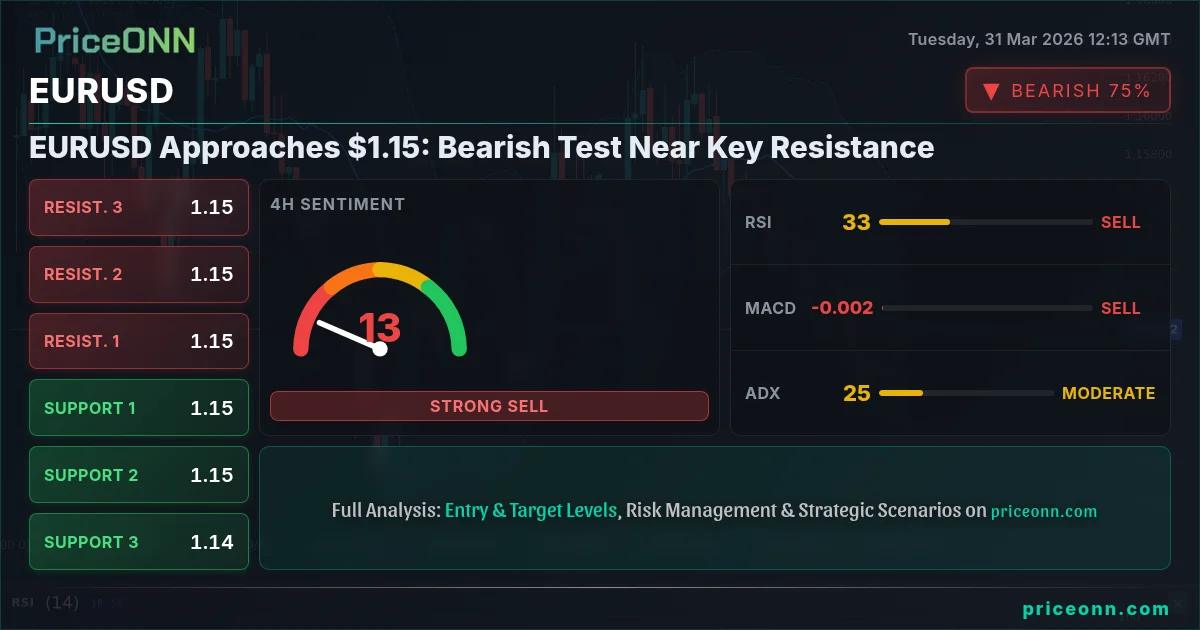
For traders, the Eurozone's inflation data may offer a supportive backdrop for the Euro, especially if it dampens expectations for immediate aggressive ECB tightening. Key currency pairs to watch include EUR/USD, where a sustained move above 1.0850 could signal further upside potential if market sentiment shifts towards the Euro. Traders should monitor upcoming ECB statements for any commentary on the inflation outlook and its policy implications.
The positive news from China could lead to increased volatility in commodity markets and related currencies. The Australian Dollar may see upward pressure, with AUD/USD potentially testing resistance levels around 0.6600. Traders should also be aware of the potential for increased demand for industrial metals, which could impact prices for commodities like copper and iron ore. Monitoring Chinese trade data and commodity futures will be crucial for assessing the full impact.
Outlook
The coming weeks will be critical in determining whether the Eurozone's disinflationary trend continues and if China's manufacturing revival has sustainable momentum. Traders will be closely watching for any signs of further shifts in central bank policy expectations and the sustained impact of Chinese demand on global commodity prices. The interplay between these factors will likely shape currency and commodity market direction in the short to medium term.
Frequently Asked Questions
What is the significance of the Eurozone's March inflation rate falling to 2.5%?
The 2.5% annual inflation rate in March, below the 2.7% expectation, suggests moderating price pressures in the Eurozone. This could influence the European Central Bank's monetary policy decisions, potentially reducing the urgency for aggressive interest rate hikes.
How does China's PMI rebound to 50.4 impact commodity markets?
A PMI above 50 indicates economic expansion. China's return to expansion at 50.4 signals increased industrial activity, which typically boosts demand for raw materials like iron ore and copper, potentially driving up their prices.
What should traders watch for in the Euro and Australian Dollar following these economic reports?
Traders should monitor EUR/USD for potential moves above 1.0850 based on easing inflation expectations. For the AUD, watch for continued strength if commodity prices rise due to Chinese demand, with AUD/USD potentially testing 0.6600.
Track markets in real-time
Empower your investment decisions with AI-powered analysis, technical indicators and real-time price data.
Join Our Telegram Channel
Get breaking market news, AI analysis and trading signals delivered instantly to your Telegram.
Join Channel