
Can Vision Chain Bridge Traditional Finance and Crypto?

Vienna-based crypto broker Bitpanda has unveiled Vision Chain, an Ethereum layer-2 solution designed to accelerate the tokenization of traditional assets for European financial institutions. This strategic move positions Bitpanda to capitalize on the burgeoning market for real-world assets (RWAs) moving onto the blockchain, leveraging existing banking partnerships and a focus on regulatory compliance.
Market Context
Vision Chain is built upon the Optimism OP Stack and integrates institutional-grade custody and compliance tools. The platform is specifically engineered to support the issuance and management of tokenized assets such as stocks, bonds, and funds, ensuring compatibility with the European Union's Markets in Crypto Assets Regulation (MiCA) and the Markets in Financial Instruments Directive (MiFID II). Bitpanda argues that by offering a ready-made, compliant infrastructure, it can simplify the transition to on-chain operations for regulated entities, a process that would otherwise require significant investment in building proprietary systems. This development arrives as the broader market for asset tokenization is experiencing exponential growth. Market data indicates the asset tokenization market was valued at approximately $2.08 trillion in 2025 and is forecast to expand to $13.55 trillion by 2030, reflecting a compound annual growth rate of roughly 45%.
Analysis & Drivers
The primary driver behind Vision Chain's development is the increasing demand from traditional finance for blockchain-based solutions that offer efficiency, transparency, and broader market access. Regulatory clarity, particularly with frameworks like MiCA and MiFID II, is a critical enabler for institutional adoption. Bitpanda's platform aims to directly address these needs, positioning itself as a key facilitator for banks and fintechs looking to tokenize RWAs. The company's existing relationships with banks in Germany and Austria provide a significant competitive advantage, offering a direct pipeline to potential clients. Furthermore, the broader macro trend of digitizing financial assets, driven by technological advancements and the pursuit of yield in a complex economic landscape, underpins the massive growth projections for the tokenization market. Vision Chain enters a competitive landscape that includes other established financial players and crypto-native firms exploring similar tokenization initiatives.
Trader Implications
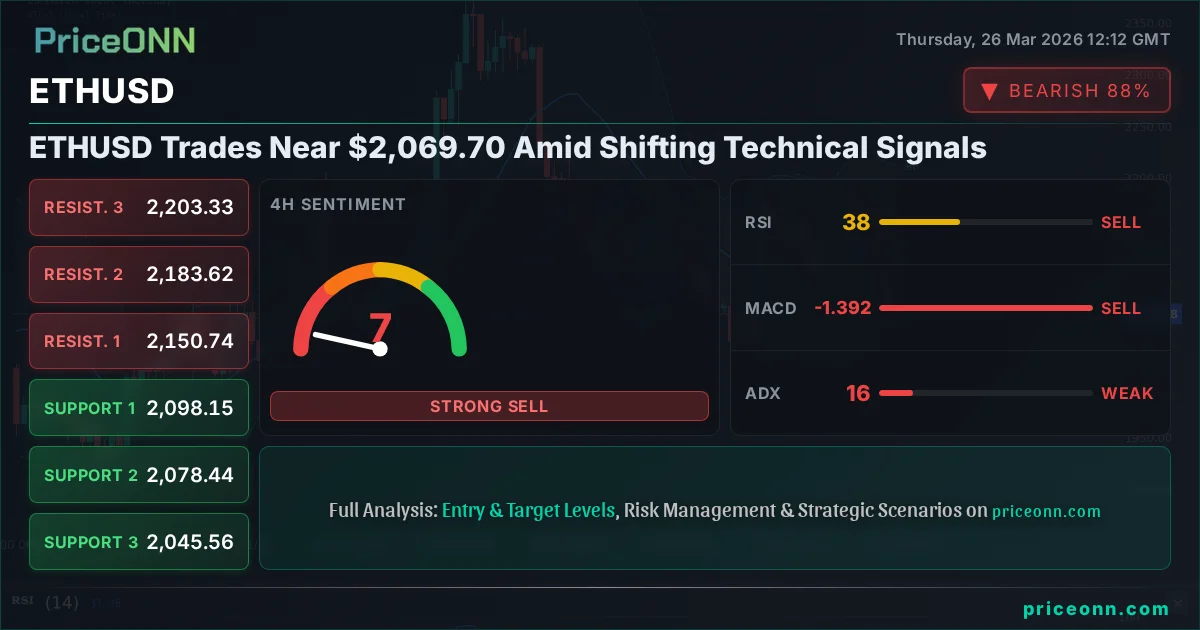
For traders and investors, the emergence of platforms like Vision Chain signifies a potential expansion of investable assets and a shift towards more liquid and accessible markets for traditionally illiquid assets. Key levels to watch will include the adoption rate of Vision Chain by major European financial institutions and the volume of RWAs tokenized on the platform. Traders should monitor developments in regulatory interpretations of tokenized assets under MiCA and MiFID II, as these will heavily influence market confidence and participation. The success of Vision Chain could lead to increased trading activity in tokenized securities, potentially creating new arbitrage opportunities and liquidity pools. The underlying ETH price action will also remain a critical factor, given Vision Chain's reliance on Ethereum's layer-2 infrastructure. Traders should consider the implications of increased institutional on-chain activity on overall market sentiment and volatility.
Outlook
The success of Bitpanda's Vision Chain will hinge on its ability to navigate complex regulatory environments and demonstrate tangible benefits to traditional financial players. If it can effectively onboard institutions and facilitate significant RWA tokenization, it could become a pivotal player in bridging the gap between traditional finance and the digital asset ecosystem. The projected market growth for tokenized assets suggests a strong tailwind, but competition and the pace of regulatory evolution will be crucial factors. Investors should watch for partnerships and the volume of assets tokenized as key indicators of Vision Chain's traction in the coming years.
Frequently Asked Questions
What is Vision Chain's primary goal?
Vision Chain's primary goal is to enable European banks and fintechs to issue and manage tokenized traditional assets, such as stocks and bonds, on a compliant Ethereum layer-2 solution. It aims to simplify the process of bringing real-world assets on-chain under regulations like MiCA and MiFID II.
What is the projected market size for asset tokenization?
Market data projects the asset tokenization market to grow from approximately $2.08 trillion in 2025 to $13.55 trillion by 2030. This represents a significant compound annual growth rate of about 45%.
What are the key implications for traders regarding Vision Chain?
Traders should watch for increased liquidity and new trading opportunities in tokenized assets. Key factors to monitor include institutional adoption rates, regulatory clarity on tokenized securities, and the overall impact on market sentiment and volatility within the digital asset space.
Track markets in real-time
Empower your investment decisions with AI-powered analysis, technical indicators and real-time price data.
Join Our Telegram Channel
Get breaking market news, AI analysis and trading signals delivered instantly to your Telegram.
Join Channel


PriceONN