China's NBS Manufacturing and Non-Manufacturing PMIs return to expansion in March

March Sees China's Industrial Engine Roar Back to Life
A pivotal economic gauge for the world's second-largest economy has just signaled a much-needed turnaround. The National Bureau of Statistics (NBS) reported on Tuesday that China's Manufacturing Purchasing Managers' Index (PMI) climbed to 50.4 in March. This marks a decisive return to expansion after a contractionary reading of 49 in February, a move that has immediate implications for global trade flows and currency markets.
This upward swing suggests that the industrial sector is regaining momentum. The PMI, a survey of purchasing managers across numerous industries, acts as a forward-looking indicator of economic health. A reading above 50 indicates expansion, while a figure below 50 signifies contraction. The rebound to 50.4 is not just a marginal improvement; it's a clear indication that factory activity is picking up pace, potentially easing concerns about a prolonged economic slowdown.
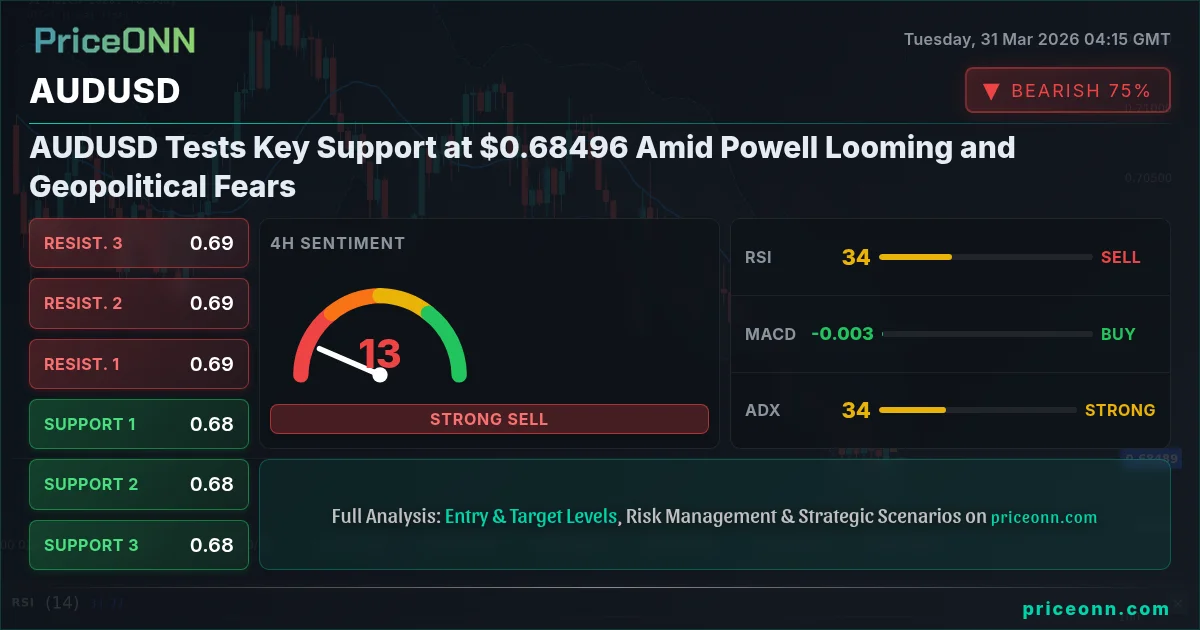
Digging deeper into the NBS report, we see that new orders, a key component of the PMI, also showed signs of life. This suggests that both domestic and international demand for Chinese goods are strengthening. Furthermore, production levels appear to be rising in response to this increased demand, pointing towards a more robust manufacturing output.
What Smart Money Is Watching
This resurgence in Chinese manufacturing activity carries significant weight for the Australian Dollar (AUD). As Australia's largest trading partner, any improvement in China's economic health directly translates to increased demand for Australian exports, particularly raw materials like iron ore. The AUD, often considered a proxy for Chinese growth due to this strong trade linkage, tends to rally when China's economic indicators flash positive.
Specifically, iron ore prices are a critical driver for the AUD. With China being the primary destination for Australia's massive iron ore exports, a revitalized Chinese industrial sector implies a greater need for this key commodity. Pricing data confirms that higher iron ore prices generally correlate with a stronger AUD, as it boosts Australia's export revenues and improves its trade balance. The latest NBS figures suggest a potential tailwind for iron ore prices in the near term.
Beyond commodities, this development could also influence broader market sentiment. A stronger Chinese economy often boosts global risk appetite, potentially leading to a 'risk-on' environment where investors are more willing to invest in riskier assets like the Australian Dollar and less inclined to seek safe havens. Conversely, a faltering Chinese economy can trigger 'risk-off' sentiment, pressuring the AUD.
The Reserve Bank of Australia (RBA) will undoubtedly be monitoring these global developments closely. While the RBA's primary mandate is domestic inflation control, aiming for a 2-3% target, it cannot ignore external economic forces. Shifts in global demand, influenced by major economies like China, can impact Australia's inflation trajectory and necessitate adjustments to interest rate policy. Higher interest rates generally support the AUD, while lower rates can weaken it. The interplay between China's economic performance and the RBA's monetary policy decisions will be crucial for AUD traders to watch.
Traders should be looking for sustained positive momentum in Chinese manufacturing data and its subsequent impact on commodity prices. A continued upward trend in the PMI, coupled with robust demand for iron ore, could provide a solid foundation for AUD appreciation. Conversely, any signs of stalling growth or renewed contraction in China would present a significant risk to the Australian Dollar's outlook.
Track markets in real-time
Empower your investment decisions with AI-powered analysis, technical indicators and real-time price data.
Join Our Telegram Channel
Get breaking market news, AI analysis and trading signals delivered instantly to your Telegram.
Join Channel