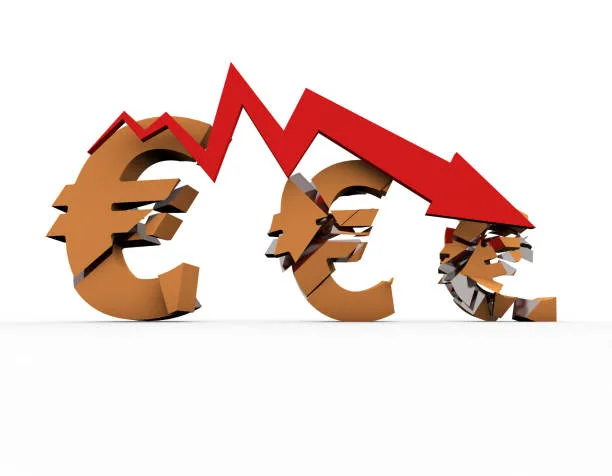
Euro and Sterling Fall Despite Markets Flipping Toward ECB and BoE Hikes
Market sentiment showed tentative signs of stabilization after the sharp panic seen at the open of the day. Oil prices eased from their initial spike following reports that G7 finance ministers would discuss the potential release of emergency oil reserves. Yet the relief remains fragile, with WTI crude still hovering above the psychologically important 100 level.
Meanwhile, beyond the immediate oil market impact, the energy shock is triggering a dramatic shift in the global interest rate narrative. Only weeks ago, markets were focused on disinflation and the prospect of continued policy easing across major economies. The surge in oil prices has abruptly flipped that narrative toward rising stagflation concerns. This shift is particularly significant for the Eurozone and the UK, which are heavily dependent on imported energy.
For the ECB, market expectations have changed dramatically. As recently as February, investors largely expected the central bank to hold rates steady for an extended period following its tightening cycle, with the next move uncertain between a cut or a hike. Now the outlook has shifted sharply. Interest rate swaps are pricing in two full 25 basis point hikes by the end of 2026. This represents a major reversal from just a week ago, when markets were still discussing the possibility of another rate cut.
The repricing has been even more dramatic for the BoE. Markets previously expected a rate cut in March to support the struggling economy. That narrative has now flipped, with traders assigning around a 70 percent probability that the next move will instead be a rate hike by the end of the year.
Both central banks now face a difficult dilemma. Cutting rates to support economic activity risks allowing energy-driven inflation to accelerate, echoing the inflation shock experienced in 2022. Yet raising rates could further weaken already fragile economies. After all, it seems that markets currently believe the ECB and BoE will ultimately prioritize inflation credibility.
This creates a paradox for currency markets. Normally, expectations of tighter monetary policy support a currency by raising yields and attracting capital inflows. Yet both Euro and Sterling have struggled to gain support despite the increasingly hawkish repricing of interest rates.
The reason lies in how investors interpret the nature of these potential rate hikes. In Europe and the UK, higher rates are not viewed as a sign of economic strength but rather as a defensive move to contain inflation triggered by an external energy shock. In other words, markets see these as “bad hikes.” The ECB and BoE may be forced to tighten policy not because growth is strong, but because inflation is rising again due to higher energy prices.
Such hikes risk deepening an already fragile economic environment. Investors fear that tighter monetary policy could push both economies closer to recession, which reduces the attractiveness of holding Euro- or Sterling-denominated assets.
At the same time, the surge in energy prices reinforces the structural weakness of the Eurozone and the UK as major energy importers. Higher import bills effectively transfer income out of the region, worsening trade balances and putting additional pressure on both currencies.
On the other hand, currencies linked to energy-exporting economies-such as Canadian and Australian Dollars-are benefiting from the same energy shock that is hurting Europe and the UK. For Australia and Canada, the Iran war is a “wealth transfer” from the rest of the world to them. As energy prices rise, their national income increases. Meanwhile, Dollar continues to attract safe-haven flows as investors seek stability during a period of war.
As for the day so far, Loonie is currently the strongest, followed by Kiwi, and then Dollar. Sterling is the worst, followed by Euro, and then Yen. Swiss Franc and Loonie are positioning in the middle.
In Europe, at the time of writing, FTSE is down -1.07%. DAX is down -1.34%. CAC is down -1.86%. UK 10-year yield is up 0.169 at 4.731. Germany 10-year yield is up 0.045 at 2.907. Earlier in Asia, Nikkei fell -5.20%. Hong Kong HSI fell -1.35%. China Shanghai SSE fell -0.67%. Singapore Strait Times fell -1.89%. Japan 10-year JGB yield rose 0.02 to 2.186.
Eurozone Sentix turns negative at -3.1 amid oil surge and war
Eurozone investor sentiment deteriorated sharply in March as the escalating Middle East conflict and the surge in energy prices rattled market confidence. The Sentix Investor Confidence index fell from 4.2 to -3.1, below expectations of -1.1, marking a sudden reversal in sentiment after several months of gradual improvement.
The deterioration was visible across both current and forward-looking components. The Current Situation Index declined from -6.8 to -9.5, reflecting a weakening assessment of the present economic environment. More striking was the collapse in expectations, with the Expectations Index plunging from 15.8 to 3.5, signaling that investors have rapidly downgraded their outlook for the months ahead.
According to Sentix, the survey offers an early snapshot of the economic impact following the outbreak of the Iran war. Attacks on energy infrastructure and disruptions to shipping in the Persian Gulf have driven a sharp surge in oil prices, which in turn is weighing heavily on investor sentiment. The decline in expectations is particularly notable as it casts doubt on the Eurozone’s tentative economic recovery seen in recent months.
Rising energy costs are also reigniting inflation concerns. Sentix noted that its inflation theme barometer plunged from -7.5 to -35, indicating a sharp rise in inflation fears driven largely by turmoil in energy markets. This shift could complicate the outlook for monetary policy, as renewed inflation pressures may limit the ECB’s ability to provide further support to financial markets and the broader economy.
Japan wage momentum builds as real earnings rise first time in 13 months
Japan’s wage data delivered an encouraging signal for the BoJ at the start of the year. Real wages rose 1.4% yoy in January, rebounding from December’s -0.1% contraction and marking the first increase in 13 months. The improvement reflects a combination of stronger nominal pay and easing consumer price pressures, suggesting the prolonged squeeze on household purchasing power may finally be easing.
Nominal wage growth was robust. Total cash earnings rose 3.0% yoy, beating expectations of 2.5% and marking the fastest pace since July. Regular pay, or base salary, also climbed 3.0%, the strongest increase since October 1992. Overtime earnings rose 3.3%, the highest level in roughly three years, while special payments-largely one-off bonuses-advanced 3.8%.
The wage gains were sufficient to outpace the consumer inflation rate used by the labor ministry to calculate real wages, which slowed to 1.7% yoy in January. That was the weakest price increase since March 2022, helped by government fuel subsidies and fewer food price hikes.
Momentum in wage negotiations also remains strong. Japan’s largest labor union federation, Rengo, said last week that its member unions are seeking an average wage hike of 5.94% this year. That follows an average increase of 5.25% in 2025, the largest in 34 years, reinforcing expectations that wage growth could remain a central pillar supporting Japan’s domestic demand and the broader policy normalization narrative for the BoJ.
China CPI jumps to 1.3% as Lunar New Year spending boosts inflation
China’s consumer inflation rebounded sharply in February, offering a fresh sign of improving domestic demand. Headline CPI rose from 0.2% yoy to 1.3%, well above expectations of 0.9% and marking the strongest increase in more than three years. On a monthly basis, prices climbed 1.0% mom, also beating economists’ forecasts for a 0.5% rise.
The surge in inflation was largely driven by seasonal factors. A nine-day Lunar New Year holiday boosted domestic travel and consumer spending, pushing service prices higher and lifting the overall CPI reading. Core CPI, which excludes volatile food and fuel prices, strengthened to 1.8% yoy from 0.8% in January, indicating broader price pressures beyond the holiday effect.
Upstream price pressures also showed signs of easing deflation. PPI improved from -1.4% year-on-year to -0.9%, the smallest decline since July 2024 and stronger than expectations of -1.1%. NBS statistician Dong Lijuan said the moderation in producer deflation reflected firmer prices in advanced and emerging industries, as well as capacity management in key industrial sectors.
EUR/USD Mid-Day Outlook
Daily Pivots: (S1) 1.1563; (P) 1.1594; (R1) 1.1641; More….
Intraday bias in EUR/USD remains on the downside for the moment. Current decline from 1.2081 should target 38.2% retracement of 1.0176 to 1.2081 at 1.1353 next. On the upside, above 1.1653 minor resistance will turn intraday bias neutral again first. But outlook will remain bearish as long as 1.1740 support turned resistance holds, in case of another recovery.
In the bigger picture, a medium term top should be in place at 1.2081 on bearish divergence condition in D MACD. Sustained trading below 55 W EMA (now at 1.1500) should confirm rejection by 1.2 key cluster resistance level. That would also raise the chance that whole up trend from 0.9534 (2022 low) has completed as a three wave corrective bounce too. For now, medium term outlook is neutral at best as long as 1.2081 holds, even in case of rebound.
Economic Indicators Update
GMT CCY EVENTS Act Cons Prev Rev 23:30 JPY Labor Cash Earnings Y/Y Jan 3.00% 2.50% 2.40% 23:50 JPY Bank Lending Y/Y Feb 4.50% 4.40% 4.50% 4.40% 23:50 JPY Current Account (JPY) Jan 3.15T 3.18T 2.70T 01:30 CNY CPI Y/Y Feb 1.30% 0.90% 0.20% 01:30 CNY PPI Y/Y Feb -0.90% -1.10% -1.40% 05:00 JPY Leading Economic Index Jan P 112.4 113.2 111 111 05:00 JPY Eco Watchers Survey: Current Feb 48.9 48.2 47.6 07:00 EUR Germany Industrial Production M/M Jan -0.50% 0.90% -1.90% 07:00 EUR Germany Factory Orders M/M Jan -11.10% -4.30% 7.80% 6.40% 09:30 EUR Eurozone Sentix Investor Confidence Mar -3.1 -1.1 4.2
Track markets in real-time
Empower your investment decisions with AI-powered analysis, technical indicators and real-time price data.
Join Our Telegram Channel
Get breaking market news, AI analysis and trading signals delivered instantly to your Telegram.
Join Channel