
Fed’s Hammack Sees Multiple Hikes, Says Current Rates Aren’t Restrictive Enough
 PriceONN Editorial Desk
Multi-source verification
PriceONN Editorial Desk
Multi-source verification
Hawkish Stance on Inflation Persists
A prominent voice within the Federal Reserve is signaling a strong conviction for continued monetary tightening. Cleveland Fed President Beth Hammack articulated a clear case for more than one interest rate increase, suggesting that the current policy level is not adequately curbing economic activity. Hammack, who notably dissented in July, advocating for a 25 basis point hike when the committee opted to hold rates steady at 3.50–3.75%, believes that further action is warranted.
Her rationale hinges on the assessment that prevailing borrowing costs are not significantly impeding business investment or growth. "So to me that says that now is the time to act," Hammack stated in a recent interview. She employed a driving analogy, comparing a gradual tightening approach to applying the brakes judiciously before a complete stop, rather than waiting for a more drastic, potentially costly, intervention later. Delaying further action, she warned, risks prolonging inflation above the desired 2% threshold and escalating the eventual cost of bringing it down.
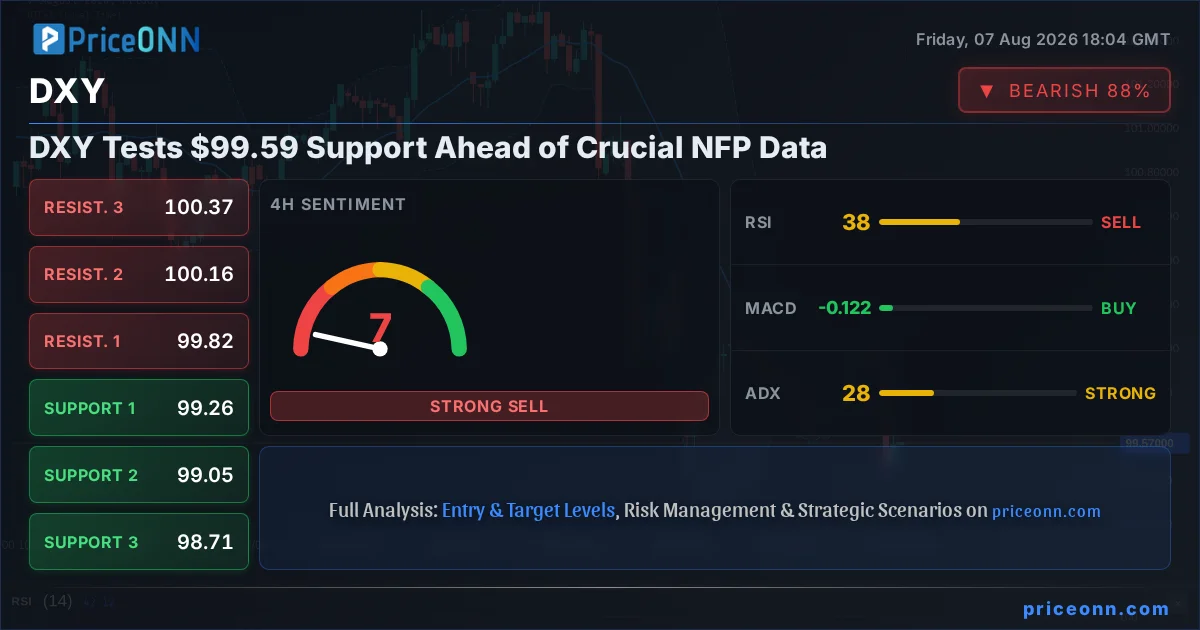
Labor Market Resilience and Inflation Outlook
Despite a recent dip in employment figures, Hammack remains steadfast in her inflation focus. The July jobs report, which showed a contraction of 23,000 nonfarm payrolls, did not sway her perspective. She pointed to the unemployment rate holding at 4.1%, a level she considers close to full employment. "I’m still not seeing a problem" within the labor market, she remarked, indicating a lack of conditions that would typically necessitate a pause in rate hikes.
Hammack expressed skepticism that inflation will naturally recede to the Fed's target without additional policy intervention. "From where I sit, I just don’t see it coming back on its own," she asserted. This outlook places significant importance on the upcoming July Consumer Price Index (CPI) data. While core CPI is projected to tick down from 2.6% in June to 2.5% in July, any substantial downside surprise could challenge Hammack's view. Conversely, inflation proving more persistent or accelerating would bolster the argument for a series of rate increases.
Market Yields vs. Fed Action
Furthermore, Hammack pushed back against the notion that rising market yields can independently achieve the Fed's inflation goals. "Markets are a complement for the Fed. They’re not a substitute," she emphasized. This statement underscores the central bank's responsibility to back its policy intentions with concrete actions when necessary. Hammack also suggested that true credibility stems not from extensive forward guidance, but from clearly communicating the Fed's reaction function and its unwavering commitment to the 2% inflation objective.
Her comments highlight a growing divergence in policy expectations heading into the next Federal Open Market Committee meeting. While weaker employment data has ostensibly raised the bar for another rate hike, a faction of policymakers, including Hammack, appear to believe that inflation dynamics still necessitate not just a single additional move, but potentially a renewed sequence of tightening measures. This hawkish sentiment suggests a potential for further policy tightening beyond what current market pricing might anticipate.
Reading Between the Lines
Hammack's firm stance on the need for further rate hikes, even with mixed employment signals, underscores the Federal Reserve's ongoing battle against persistent inflation. Her assertion that current rates are not
Track markets in real-time
Empower your investment decisions with AI-powered analysis, technical indicators and real-time price data.
Join Our Telegram Channel
Get breaking market news, AI analysis and trading signals delivered instantly to your Telegram.
Join Channel PriceONN News
RBA accepted that inflation has improved, but refused to turn that improvement into a declaration that rate hikes are finished. Cash rate was left unchanged at 4.35% unanimously, yet Board described policy as only “somewhat restrictive” and explicitly kept another increase on table, saying it could still raise rates “if upside risks materialise.” That is […] The post RBA Accepts Softer Inflation but Still Leaves Scope for One More Hike appeared first on ActionForex.
PriceONN News
At its meeting today, the Board decided to leave the cash rate target unchanged at 4.35 per cent. Inflation picked up materially in the second half of 2025, and information since the beginning of this year confirms that some of the increase reflected greater capacity pressures. While the impact of the Middle East conflict on inflation has […] The post (RBA) Statement by the Reserve Bank Board: Monetary Policy Decisions appeared first on ActionForex.
PriceONN News
The long-term advances in the Dow Jones and Copper cannot be correctly labeled as regular Elliott Wave impulses. The reason is based on one of the most important rules within Elliott Wave Theory: Wave 4 of a regular impulse cannot overlap the price territory of Wave 1 at the same degree. This overlap is visible […] The post Dow Jones and Copper: Why the Overlap Reveals a Nest and Signals a Major Risk-On Acceleration appeared first on ActionForex.
PriceONN News
Market Overview The crypto market capitalisation has risen to $2.22T, returning to the levels seen at its two-week highs. Since the start of August, the balance of power has shifted in favour of buyers, but the pace of this recovery is significantly slower than that of the similar rally seen in early July. This suggests […] The post Bitcoin Consolidates Around $65K, Setting Its Sights on $70K appeared first on ActionForex.
PriceONN News
The USD index plummeted amid a decline in US employment. Gold is benefiting from the Fed’s reluctance to raise interest rates. The US dollar touched a seven-week low after an unexpected labour market report. Employment in July unexpectedly fell by 23K. The figures for May were revised down from 129K to 63K, and those for […] The post The Dollar Let the Labour Market Down appeared first on ActionForex.
PriceONN News
GBP/USD enters the week of 10–14 August near 1.3500 – its highest level since 15 July. Sterling is building on the momentum from a sharp decline in the dollar following a weak US labour market report, which reduced expectations of a Federal Reserve rate hike in September. Further support has come from the drop in […] The post GBP/USD Starts the Week on a Strong Footing appeared first on ActionForex.
PriceONN News
USD/JPY finds itself at the center of one of the most dramatic currency stories this summer. Having weakened to a four-decade low near ¥164, the yen was pulled back sharply after Japan and the US carried out a coordinated intervention, with Tokyo reportedly spending around $34 billion in a single session to defend its currency. […] The post USD/JPY: Was Intervention Enough to Change the Trend? appeared first on ActionForex.
PriceONN News
Eurozone investor confidence improved for a fourth straight month in August, reinforcing signs that sentiment is recovering alongside firmer economic data. Sentix Overall Index rose from -3.1 to 0.9, beating expectations of -1.3 and reaching highest level since February. Current Situation improved from -14.8 to -8.0, while Expectations edged up from 9.3 to 10.3. Sentix […] The post Eurozone Sentix Confidence Turns Positive, but Inflation Concerns Return appeared first on ActionForex.
PriceONN News
The pair gained momentum following the release of the US labour market report for July 2026 on 7 August. Non-farm employment fell by 23,000 jobs, compared with a forecast for an increase of 80,000 jobs among economists surveyed by Reuters. Employment data for May and June were also revised downwards, according to the Bureau of […] The post GBP/USD Analysis: Weak US Labour Market Data Pushes the Pair Higher appeared first on ActionForex.
PriceONN News
Key Highlights EUR/USD started a fresh increase above the 1.1520 resistance. A contracting triangle is forming with resistance at 1.1600 on the 4-hour chart. GBP/USD could gain pace if it clears the 1.3550 resistance. Gold prices climbed higher above $4,350 and might continue to rise. EUR/USD Technical Analysis The Euro formed a base above 1.1380 […] The post EUR/USD Strengthens Further as Buyers Press Their Advantage appeared first on ActionForex.
PriceONN News
The RBA's Tuesday hold is a formality - what matters for AUD/CAD is whether its tightening bias survives, and the setup is asymmetric: preserving it offers limited support, while confirming the cycle has ended could trigger a deeper correction. The post AUD/CAD Risks Deeper Correction if RBA Tightening Bias Doesn’t Survive appeared first on ActionForex.
PriceONN News
BoJ’s Summary of Opinions from July 30–31 meeting points to an important shift in policy thinking: debate is moving away from how to lift underlying inflation toward 2% and increasingly toward how to stop it from overshooting. One opinion captured change explicitly, saying focus of monetary policy has shifted from “lifting underlying CPI inflation to […] The post BoJ Opinions: Inflation Mission Changed to Preventing Inflation Overshoot appeared first on ActionForex.