Forex Today: US Dollar rallies on Trump’s Iran warning as markets brace for NFP

Dollar Strength on Geopolitical Winds
A palpable shift occurred in currency markets today as the US Dollar Index (DXY) ascended, reclaiming the 100.50 territory. This upward movement was not driven by typical economic indicators but rather by a potent cocktail of geopolitical tension and anticipated labor market revelations. President Donald Trump's assertive declaration, signaling a potentially more aggressive US posture toward Iran should regional instability persist, injected a dose of uncertainty that often sends investors scrambling for perceived safety. This flight to quality typically benefits the dollar, amplifying its appeal in times of global unease.
The implications of this geopolitical backdrop are significant. While the specifics of the US stance on Iran remain fluid, the mere suggestion of heightened conflict or sanctions can ripple through global supply chains and commodity markets. For currency traders, this translates into a heightened focus on risk aversion, which, in turn, supports the dollar's safe-haven status. The market is now in a delicate balancing act, digesting the geopolitical signals while simultaneously preparing for the release of the highly influential Nonfarm Payrolls (NFP) report, a key determinant of the Federal Reserve's monetary policy path.
Understanding West Texas Intermediate Crude
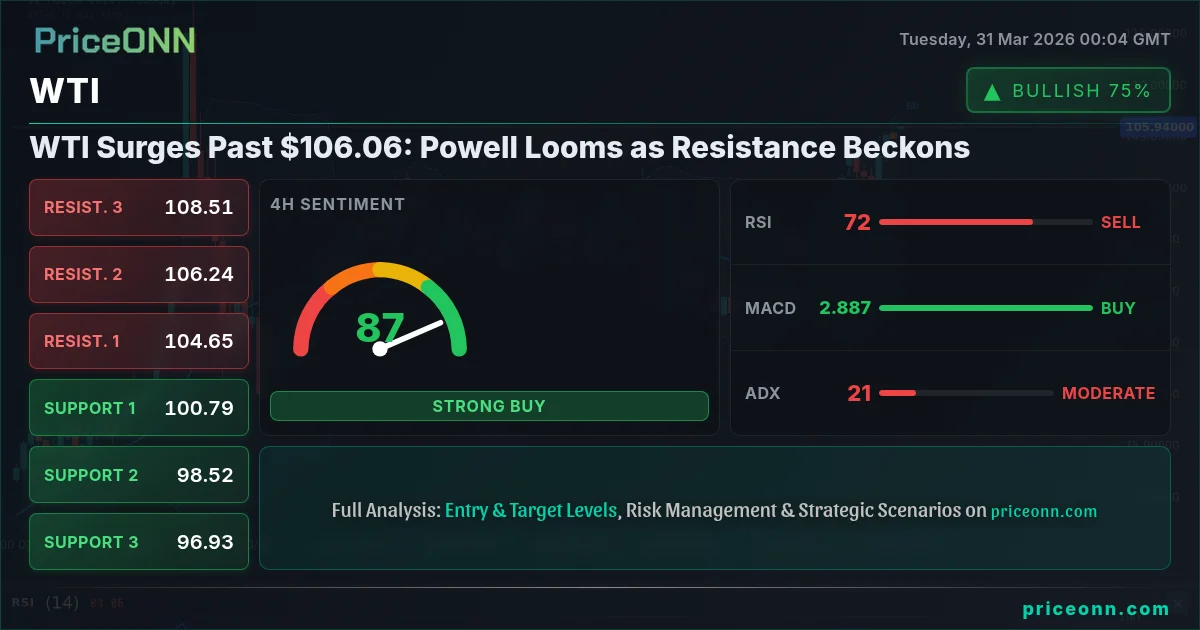
Beyond the immediate currency movements, the interplay between the US dollar and energy markets provides a critical lens through which to view broader economic health. West Texas Intermediate (WTI) crude oil, a benchmark for global oil pricing, serves as a prime example. Often referred to as "light" and "sweet" due to its low sulfur content and favorable gravity, WTI is a high-quality crude that is relatively easy to refine into usable products.
Sourced within the United States and distributed through the vital Cushing, Oklahoma hub – famously dubbed "The Pipeline Crossroads of the World" – WTI's price is intrinsically linked to fundamental supply and demand dynamics. Global economic growth is a significant demand driver; robust expansion fuels industrial activity and transportation, thereby increasing oil consumption. Conversely, economic slowdowns dampen this demand.
Furthermore, geopolitical events, including wars, sanctions, and political instability in oil producing regions, can directly disrupt supply routes and impact pricing. The strategic decisions of the Organization of the Petroleum Exporting Countries (OPEC) and its allies, collectively known as OPEC+, play a pivotal role. When OPEC+ members agree to curb production, it can tighten global supply, often leading to higher prices. Conversely, increased output tends to suppress prices.
The relationship between the dollar and WTI is particularly noteworthy. Since oil is predominantly traded in US dollars, a weaker dollar can make oil purchases more affordable for countries using other currencies, potentially boosting demand and prices. An appreciating dollar, on the other hand, can have the opposite effect, making oil more expensive globally and potentially dampening demand.
Market participants closely monitor weekly inventory reports released by the American Petroleum Institute (API) and the Energy Information Administration (EIA). A significant drawdown in crude oil stockpiles can signal stronger-than-expected demand, typically leading to a price increase for WTI. Conversely, an unexpected build in inventories suggests ample supply, which can put downward pressure on prices. The API report surfaces every Tuesday, with the EIA data following on Wednesday. While both reports offer valuable insights, the EIA data, being from a government agency, is generally considered the more definitive.
Market Ripple Effects
The dollar's recent ascent, fueled by geopolitical anxieties and anticipation of key economic data, sets the stage for significant market reactions. Investors and traders should closely monitor how these forces interact in the coming sessions.
The immediate beneficiary of a stronger dollar is often seen in currency pairs where the USD is the base currency, such as EUR/USD and GBP/USD. A robust dollar typically exerts downward pressure on these pairs, suggesting potential for further declines if the trend holds. The geopolitical risk premium currently embedded in the dollar could also weigh on riskier assets, including emerging market currencies and equities.
Simultaneously, the price of WTI Crude Oil warrants attention. As noted, a stronger dollar generally makes dollar-denominated commodities like oil more expensive for holders of other currencies. This could create headwinds for oil prices, potentially capping any upside momentum unless supply-side disruptions or exceptionally strong demand data emerge. Traders looking for opportunities might watch for divergence between dollar strength and oil price action, which could signal underlying market sentiment shifts.
The upcoming Nonfarm Payrolls report is the critical economic data point. A significantly stronger-than-expected jobs number could further bolster the dollar, reinforcing the narrative of economic resilience and potentially pushing back expectations for any Federal Reserve rate cuts. Conversely, a weaker-than-expected report might trigger a dollar pullback and boost risk appetite, even amidst geopolitical concerns.
Key levels to watch include the 100.50 mark for the DXY, which has now become a support level. A decisive break above this could signal further dollar appreciation. On the downside, a failure to hold these gains could see the index retreat towards 100.00. For WTI, the $70 per barrel range remains a closely watched psychological and technical level.
Track markets in real-time
Empower your investment decisions with AI-powered analysis, technical indicators and real-time price data.
Join Our Telegram Channel
Get breaking market news, AI analysis and trading signals delivered instantly to your Telegram.
Join Channel