Gold rallies to over one-week top as Trump’s de-escalation signals prompt USD selling
Gold's Safe Haven Appeal Gains Traction
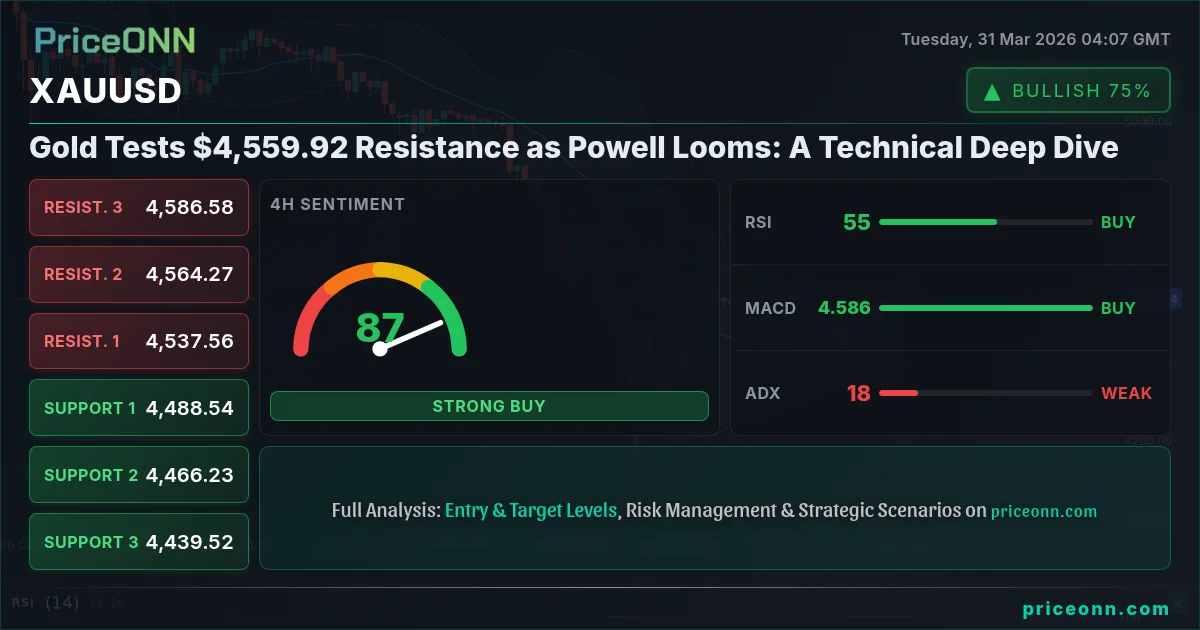
The yellow metal is experiencing a significant uptick, marking its third day of gains and reaching its highest point in over a week during Tuesday's Asian trading session. This surge in Gold (XAU/USD) comes as the US Dollar faces renewed selling pressure, a classic driver for the precious commodity. While the upward momentum is clear, gold is encountering resistance as it attempts to decisively break above the psychologically important $4,600 mark.
Historically, gold has served as a bedrock asset, functioning as both a store of value and a medium of exchange for millennia. Today, its allure extends beyond adornment; it's widely recognized as a premier safe-haven asset. This designation means investors increasingly turn to gold during periods of heightened market uncertainty and economic turbulence. Furthermore, its appeal as a hedge against inflation and currency devaluation remains strong, as gold's value is not tied to any single government or issuer.
The role of central banks in the gold market cannot be overstated. They are the largest holders of the precious metal, often increasing their reserves as a strategic move to bolster their currencies and signal economic stability during volatile times. A robust gold reserve can significantly enhance a nation's perceived creditworthiness and solvency. Evidence of this trend is striking: in 2022, central banks collectively added an unprecedented 1,136 tonnes of gold to their holdings, a staggering acquisition valued at approximately $70 billion. This marks the highest annual purchase volume since records began, with notable increases coming from emerging economies like China, India, and Turkey.
Understanding gold's market dynamics requires recognizing its inverse relationship with key financial instruments. It typically moves in opposition to the US Dollar and US Treasuries, both of which are major global reserve assets and safe havens themselves. When the dollar weakens, gold often strengthens, offering investors and central banks a vital avenue for diversification amidst financial instability. This dynamic extends to risk assets; a buoyant stock market often correlates with a weaker gold price, while sell-offs in equities and other riskier markets tend to elevate gold's appeal.
The price trajectory of gold is influenced by a multifaceted array of factors. Geopolitical tensions or pervasive fears of a significant economic downturn can trigger rapid escalations in gold prices, a direct consequence of its safe-haven status. As an asset that generates no yield, gold typically performs better in an environment of lower interest rates. Conversely, rising borrowing costs, often associated with higher interest rate policies, tend to exert downward pressure on the precious metal. Nevertheless, the most consistent driver impacting gold prices remains the performance of the US Dollar, given that gold is predominantly priced in dollars (XAU/USD). A strong dollar historically caps gold's ascent, while a weaker dollar paves the way for price increases.
Market Ripple Effects
The current upward pressure on gold, driven by a softening dollar and potentially easing geopolitical tensions, presents a complex landscape for various market participants. The weakening dollar is a critical signal, suggesting a potential shift in global risk appetite or a reassessment of US economic outlook. For traders and investors, this environment necessitates a close watch on several interconnected markets.
The immediate beneficiaries are typically other precious metals like Silver (XAG/USD) and potentially Platinum, which often move in sympathy with gold. A weaker dollar also makes dollar-denominated commodities cheaper for holders of other currencies, potentially boosting demand. Beyond commodities, the US Dollar Index (DXY) is naturally under pressure, and its continued decline could signal broader risk-on sentiment, benefiting global equities. Conversely, currencies like the Euro (EUR/USD) and the Japanese Yen (JPY/USD) might see supportive price action as the dollar retreats. Investors should monitor key support and resistance levels for gold, particularly the $4,600 area, and watch for confirmation of sustained dollar weakness. Geopolitical developments will remain a critical overlay, capable of rapidly altering gold's safe-haven premium.
Track markets in real-time
Empower your investment decisions with AI-powered analysis, technical indicators and real-time price data.
Join Our Telegram Channel
Get breaking market news, AI analysis and trading signals delivered instantly to your Telegram.
Join Channel