Gold rises as US Treasury yields ease while Middle East tensions escalate
Yellow Metal Reclaims Ground Amid Global Instability
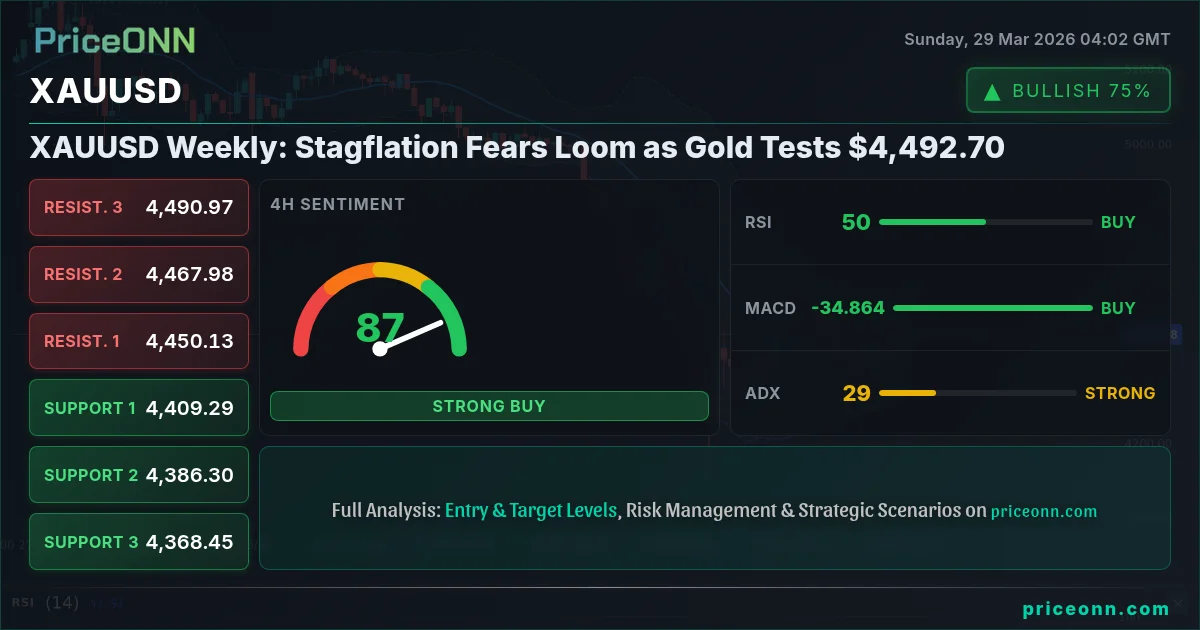
The price of gold experienced a notable resurgence on Monday, clawing back earlier losses to trade around $4,576. This upward momentum followed an intraday dip to $4,419 during the Asian trading session, signaling a shift in market sentiment. The driving forces behind this reversal appear to be a confluence of escalating geopolitical tensions in the Middle East and a cooling of US Treasury yields, both of which typically bolster demand for gold as a secure asset.
Historically, gold has served as a bedrock of value and a universally accepted medium of exchange. Beyond its aesthetic appeal and use in jewelry, its modern-day perception as a premier safe haven asset is paramount. This designation means investors flock to gold during periods of heightened uncertainty and market turbulence, seeking refuge from volatility elsewhere. Furthermore, gold is frequently viewed as a potent hedge against inflation and currency devaluation, its intrinsic value not tethered to any single government or financial institution.
Central banks have emerged as significant accumulators of gold, a trend that has accelerated in recent years. In their strategic efforts to fortify their currencies and economies, particularly during uncertain global climates, these institutions often diversify their foreign exchange reserves by acquiring gold. This strategy not only enhances the perceived strength of their national economies but also bolsters confidence in their currency's stability. The World Gold Council reported a staggering 1,136 tonnes of gold added to central bank reserves in 2022, a purchase volume valued at approximately $70 billion and the highest on record. Emerging economies, notably China, India, and Turkey, have been at the forefront of this aggressive accumulation.
The interplay between gold, the US Dollar, and US Treasuries is a critical dynamic for market participants. Gold typically exhibits an inverse correlation with both the dollar and Treasury yields, both of which are themselves considered major safe haven assets and reserve currencies. When the US Dollar weakens, gold often strengthens, offering investors and central banks a valuable avenue for diversification. This dynamic is further amplified during times of geopolitical stress or economic uncertainty.
Moreover, gold’s relationship with riskier assets like equities also plays a crucial role. A robust stock market rally can often dampen gold prices, as capital flows towards potentially higher returns in equities. Conversely, significant sell-offs in riskier markets tend to see a flight to quality, benefiting the precious metal. The yellow metal’s price is susceptible to a wide array of influences, with geopolitical instability and fears of severe economic downturns capable of triggering sharp price escalations due to its established safe haven status.
As an asset that does not generate yield, gold’s performance is intrinsically linked to interest rate environments. Lower interest rates generally provide a tailwind for gold prices, making the opportunity cost of holding a non-yielding asset less significant. Conversely, rising interest rates, which increase the cost of capital, tend to put downward pressure on gold. However, a dominant factor influencing gold's price trajectory remains the behavior of the US Dollar, as the asset is predominantly priced in dollars (XAU/USD). A strengthening dollar tends to cap gold prices, while a weakening dollar often provides the catalyst for upward price movements.
Market Ripple Effects
The current environment, characterized by heightened geopolitical risks and fluctuating Treasury yields, presents a complex scenario for investors. Gold's immediate strength is a direct response to its safe haven appeal, but its sustained trajectory will depend on several key factors. Escalating conflicts in the Middle East could inject further volatility into energy markets and global supply chains, potentially boosting gold's appeal even as central banks navigate inflation concerns. The Federal Reserve's stance on interest rates will be a critical determinant; any signal of a dovish pivot or a pause in rate hikes would likely support gold prices by reducing the opportunity cost of holding the non-yielding metal and potentially weakening the US Dollar.
Traders should closely monitor the US Dollar Index (DXY), which often moves inversely to gold. A sustained decline in the DXY could signal further upside potential for XAU/USD. Additionally, the performance of US Treasury yields, particularly the 10-year rate, is a vital gauge. Easing yields, as seen today, reduce the attractiveness of holding bonds over gold. Beyond these direct correlations, broader market sentiment towards risk assets will also be influential. A significant downturn in global equity markets, such as the S&P 500, could trigger another wave of safe haven buying in gold. Conversely, a de-escalation of geopolitical tensions without a dovish shift from the Fed might see gold prices retrace, especially if the dollar firms up.
The recent surge in central bank gold purchases underscores a long-term strategic shift, suggesting that even a stabilization in geopolitical events might not lead to a significant unwinding of gold holdings. This institutional demand provides a solid floor for the precious metal, making sharp, sustained declines less probable in the current global economic climate. Investors seeking diversification and a hedge against systemic risk should consider gold's role within a broader portfolio, especially as inflation concerns, while perhaps moderating, remain a persistent theme.
Track markets in real-time
Empower your investment decisions with AI-powered analysis, technical indicators and real-time price data.
Join Our Telegram Channel
Get breaking market news, AI analysis and trading signals delivered instantly to your Telegram.
Join Channel