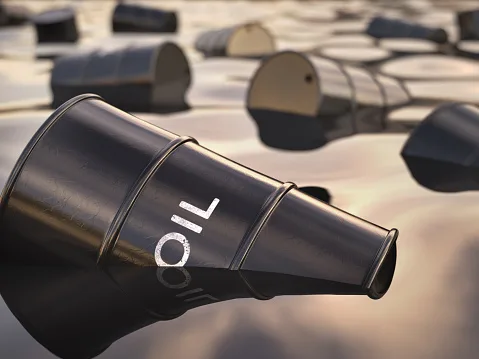
Japan, Germany release Oil reserves ahead of IEA decision, WTI drops

WTI Crude: The Light, Sweet Benchmark
West Texas Intermediate (WTI) crude oil serves as a vital benchmark in the global energy market. This "light sweet" crude, prized for its low density and sulfur content, is easily refined. Originating in the United States, WTI's distribution hinges on the Cushing hub in Oklahoma, often called "The Pipeline Crossroads of the World."
Like any commodity, WTI's price hinges on supply and demand dynamics. Strong global economic growth typically fuels increased demand, driving prices upward, while weaker growth can depress demand and prices. Geopolitical factors, such as instability, conflicts, and sanctions, can severely disrupt supply chains, creating price volatility.
The US Dollar's strength also plays a crucial role. Because oil transactions are predominantly conducted in US Dollars, a weaker dollar can make oil more affordable for international buyers, potentially boosting demand and prices. Conversely, a stronger dollar can make oil more expensive, potentially dampening demand.
Decoding the Data: Inventory Reports and OPEC Decisions
Weekly inventory reports from the American Petroleum Institute (API) and the Energy Information Administration (EIA) offer insights into the balance between oil supply and demand. A decline in inventories usually suggests heightened demand, which can push prices higher. Conversely, rising inventories may point to increased supply, potentially exerting downward pressure on prices.
The API releases its report every Tuesday, followed by the EIA on Wednesday. While their findings usually align within a 1% margin roughly 75% of the time, the EIA data, being a government source, is generally regarded as more reliable.
The Organization of the Petroleum Exporting Countries (OPEC), comprising 12 major oil-producing nations, significantly influences WTI prices. Twice a year, OPEC members convene to determine production quotas. Decisions to lower quotas can tighten supply, driving prices upward. Conversely, increasing production can have the opposite effect, potentially lowering prices.
OPEC+ includes the original OPEC members plus ten additional non-OPEC nations, with Russia being the most prominent. This expanded group further amplifies the collective influence on global oil supply and, consequently, WTI prices.
Reading Between the Lines: What's at Stake for Traders
The anticipated IEA announcement regarding potential oil reserve releases injects uncertainty into the market. Any decision to release reserves, especially if coordinated with major economies like Japan and Germany, could exert downward pressure on WTI prices in the short term.
Traders should closely monitor the EIA's weekly inventory data and any statements from OPEC+ regarding future production plans. These factors, coupled with geopolitical developments, will likely dictate WTI's price trajectory. Keep a close watch on the $70-$75 per barrel range, which could act as a critical support zone if prices decline.
Beyond WTI, this situation has implications for Brent Crude, the Canadian Dollar (USD/CAD), and energy sector equities. A coordinated reserve release could temporarily suppress prices across the board, impacting the profitability of oil producers and potentially influencing inflation expectations.
Track markets in real-time
Empower your investment decisions with AI-powered analysis, technical indicators and real-time price data.
Join Our Telegram Channel
Get breaking market news, AI analysis and trading signals delivered instantly to your Telegram.
Join Channel