Japanese Yen stays defensive despite the Middle East war escalation

Global Unrest Fails to Ignite Yen Demand
The Japanese Yen, often a bellwether for global risk aversion, is exhibiting a curious lack of strength as geopolitical conflicts intensify. Even as the situation in the Middle East enters its fourth week with no apparent de-escalation, the Yen is struggling to gain ground against its major currency counterparts, particularly the US Dollar. This unexpected resilience in the USD, coupled with the Yen's muted response, signals a complex interplay of global economic forces that are currently overshadowing traditional safe-haven dynamics.
Several critical factors typically influence the Yen's trajectory. The overarching health of the Japanese economy plays a role, but more significant are the monetary policy decisions emanating from the Bank of Japan (BoJ). Historically, the BoJ has held currency stability as a key objective, occasionally intervening directly in forex markets to curb excessive Yen appreciation. Such interventions, however, are infrequent, often due to diplomatic considerations with key trading partners.
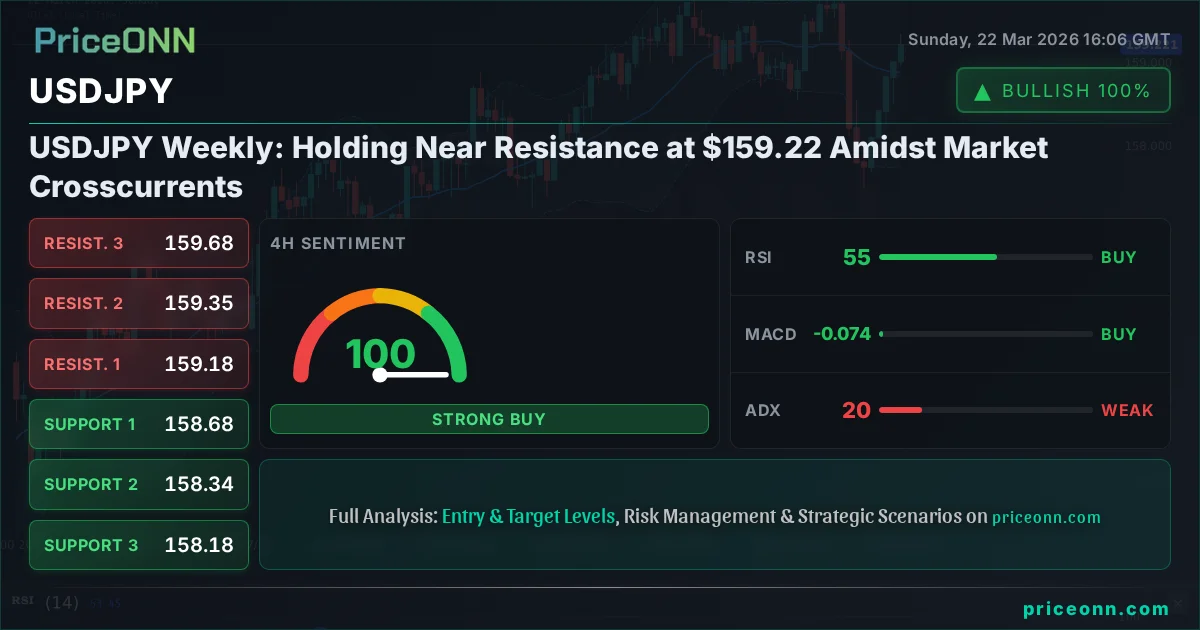
For a decade leading up to 2024, the BoJ's steadfast commitment to an ultra-accommodative monetary stance created a significant policy divergence with other leading central banks. This divergence fueled a widening gap in interest rate differentials, especially between Japanese and US sovereign debt. Such conditions invariably favored the US Dollar, leading to a prolonged period of Yen depreciation.
Shifting Monetary Sands and Yen Support
Recent shifts in central bank policy are beginning to alter this landscape. The BoJ's gradual move away from its ultra-loose policy, initiated in 2024, is starting to provide some underlying support for the Yen. Concurrently, other major central banks have begun to signal or enact interest rate adjustments, contributing to a narrowing of the yield differential that has so heavily influenced currency pairs.
Traditionally, the Japanese Yen has been a favored destination for capital seeking refuge during times of global uncertainty. Investors have often perceived the Yen as a stable asset, turning to it when perceived riskier investments become volatile. In theory, escalating international crises should bolster demand for the Yen, driving its value higher against currencies perceived as more susceptible to economic shocks.
However, current market behavior suggests that other factors are currently holding sway. The persistent strength of the US Dollar, buoyed by robust economic data and the Federal Reserve's cautious approach to monetary easing, appears to be eclipsing the Yen's safe-haven appeal. The market's focus seems to be less on geopolitical risk and more on interest rate differentials and economic growth prospects, leaving the Yen in a defensive, yet underperforming, position.
Reading Between the Lines
The current market narrative is a fascinating departure from historical norms. While the Middle East conflict provides a backdrop of significant geopolitical risk, the Japanese Yen is not reflecting this uncertainty through typical safe-haven appreciation. This suggests a market that is prioritizing other drivers, primarily the stark contrast between the Federal Reserve's relatively hawkish stance and the BoJ's ongoing, albeit slowly unwinding, accommodative measures.
The widening yield gap between 10-year US Treasuries and their Japanese counterparts has been a potent force favoring the USD/JPY pair. Even with the BoJ's policy normalization, the pace of change appears insufficient to counteract the attractiveness of higher yields available in the US market. This dynamic is crucial for traders watching the currency markets, as it implies that geopolitical headlines might have a diminished impact on the Yen's direction compared to interest rate expectations and central bank communications.
The implications for investors are significant. Relying solely on the Yen as a hedge against global turmoil may prove less effective in the current environment. Attention should instead be directed towards the interplay between the US Dollar Index (DXY), which often reflects global economic strength and Fed policy expectations, and potentially other currency pairs that are more directly sensitive to commodity price movements or regional economic stability. Furthermore, the performance of equity markets, particularly those sensitive to interest rates and global trade, will offer clues as to whether risk sentiment is truly shifting or if the market is simply focused on a narrow set of economic variables.
Track markets in real-time
Empower your investment decisions with AI-powered analysis, technical indicators and real-time price data.
Join Our Telegram Channel
Get breaking market news, AI analysis and trading signals delivered instantly to your Telegram.
Join Channel