Middle East Crisis Could Triple Pakistan’s Oil Import Bill
Previously, we reported that Pakistan could find itself sucked into the Middle East war thanks to the Strategic Mutual Defence Agreement (SMDA) it signed with Saudi Arabia in September 2025. The core of the agreement states that any aggression against one country is considered an aggression against both, potentially requiring Pakistan to intervene against Iran’s missile strikes on Saudi Arabia. However, military confrontation with its southerly neighbor might turn out to be a less existential threat for Pakistan.
Surging oil prices are already wreaking havoc on the global economy. According to the International Monetary Fund, the combination of soaring oil prices and slowing growth creates risks reminiscent of previous oil shocks in the 1970s and the more recent Financial Crisis of 2008, with the Bretton Woods institution estimating a 40 basis points (bps) rise in inflation and a 15 bps decrease in global growth for every 10% rise in oil prices. Brent crude prices have increased by nearly 50% to above $100 per barrel since the Middle East war between the U.S.-Israel and Iran kicked off about two weeks ago.
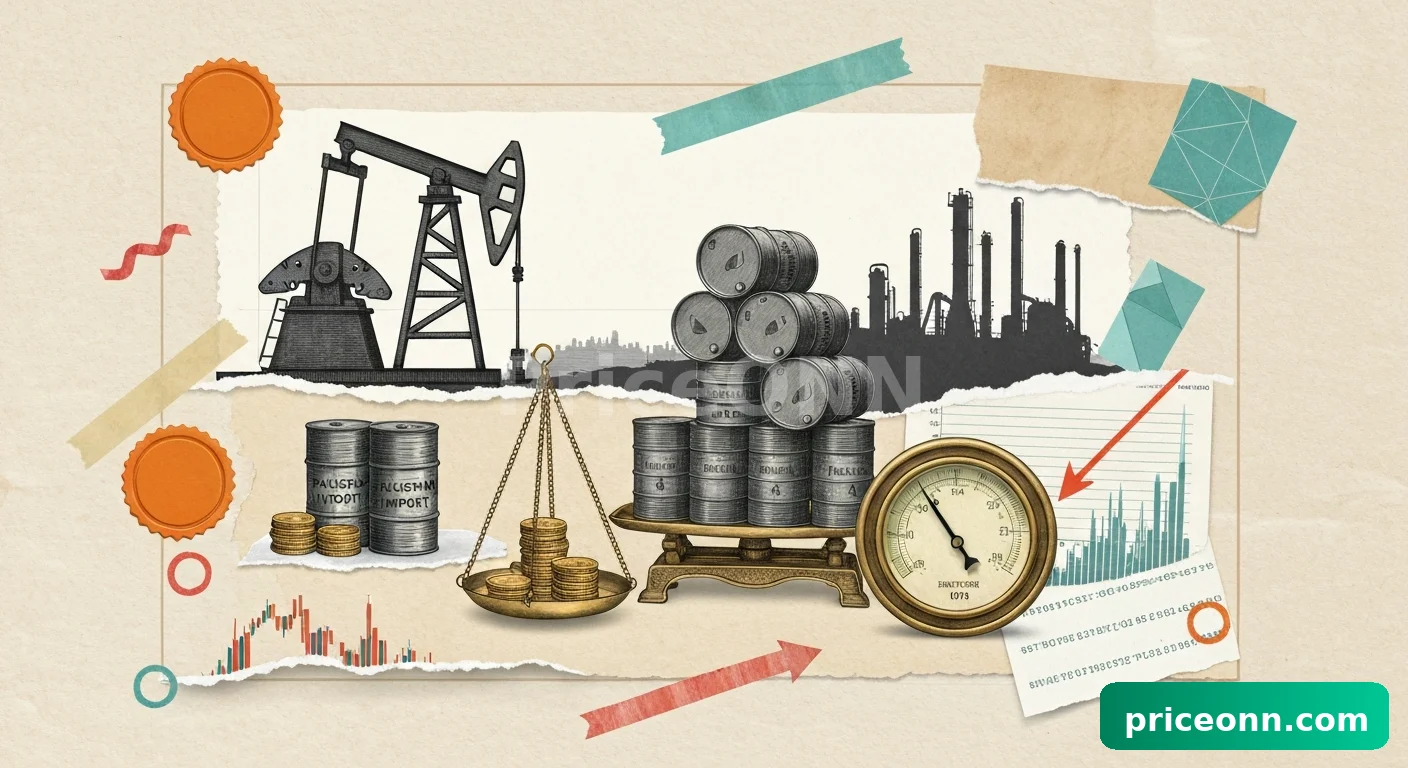
However, the situation could be a lot more dire for Pakistan, thanks to the country’s heavy reliance on fuel imports. A recent study by the Pakistan Institute of Development Economics (PIDE) found that every $10 increase in global oil prices raises Pakistan's annual petroleum import bill by approximately $1.8-$2.0 billion. PIDE has warned that a closure of the Strait of Hormuz could trigger a wild oil price rally of up to $150 per barrel, causing Pakistan’s monthly fuel import bills to skyrocket to between $3.5 billion and $4.5 billion, while consumer inflation could jump from the current 7% to up to 17%.
Related: Little-Known US Company Lands Important Pentagon Contract in Rare Earth Race
For the first 10 months of the current fiscal year (July–April), Pakistan’s total oil imports exceeded $17 billion, averaging roughly $1.7 billion per month before the most recent price spikes. Over 80% of the country's oil and refined fuel needs are met through imports; roughly 80% of Pakistan's crude oil imports typically pass through the Strait of Hormuz, while 25% of the country's annual natural gas consumption is imported, primarily as Liquefied Natural Gas (LNG), from Qatar. Pakistan currently holds only 10-14 days of petroleum reserves, significantly less than regional peers like India, which maintains roughly 65-70 days of stock. Additionally, the crisis is expected to raise shipping insurance and freight costs, further straining foreign exchange reserves and widening the current account deficit.
Thankfully, Pakistan is taking proactive measures to avoid becoming a sitting duck in the ongoing conflict. The country has launched Operation Muhafiz-ul-Bahr (meaning "Protector of the Seas"), a maritime security operation launched by the Pakistan Navy in March whose primary goal is to ensure the uninterrupted flow of trade through key Sea Lines of Communication (SLOCs). Through the operation, Pakistan’s navy warships provide direct protection to merchant vessels, specifically those carrying critical energy supplies (oil and gas). With ~90% of Pakistan’s trade conducted by sea, the operation is vital for the country’s economic stability. Further, Pakistan is implementing various austerity measures to help alleviate rising fuel costs, including a four-day workweek, 50% remote work for public employees, and closing schools for two weeks. Other measures include a two-month salary waiver by cabinet ministers, parliamentary pay cuts, and a reduction in non-essential spending.
PIDE has also made several recommendations to help the Pakistani government cope with the unraveling crisis, including expanding the national strategic petroleum reserves to provide a buffer of 30–60 days during global energy shocks; strengthening fuel stock monitoring, diversifying import routes, and adopting oil hedging strategies. Pakistan can diversify its oil import routes by establishing overland pipelines with neighboring countries, strengthening maritime routes to avoid the Strait of Hormuz, and increasing imports from the U.S. to reduce Middle Eastern reliance. The country can establish pipeline or land routes via Central Asia, leveraging the China-Pakistan Economic Corridor (CPEC) to enhance energy security. Further, Pakistan can shift away from complete reliance on the Gulf (Saudi Arabia/UAE) by increasing procurement of U.S. light sweet crude (WTI), which offers competitive pricing and better margins for local refineries. For other imports, Pakistan can develop the Trans-Afghan route (through Uzbekistan) as the most direct path to Central Asian trade hubs, including implementing the Uzbekistan-Afghanistan-Pakistan (UAP) railway to cut transit times by 10-15 days.
By Alex Kimani for .com
Track markets in real-time
Empower your investment decisions with AI-powered analysis, technical indicators and real-time price data.
Join Our Telegram Channel
Get breaking market news, AI analysis and trading signals delivered instantly to your Telegram.
Join Channel