North Sea Drilling Won’t Protect Europe from Global Price Shocks
The Familiar Refrain of Energy Crisis Response
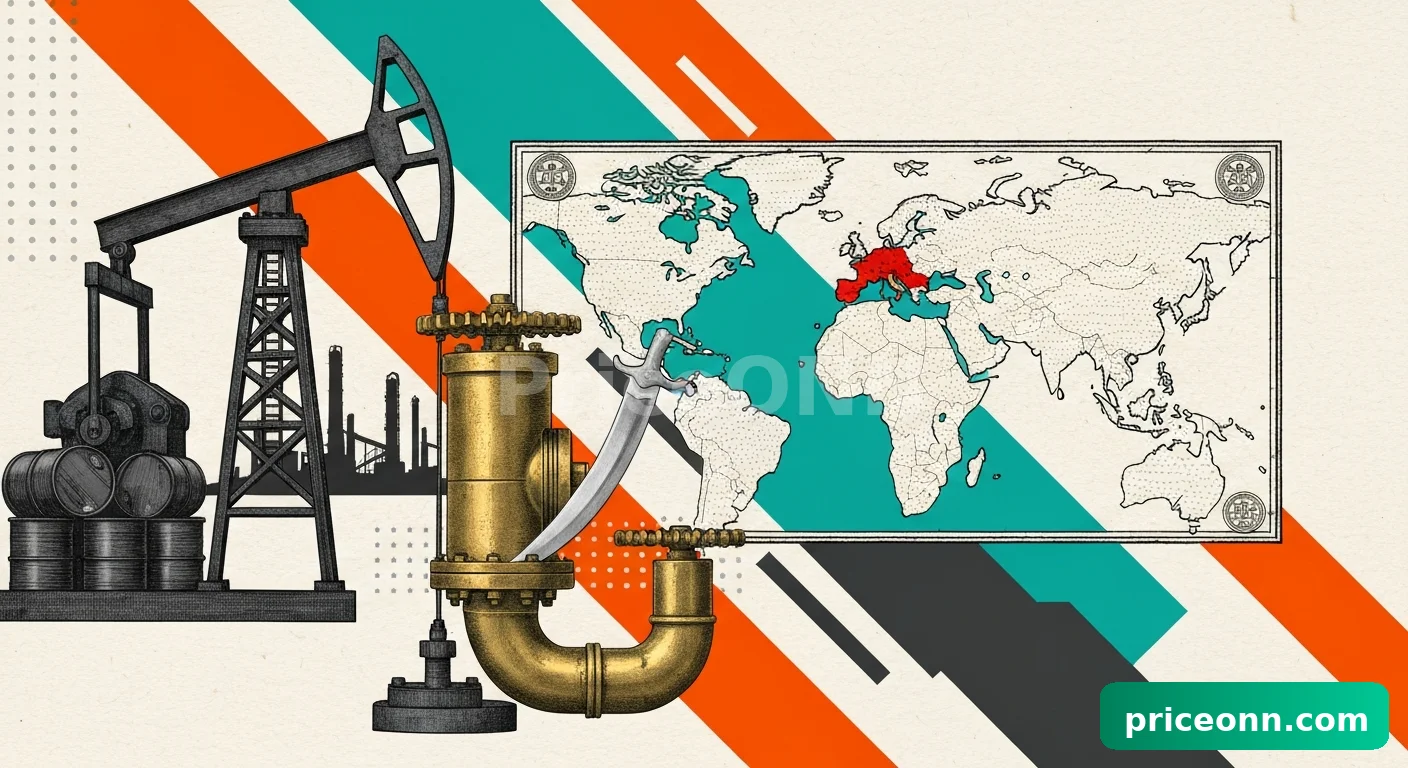
When geopolitical instability threatens crucial shipping lanes like the Strait of Hormuz, the energy market's reaction has become almost routine. We see a slowdown in tanker traffic, a jump in insurance costs, and, predictably, rising prices for both oil and gas. Perhaps even more predictably, European politicians and institutions dust off familiar proposals: reopening dormant gas fields, ramping up offshore drilling, and reconsidering domestic reserves previously deemed unviable. The Netherlands, for example, has seen renewed discussion about the long-shuttered Groningen gas field, with some suggesting it could serve as a strategic reserve. Similarly, across the North Sea, former UK energy ministers are advocating for accelerated exploration to buffer against global market volatility. The question is, will this strategy actually work?
If this response feels like a rerun, that's because it is. The fundamental problem remains unaddressed.
Groningen's Allure: A False Promise?
The renewed focus on the Groningen gas field in the Netherlands highlights this cyclical pattern. For decades, Groningen was a powerhouse, fueling the Dutch economy and supplying much of northwestern Europe with gas. However, years of earthquakes linked to extraction led to its closure, making it a politically sensitive topic. That is, until prices start to climb again.
Now, the idea that Groningen could act as a strategic reserve to stabilize markets during crises is gaining traction once more. However, energy economics throws a wrench in this narrative. Energy economist Machiel Mulder points out that in liberalized European gas markets, supply-side adjustments from major fields have a limited impact on gas price movements. Europe functions within an integrated gas market, where prices are largely dictated by international supply and demand, not the output of a single field. Even if Groningen were to reopen tomorrow, its gas would still be sold at European market prices. The origin of the gas molecules would be Dutch, but the price would still reflect the global market. Therefore, reopening Groningen might increase gas supply, but it would not magically lower heating bills.
North Sea Drilling: A Distraction from the Real Solution?
The same logic applies to the renewed enthusiasm for drilling in the North Sea. In the United Kingdom, former energy ministers argue that expanding offshore production would insulate Britain from global price swings. Similar arguments are surfacing in the Netherlands. However, new offshore fields take years, sometimes a decade, to reach significant production levels. More critically, when they do come online, their oil and gas will be sold into international markets. Even at full capacity, North Sea production represents a fraction of total European gas demand. Domestic production does not shield countries from global commodity prices; it merely determines the location of extraction, not the price consumers ultimately pay.
Large new fossil fuel investments risk locking Europe further into volatile fuel markets precisely when policymakers claim they want more stability. The Strait of Hormuz disruption highlights a structural weakness in fossil fuel systems, oil and gas resources are geographically concentrated. Supply chains stretch across oceans. Critical transport routes become chokepoints. Geopolitical events affecting these routes will inevitably impact prices globally.
A Cleaner, Safer Future: Renewables
Europe cannot control Middle Eastern politics, guarantee safe passage through strategic waterways, or stabilize global commodity markets by drilling a few more wells closer to home. However, an alternative energy system exists that is far less vulnerable to these shocks. This system runs primarily on renewable electricity. Wind turbines in the North Sea do not transit the Strait of Hormuz. Solar panels are not affected by tanker insurance rates. Electricity generated domestically from renewable sources distributes generation geographically, reducing reliance on politically sensitive regions. Economic analyses show that supply disruptions impacting fossil fuels have significantly smaller effects, sometimes around 90% less, on renewable-based energy systems because they do not depend on continuous imported fuel flows. When fossil fuel markets panic, wind and sunlight remain stable.
Maintaining diversified LNG imports, particularly from reliable suppliers, is a sensible way to manage current disruptions. However, short-term stabilization should not be confused with long-term strategy. Expanding fossil fuel infrastructure in response to temporary price spikes risks locking economies into decades of exposure to the volatility that triggered the crisis. The structural solution lies in electrification, renewable generation, storage systems, and stronger electricity grids.
Reading Between the Lines: Portfolio Implications
The current energy market dynamics present both risks and opportunities for investors. The knee-jerk reaction to geopolitical tensions often leads to short-term gains in oil and gas stocks (like Shell and BP) and ETFs (like XLE). However, these gains may be fleeting as the fundamental vulnerability of fossil fuel-dependent systems remains unaddressed. A more sustainable approach involves focusing on companies and funds involved in renewable energy (like Vestas and TAN), energy storage, and grid infrastructure. Investors should monitor policy decisions in Europe closely, as increased investment in renewables could trigger a long-term shift in capital allocation. Key risks include regulatory hurdles and technological challenges that could delay the deployment of renewable energy projects. Keep an eye on the EUR/USD currency pair as energy security concerns can impact the Euro's strength.
The Strait of Hormuz crisis serves as a reminder of Europe’s energy vulnerability. Each time this lesson is relearned, the policy debate bafflingly seems to restart from the same place: drill more, extract more, import slightly less. Europe cannot eliminate geopolitical risk from global energy markets, but it can reduce how much those markets matter to its economy. The question is, if drilling our way out of global energy volatility really worked, wouldn’t it have worked by now?
Track markets in real-time
Empower your investment decisions with AI-powered analysis, technical indicators and real-time price data.
Join Our Telegram Channel
Get breaking market news, AI analysis and trading signals delivered instantly to your Telegram.
Join Channel