Oil Prices React to Bahrain Refinery Strike, Kazakhstan Exploration Deal, and AI Energy Demand
Bahrain Refinery Attack Sparks Supply Concerns
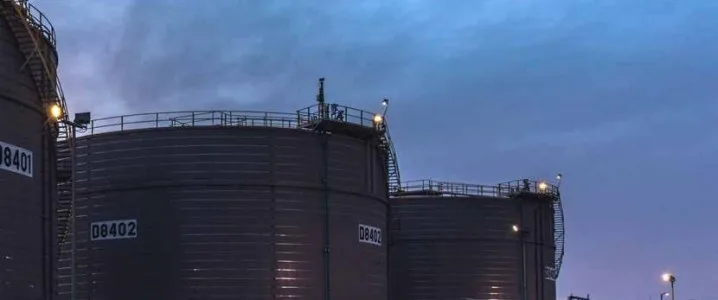
Crude oil prices are showing volatility today in response to a reported drone strike on oil infrastructure in Bahrain. The incident, which targeted the Ma'ameer industrial area, home to facilities connected to the Bahrain Petroleum Company (BAPCO), has heightened concerns about the security of Gulf refining assets amidst escalating regional tensions. While details are still emerging, initial reports suggest the attack may have involved Iranian ballistic missiles and targeted energy infrastructure rather than upstream production. BAPCO has confirmed the strike on its 405,000 b/d Sitra refinery, stating that there were no casualties and that the fire has been contained, with the refinery remaining operational.
The immediate market reaction saw refining margins widen as traders factored in the increased risk of supply disruptions. Diesel margins, as measured by the ICE gasoil crack spread against Brent crude, saw a significant expansion. ICE low-sulfur gasoil futures surged over $100 per metric ton in early trading, outpacing gains in Brent crude, which rose by a more modest amount.
Implications for Traders
Traders should closely monitor developments in Bahrain. Any further escalation of tensions or significant damage to refining capacity could lead to a sharper spike in refined product prices, particularly diesel. Keep an eye on the ICE gasoil crack spread as a key indicator of market sentiment. Support levels for Brent crude are currently being tested around $80/barrel, with resistance at $85/barrel. A break above or below these levels could signal the next major move.
Shell Expands Exploration in Kazakhstan
In other news, Shell and Kazakhstan have signed an agreement for oil and gas exploration in the Zhanaturmys block in western Kazakhstan. This deal, announced by the Kazakh Energy Ministry, involves seismic exploration, data collection, and technical assessment of potential oil and gas resources. The contract is set to run until 2032 and covers an area of 1,377 square kilometers (532 square miles).
This agreement signifies Kazakhstan's continued commitment to attracting foreign investment in its energy sector, even amidst ongoing legal disputes with Shell and other major oil companies concerning existing production projects. The Zhanaturmys block is strategically located within a promising hydrocarbon basin, suggesting significant potential for future discoveries.
Strategic Considerations
While the Shell-Kazakhstan deal is a long-term project, it underscores the importance of Central Asia as a key region for future oil and gas production. Investors should consider the geopolitical risks associated with investing in the region, as well as the potential for legal challenges and regulatory changes.
AI Boom Threatens Energy Innovation Funding
Finally, the rapid growth of artificial intelligence is creating a complex challenge for the energy sector. While AI is driving up energy demand in data centers, a recent report by the International Energy Agency (IEA) suggests that the AI boom may be diverting funding away from crucial energy innovation, particularly in areas like geothermal and nuclear fusion. The IEA's "The State of Energy Innovation 2026" report reveals that global government spending on energy research and development decreased in 2024 and 2025, reaching $55 billion worldwide. Venture capital investment in energy R&D has also declined for three consecutive years.
This trend raises concerns about the balance between supporting the burgeoning AI sector and investing in the energy solutions needed to meet future demand and achieve climate goals.
Long-Term Investment Implications
The potential diversion of funding from energy innovation could have significant long-term consequences for energy security and climate change mitigation. Investors should closely examine the allocation of capital within the energy sector and prioritize companies that are investing in innovative technologies that can reduce emissions and improve energy efficiency. The current pullback in government and private funding may present a buying opportunity for undervalued energy technology companies.
Track markets in real-time
Empower your investment decisions with AI-powered analysis, technical indicators and real-time price data.
Join Our Telegram Channel
Get breaking market news, AI analysis and trading signals delivered instantly to your Telegram.
Join Channel