Pound Sterling trades flat ahead of Fed-BoE policy, UK labor market data

Sterling's Sideways Drift Amidst Policy Anticipation
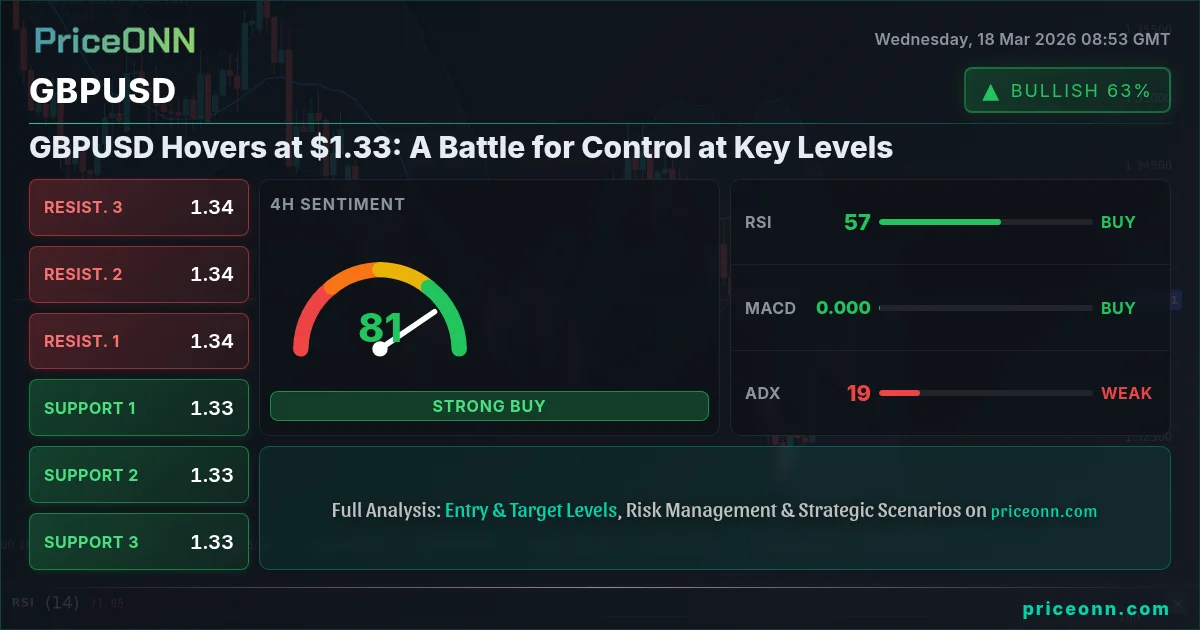
The Pound Sterling (GBP) is treading water in early European trading, holding its ground near the 1.3350 mark versus the US Dollar (USD). This period of consolidation reflects a market pause, with investors showing reluctance to commit to significant positions ahead of a packed economic calendar on Thursday. The primary drivers for this cautious sentiment are the impending interest rate decisions from two of the world's most influential central banks and a critical snapshot of the UK's employment landscape.
The Bank of England's monetary policy committee is set to announce its latest decision on interest rates. This decision hinges on the central bank's mandate to maintain price stability, defined as keeping inflation at a 2% target. The BoE's primary instrument for achieving this objective is the adjustment of its benchmark lending rate. This rate influences the cost of borrowing for commercial banks and, consequently, the broader interest rate environment across the UK economy. The Sterling's trajectory is intrinsically linked to these policy adjustments.
Understanding the BoE's Influence on Sterling
When inflation figures signal a deviation above the 2% target, the Bank of England typically responds by increasing interest rates. This move makes credit more expensive for both individuals and corporations, acting as a brake on economic activity. Paradoxically, higher interest rates often bolster the Sterling. This is because they enhance the United Kingdom's appeal as an investment destination, attracting global capital seeking higher returns.
Conversely, if inflation dips below the desired 2% level, it can indicate a slowdown in economic growth. In such scenarios, the BoE may opt to lower interest rates. The intention here is to reduce borrowing costs, encouraging businesses to invest and stimulate economic expansion. Such a policy shift, however, generally exerts downward pressure on the Pound Sterling.
In more extreme economic circumstances, the BoE possesses the authority to implement unconventional monetary tools, such as Quantitative Easing (QE). QE involves a significant expansion of credit availability within the financial system, deployed when traditional interest rate cuts prove insufficient to revive a stagnant economy. This process typically entails the central bank injecting liquidity by purchasing assets, often government or high-grade corporate bonds, from financial institutions. Historically, the implementation of QE has been associated with a depreciation of the Sterling.
The inverse policy, Quantitative Tightening (QT), is employed when the economy is robust and inflationary pressures begin to mount. Unlike QE, where the BoE actively buys assets, QT involves the central bank allowing its bond holdings to mature without reinvesting the principal, effectively reducing the money supply. This unwinding of its balance sheet is generally viewed as a supportive factor for the Sterling.
Market Ripple Effects
The upcoming Bank of England policy meeting, coupled with the release of UK labor market data, presents a critical juncture for the Pound Sterling. Traders will be dissecting every nuance of the BoE's statement, searching for clues regarding the future path of interest rates. The labor market report, in particular, will offer insights into wage growth and employment levels, key inputs for the inflation outlook and thus, future monetary policy.
The implications extend beyond the UK's borders. A hawkish surprise from the BoE, perhaps signaling a faster pace of tightening or a more aggressive stance on inflation, could propel GBP higher against currencies like the Euro (EUR) and the US Dollar (USD). Conversely, any indication of a dovish tilt or concerns about economic resilience might lead to a Sterling sell-off.
Furthermore, the market's reaction to the UK data will influence broader risk sentiment. Strong employment figures could boost confidence in the UK economy, potentially benefiting UK equities and government bonds. However, if accompanied by surging wage growth, it might also fuel inflation expectations, leading to increased pressure on the BoE to act decisively. This delicate balancing act between supporting growth and controlling inflation is precisely what markets are watching closely. The interplay between the BoE's stance, the US Federal Reserve's own policy path, and global economic conditions will ultimately shape the Sterling's performance in the coming weeks.
Attention will also be keenly focused on the US Federal Reserve, as its policy decisions often set the tone for global markets. Any divergence in monetary policy between the BoE and the Fed could create significant volatility in currency pairs like GBP/USD. Investors are bracing for potential shifts, understanding that these central bank actions are foundational to the financial landscape.
Track markets in real-time
Empower your investment decisions with AI-powered analysis, technical indicators and real-time price data.
Join Our Telegram Channel
Get breaking market news, AI analysis and trading signals delivered instantly to your Telegram.
Join Channel