Silver Price Forecast: XAG/USD plunges, clearing key levels below $70
Silver's Precipitous Fall Signals Shifting Market Sentiment
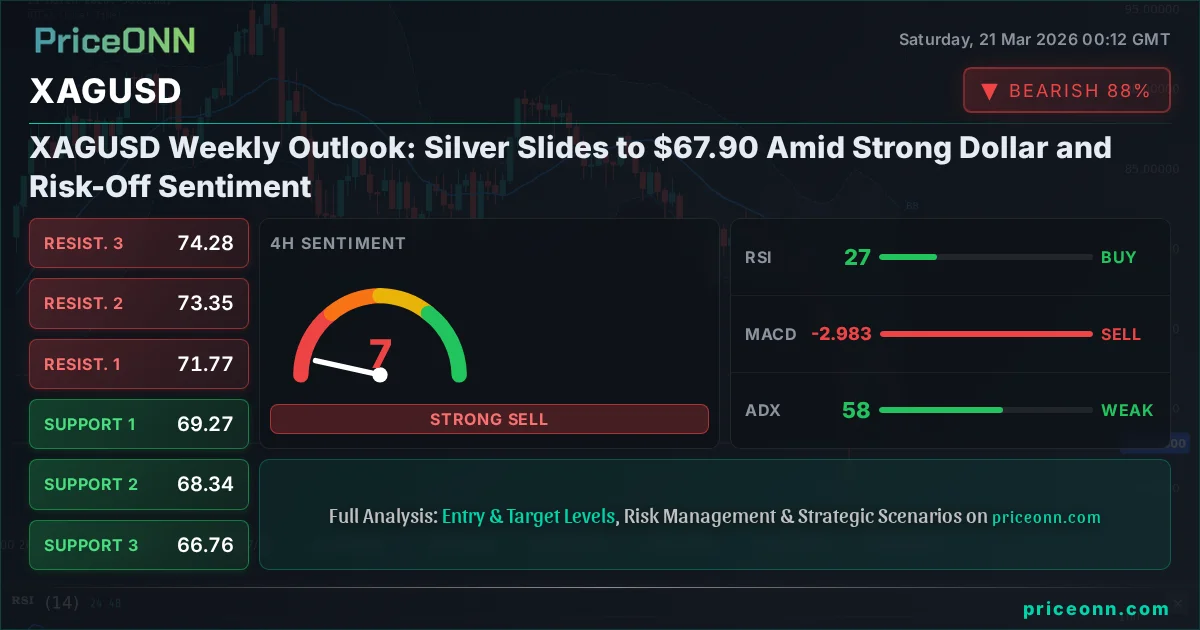
The precious metal known as silver, often a secondary choice for investors seeking haven assets, has just endured a brutal trading session. Late in North American hours, the white metal saw its value plummet, notching a daily decline exceeding 6.80%. This sharp sell-off is poised to cap off the trading week with substantial losses, marking its second largest weekly retreat in 2024, trailing only the 17.39% drop seen in the week ending January 30. At the current moment, the XAG/USD trading pair is exchanging hands at approximately $67.89.
Historically, silver has served as both a store of value and a transactional asset. While it may not command the same spotlight as gold, it offers investors a route to portfolio diversification, an avenue to preserve wealth, or a potential shield against inflationary pressures. Engagement with silver can take physical forms, such as coins and bars, or it can be accessed through financial instruments like exchange-traded funds that mirror its international market movements.
The forces dictating silver's price trajectory are multifaceted. Geopolitical turbulence or anxieties about a significant economic downturn can elevate silver's appeal as a safe harbor. This effect, however, is typically less pronounced than that experienced by gold. As an asset that does not generate yield, silver's value tends to correlate inversely with interest rate environments; lower rates often provide a tailwind for its price.
Furthermore, the performance of the US Dollar plays a critical role, given that silver is denominated in dollars. A strengthening dollar generally exerts downward pressure on silver prices, while a weaker dollar can act as a catalyst for price appreciation. Beyond these macroeconomic drivers, factors such as investment inflows, the availability of newly mined silver – which is considerably more abundant than gold – and the volume of recycled material also contribute to price dynamics.
Silver's industrial utility is another significant price determinant. Its exceptional electrical conductivity, surpassing even that of copper and gold, makes it indispensable in sectors like electronics and solar energy production. A surge in demand from these industrial applications can naturally drive prices upward, whereas a slowdown can lead to price depreciation. Economic conditions in major global players, specifically the United States, China, and India, exert considerable influence. China and the US, with their vast industrial bases, are substantial consumers of silver. In India, consumer appetite for silver jewelry also plays a notable role in shaping global price trends.
The price action of silver often mirrors that of gold, a phenomenon rooted in their shared status as precious metals and safe-haven assets. When gold prices ascend, silver frequently follows suit. The relationship between the two is often examined through the gold/silver ratio, which quantifies the number of silver ounces required to purchase one ounce of gold. A high ratio might suggest that silver is comparatively undervalued against gold, or conversely, that gold is overvalued. A low ratio could imply the opposite, with gold potentially being undervalued relative to silver.
Market Ripple Effects
The dramatic plunge in silver prices, particularly the breach of key support levels below the $70 mark, carries significant implications for various market participants and related assets. This sharp correction suggests a potential shift in risk sentiment, moving away from safe-haven assets and possibly indicating a growing aversion to inflation hedges. Traders who were long on silver are now facing substantial paper losses, and the momentum has clearly shifted to the downside in the short term.
The immediate impact is felt across the precious metals complex. Gold (XAU/USD), while often more resilient, may face headwinds as the overall sentiment towards precious metals sours. A significant divergence where silver falls sharply while gold holds firm could signal underlying strength in gold or a specific issue impacting silver demand. Conversely, if gold also succumbs to selling pressure, it would indicate a broader flight from perceived safe havens.
Industrial commodities and related equities are also in focus. Given silver's crucial role in sectors like electronics and renewable energy, a sustained price decline could, paradoxically, be viewed positively by industrial consumers, potentially lowering input costs. However, the underlying reason for the price drop – often linked to economic slowdown fears or tightening monetary policy – might overshadow this benefit, signaling weaker industrial demand ahead. Mining companies, particularly those with a significant silver production profile, will see their revenues and profit margins squeezed, likely impacting their stock valuations.
The US Dollar Index (DXY) is another asset to monitor. If silver's decline is occurring alongside a strengthening dollar, it reinforces the inverse relationship. However, if the dollar is weakening while silver plummets, it would suggest that other factors, such as a sharp increase in interest rate expectations or a sudden deleveraging event, are driving the sell-off, overriding the typical currency dynamics.
Traders should closely watch the $65-$67 area as the next potential zone of support for XAG/USD. A decisive break below this could signal further capitulation. Conversely, any signs of stabilization or a bounce from these levels, especially if accompanied by improving industrial data or a dovish shift in central bank rhetoric, could present a contrarian buying opportunity. The gold/silver ratio will also be a key indicator; a rapidly widening ratio could suggest silver is oversold relative to gold, potentially setting up a mean-reversion trade if market conditions stabilize.
Track markets in real-time
Empower your investment decisions with AI-powered analysis, technical indicators and real-time price data.
Join Our Telegram Channel
Get breaking market news, AI analysis and trading signals delivered instantly to your Telegram.
Join Channel