Silver Price Forecast: XAG/USD remains capped below 100-day SMA, downside risks persist
Market Action Amid Shifting Yields
The silver market, tracked as XAG/USD, displayed a positive bias on Monday. This upward movement appears linked to a noticeable pullback in US Treasury yields. Investors are actively recalibrating their expectations regarding the Federal Reserve's future monetary policy trajectory, creating a more favorable environment for non-interest bearing assets.
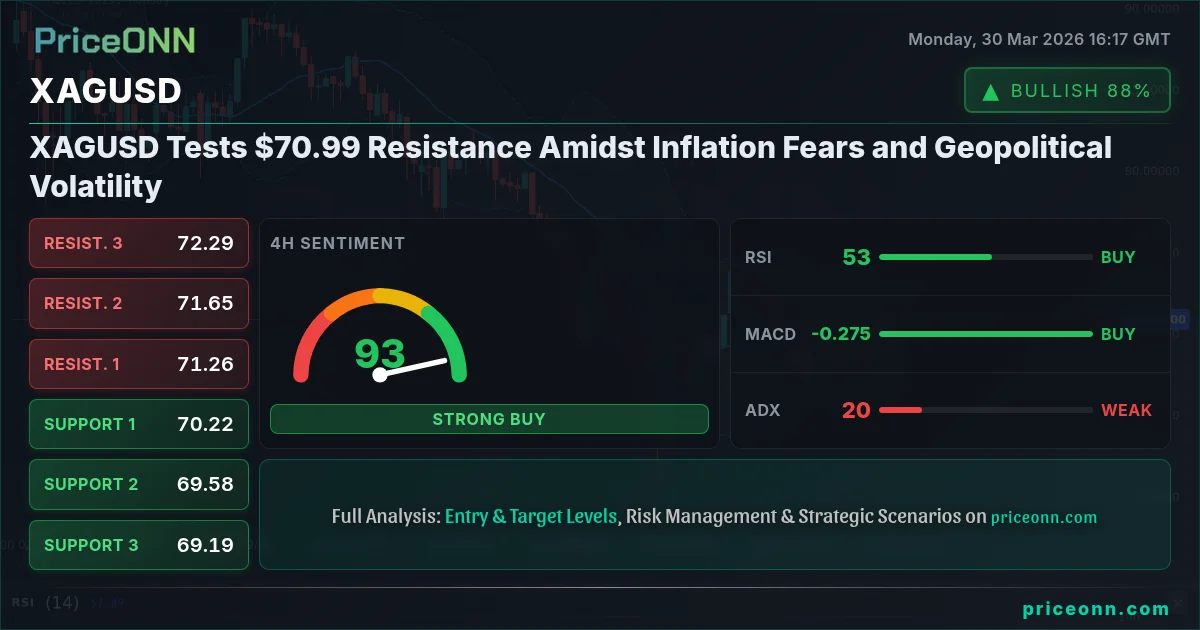
At the time of this report, XAG/USD was seen changing hands around the $70.50 level. This represents a gain of almost 1.0% for the trading session, indicating a short-term boost for the white metal. The current price action suggests that while silver faces resistance, particularly below its 100-day moving average, the easing yield environment is providing a crucial counterbalance to prevailing downside risks.
Understanding Inflation's Complex Role
Inflation, fundamentally, measures the escalation in the cost of a predefined basket of goods and services. Economists typically distinguish between "headline" inflation, representing the overall price change over a month or year, and "core" inflation. Core inflation strips out the more volatile components like food and energy, which can be swayed by geopolitical events or seasonal shifts.
Central banks, tasked with maintaining price stability, usually target a core inflation rate of approximately 2%. The Consumer Price Index (CPI) is a primary tool for gauging these price movements. When core CPI figures consistently exceed this 2% target, it often prompts central banks to consider raising interest rates. Conversely, inflation falling below the target may lead to rate cuts.
This dynamic has a direct, albeit sometimes counterintuitive, impact on currency strength. A scenario of high inflation typically compels a central bank to hike rates. These higher rates can attract foreign capital seeking better returns, thereby strengthening the domestic currency. The opposite occurs with low inflation; falling rates can make a currency less attractive to global investors.
Gold's Shifting Safe Haven Status
Historically, gold was the go-to asset for investors seeking to preserve wealth during periods of high inflation. Its intrinsic value made it a reliable hedge. While gold retains its allure as a safe haven during extreme market turmoil, its role as a primary inflation hedge has diminished.
The primary reason for this shift lies in the interest rate response to inflation. When inflation surges, central banks lift borrowing costs. Higher interest rates increase the opportunity cost of holding non-yielding assets like gold. Investors can earn a return on cash deposits or interest-bearing securities, making gold comparatively less attractive. Therefore, a high inflation environment, which previously signaled a rally in gold, now often presents headwinds due to the anticipated monetary policy tightening.
Conversely, periods of lower inflation are generally supportive of gold prices. As inflation moderates, central banks are more inclined to lower interest rates. This reduction in borrowing costs makes the opportunity cost of holding gold significantly lower, positioning it as a more appealing investment alternative compared to low-yielding fixed-income assets.
Reading Between the Lines
The current market sentiment, with silver showing resilience despite lingering upside caps, highlights a complex interplay of factors. The slight pullback in Treasury yields is offering a temporary reprieve, but the overarching question for precious metals traders remains the Federal Reserve's next move. Any indication of sustained higher rates would likely continue to pressure gold, while silver's industrial demand component could offer a different risk/reward profile.
Traders are closely monitoring key economic data releases, particularly inflation reports and employment figures, for clues about the Fed's path. The 100-day moving average for XAG/USD represents a critical technical resistance level. A sustained break above this could signal renewed bullish momentum, but the persistent downside risks associated with a higher for longer interest rate environment cannot be ignored. The market is in a delicate balance, awaiting clearer signals from monetary policymakers.
Track markets in real-time
Empower your investment decisions with AI-powered analysis, technical indicators and real-time price data.
Join Our Telegram Channel
Get breaking market news, AI analysis and trading signals delivered instantly to your Telegram.
Join Channel