Silver price rallies on US-Iran de-escalation hopes, softer inflation outlook
Market Momentum Builds for Precious Metals
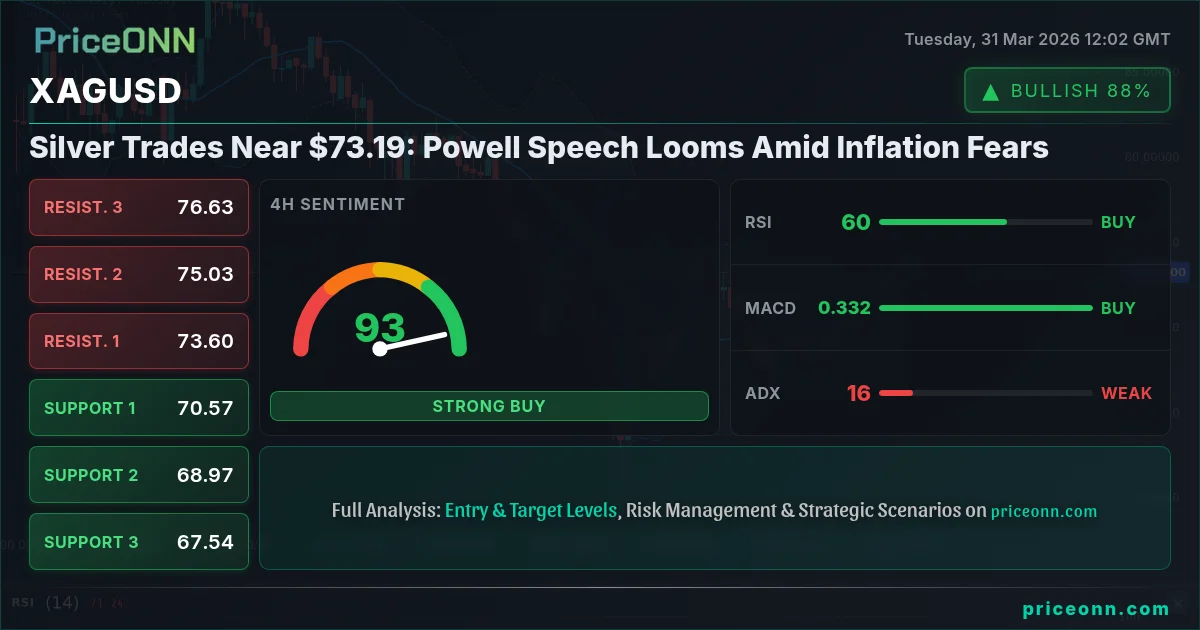
The price of Silver experienced a dramatic uplift on Tuesday, breaking through key resistance levels and capturing investor attention. At the time of this report, the white metal was trading around the $73.70 mark, representing a substantial 5.14% increase over the preceding 24 hours. This sharp ascent appears to be fueled by a confluence of positive market signals, including a palpable de-escalation in US-Iran geopolitical tensions and growing expectations that inflation may be softening.
Historically, silver has maintained a dual role in financial markets. It serves not only as a traditional store of value, much like its more famous counterpart gold, but also as a crucial diversification tool for investment portfolios. Its appeal stems from its intrinsic worth and its potential to act as a hedge against periods of elevated inflation. Investors engage with silver through various avenues, from acquiring physical bullion in the form of coins and bars to utilizing more liquid instruments like Exchange Traded Funds (ETFs) that mirror its price movements across global exchanges.
The factors influencing silver's valuation are multifaceted and dynamic. Geopolitical uncertainty or the specter of a severe economic downturn can propel silver prices higher, leveraging its perceived safe-haven status, though typically to a lesser degree than gold. As an asset that does not generate yield, silver often finds favor in environments characterized by declining interest rates. Its price trajectory is also intricately linked to the performance of the US Dollar, given that silver is denominated in USD (XAG/USD). A strengthening dollar generally exerts downward pressure on silver prices, while a weakening dollar tends to provide a significant tailwind.
Beyond macroeconomic influences, supply-side dynamics play a critical role. Silver mining output, which is considerably more abundant than gold extraction, and the rates of metal recycling are key determinants of availability. Furthermore, industrial demand exerts considerable influence. Silver's exceptional electrical conductivity makes it indispensable in numerous high-tech applications, particularly within the electronics and solar energy sectors. A robust increase in demand from these industries can readily translate into higher prices, whereas a contraction in industrial activity typically leads to price erosion.
The economic health of major global players, specifically the United States, China, and India, also contributes to silver price fluctuations. China and the US, with their vast industrial bases, incorporate silver into a myriad of manufacturing processes. Meanwhile, consumer demand for silver jewelry in India remains a significant factor in global pricing. The interplay between industrial consumption and consumer-driven markets creates a complex web of supply and demand pressures.
A notable correlation exists between the movements of silver and gold. As gold prices ascend, silver often follows suit, benefiting from a similar investor perception of its safe-haven qualities. The Gold/Silver ratio, a metric indicating how many ounces of silver are required to purchase one ounce of gold, offers a comparative valuation perspective. A high ratio may signal that silver is relatively undervalued compared to gold, or conversely, that gold is overvalued. A low ratio might suggest the opposite scenario, with gold potentially being undervalued relative to silver.
Market Ripple Effects
The current surge in silver prices carries significant implications beyond the white metal itself. The easing of geopolitical tensions, particularly between the US and Iran, reduces a key source of safe-haven demand that has benefited precious metals. This shift suggests that market participants are increasingly prioritizing economic fundamentals over immediate geopolitical risks. The softer inflation outlook, if sustained, would typically lead to expectations of less aggressive monetary policy from central banks, potentially including earlier or more substantial interest rate cuts. This environment is generally supportive for non-yielding assets like precious metals.
Traders should closely monitor the US Dollar Index (DXY). A sustained weakening of the dollar could provide further impetus for silver's advance, while any unexpected strengthening might stall its rally. Additionally, the performance of gold remains a critical barometer. While silver is outperforming gold on a percentage basis today, gold's broader trend will influence the overall precious metals complex. Investors might also observe the behavior of industrial metals, such as copper. If industrial demand remains robust despite easing inflation expectations, it could signal underlying economic strength that benefits both industrial and precious metals.
The risk-on sentiment potentially signaled by de-escalating tensions could also impact equity markets, particularly technology stocks that are sensitive to interest rate expectations. A sustained rally in silver could also be interpreted as a sign of broad market liquidity seeking safe or alternative havens, even amidst reduced geopolitical fear. Key levels to watch for silver include its recent highs and psychological barriers. A decisive break above these could signal further upside potential, whereas failure to hold current gains might indicate that the inflationary hedge narrative is fading faster than anticipated.
Track markets in real-time
Empower your investment decisions with AI-powered analysis, technical indicators and real-time price data.
Join Our Telegram Channel
Get breaking market news, AI analysis and trading signals delivered instantly to your Telegram.
Join Channel