Silver price slides as safe-haven Dollar, higher yields outweigh geopolitical support
Precious Metal Faces Headwinds as Greenback Gains Traction
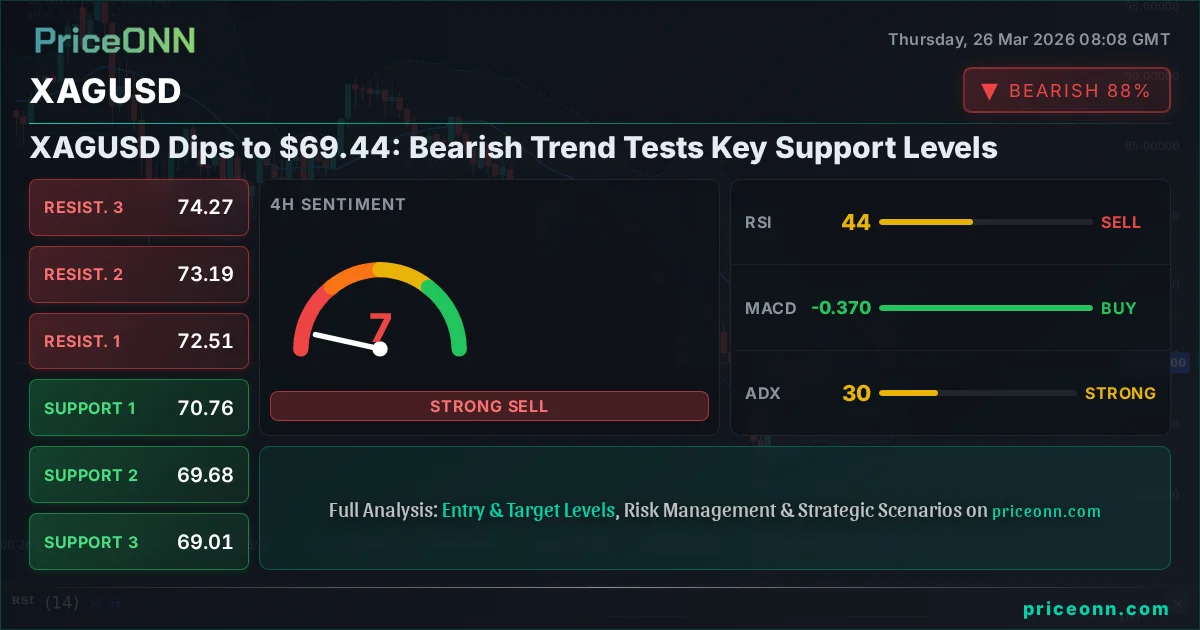
The price of Silver experienced a sharp downturn today, trading precariously close to the $68.50 mark. This represents a substantial 3.85% fall from recent highs, erasing earlier gains accumulated this week. The pullback signifies a clear shift in market dynamics, as potent macroeconomic forces begin to outweigh the metal's traditional appeal as a haven asset.
Historically, Silver has served multiple roles in the financial world, acting as a store of value and a medium for transactions. While often overshadowed by its more famous counterpart, Gold, it offers investors a means to diversify portfolios. Its appeal can stem from its intrinsic worth or its potential as a protective measure against periods of elevated inflation. Investors can gain exposure through physical acquisition of coins and bars, or via financial instruments like Exchange Traded Funds that mirror its international market performance.
Several interconnected factors influence Silver's price trajectory. Heightened geopolitical tensions or anxieties about a severe economic downturn can typically bolster its value due to its perceived safety. However, this safe-haven characteristic is generally less pronounced than that of Gold. As an asset that generates no yield, Silver typically benefits from a low interest rate environment. Conversely, rising rates can stifle its appeal.
The performance of the US Dollar is another critical determinant. Since Silver is denominated in dollars (XAG/USD), a robust dollar tends to exert downward pressure on its price. Conversely, a weakening dollar often provides a tailwind, propelling prices upward. Beyond these macroeconomic influences, supply-side dynamics play a significant role. Mining output, which is considerably more abundant for Silver than for Gold, alongside recycling rates, directly impacts availability and, consequently, price levels.
Industrial demand adds another layer of complexity. Silver's exceptional electrical conductivity, surpassing that of Copper and even Gold, makes it indispensable in various high-tech sectors, including electronics and solar energy production. A surge in demand from these industries can drive prices higher, while a slowdown typically leads to price erosion. Furthermore, economic activity in major global economies like the United States, China, and India exerts considerable influence. China and the US, with their vast industrial bases, are significant consumers of Silver in manufacturing processes. In India, consumer appetite for the precious metal, particularly for jewelry, is a key factor in global price setting.
The relationship between Silver and Gold prices is also noteworthy. Movements in Gold often presage similar trends in Silver, given their shared status as perceived safe havens. The Gold/Silver ratio, which quantifies the ounces of Silver required to purchase one ounce of Gold, serves as a gauge for their relative valuation. A high ratio may suggest that Silver is comparatively undervalued or Gold is overvalued, prompting some investors to consider strategic rebalancing. A low ratio, conversely, might indicate the opposite scenario.
Market Ripple Effects
The current slide in Silver prices, driven by a strengthening US Dollar and rising yields, presents a complex picture for market participants. The US Dollar Index (DXY), which measures the greenback's strength against a basket of major currencies, is likely to see increased upward momentum if this trend persists. Traders will be closely watching the DXY for confirmation of sustained dollar strength.
This environment is typically challenging for other precious metals, though their reactions can vary. Gold, while also sensitive to dollar strength and yields, often maintains a stronger safe-haven bid during periods of uncertainty. However, a strong dollar can still cap its upside. Investors might also re-evaluate their exposure to industrial commodities. A potential slowdown in global manufacturing, hinted at by industrial demand shifts for Silver, could negatively impact sectors reliant on robust economic activity.
Furthermore, the US Treasury yields, particularly on longer-dated bonds, are a critical indicator to monitor. Rising yields make interest-bearing assets more attractive relative to non-yielding ones like Silver, thus increasing the opportunity cost of holding the metal. Key levels to watch on Silver include the recent support around $68.50, with a decisive break below potentially opening the door to further declines towards the $65-$67 range. Conversely, a reversal in the dollar or a drop in yields could reignite buying interest.
Track markets in real-time
Empower your investment decisions with AI-powered analysis, technical indicators and real-time price data.
Join Our Telegram Channel
Get breaking market news, AI analysis and trading signals delivered instantly to your Telegram.
Join Channel