Silver price today: Silver falls, according to PriceONN data
Monday's Market Move for Silver
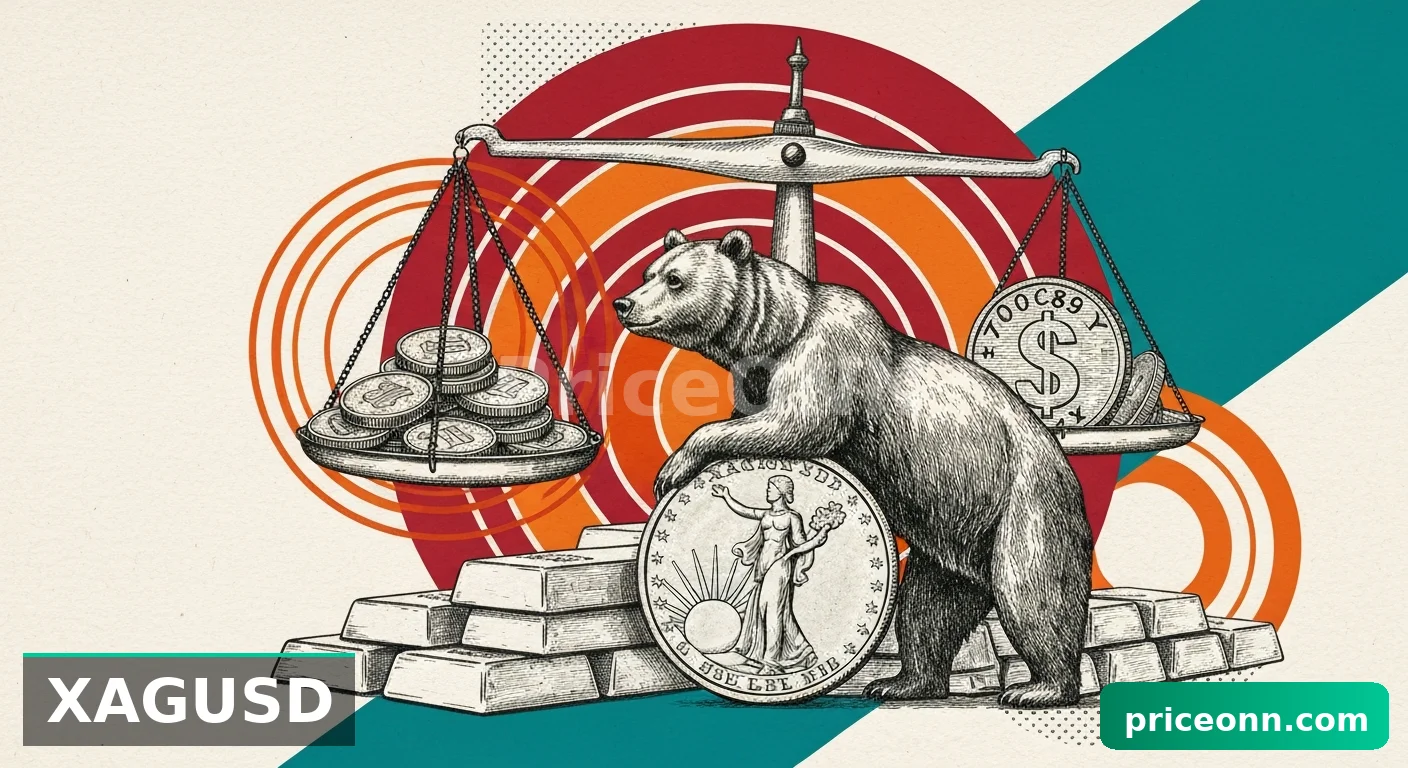
The price of silver, a key precious metal, registered a decline at the start of the trading week. As of Monday's session, the XAG/USD pair was valued at $78.94 per troy ounce. This marks a significant pullback of 2.07% from its previous trading level of $80.60 on Friday.
Understanding Silver's Market Dynamics
Silver, while often overshadowed by its more famous counterpart, gold, plays a critical role in diversified investment portfolios. Its appeal stems from its historical status as a store of value and a hedge against inflationary pressures. Many investors turn to silver to broaden their asset allocation, seeking its intrinsic worth or its potential to preserve capital during periods of economic uncertainty. Access to silver is multifaceted; investors can acquire physical forms like coins and bars, or engage with it through financial instruments such as Exchange Traded Funds (ETFs) that mirror its global market performance.
The forces shaping silver's price are varied and interconnected. Geopolitical tensions or anxieties surrounding a potential economic downturn can elevate silver's standing as a safe-haven asset, though its influence in this regard typically trails that of gold. As an asset that generates no yield, silver often finds favor when interest rates are low, potentially driving its value upward. The performance of the US Dollar is another significant determinant; given that silver is quoted in dollars (XAG/USD), a strengthening dollar usually exerts downward pressure on silver prices, while a weakening dollar can provide a tailwind for price appreciation.
Beyond these macroeconomic factors, the supply side also plays a crucial role. Silver is considerably more abundant than gold, and its price is influenced by mining output and the volume of recycled material. Furthermore, industrial demand presents a substantial layer of complexity. Silver's exceptional electrical conductivity, surpassing that of copper and even gold, makes it indispensable in various high-tech applications, including electronics and solar energy production. A surge in demand from these sectors can significantly bolster prices, whereas a contraction in industrial activity tends to depress them.
Economic activity in major global players like the United States, China, and India also contributes to price fluctuations. For the US and especially China, robust industrial sectors consume significant quantities of silver. In India, consumer appetite for silver jewelry adds another layer to global demand dynamics, influencing pricing trends.
The Gold-Silver Interplay
Silver's price movements frequently mirror those of gold, given their shared status as precious metals with safe-haven characteristics. When gold prices trend upwards, silver often follows, albeit sometimes with amplified volatility. The Gold/Silver ratio, a metric representing the number of silver ounces required to purchase one ounce of gold, offers insight into their relative valuations. A high ratio might signal that silver is comparatively undervalued against gold, or vice versa. Conversely, a low ratio could suggest gold is trading at a discount relative to silver.
Market Ripple Effects
Today's dip in silver prices warrants attention from a broader market perspective. While the immediate cause may be linked to specific trading desk activity or broader dollar strength, the implications extend to several interconnected markets. The US Dollar Index (DXY) is a key counterpoint; a stronger dollar often correlates with weaker commodity prices, including silver. Investors should monitor the DXY for cues on the directionality of the precious metal.
Furthermore, the performance of industrial metals like copper could offer clues about global manufacturing health, which directly impacts silver's industrial demand. A weakening copper price might foreshadow reduced industrial offtake for silver, potentially adding to downward price pressure. Equity markets, particularly those in the technology and renewable energy sectors, which are significant consumers of silver, could also see ripple effects. A sustained drop in silver prices might reflect broader economic slowdown fears that could also impact these growth-oriented stocks.
Traders should be particularly attuned to the $78.50 level as a potential short-term support. A decisive break below this could signal further downside towards the $77 mark. Conversely, any stabilization and recovery above $80 would indicate a potential retest of recent highs. The interplay between safe-haven demand, industrial output, and currency movements will be critical in determining silver's trajectory in the coming days.
Track markets in real-time
Empower your investment decisions with AI-powered analysis, technical indicators and real-time price data.
Join Our Telegram Channel
Get breaking market news, AI analysis and trading signals delivered instantly to your Telegram.
Join Channel