
WTI struggles around $100 as Trump calls allies to keep Hormuz safe and open
 PriceONN Editorial Desk
Multi-source verification
PriceONN Editorial Desk
Multi-source verification
Global Oil Benchmark Faces Pressure
The benchmark grade for US crude oil, West Texas Intermediate (WTI), found itself trading just shy of the significant $100 per barrel mark on Monday. As European markets opened, WTI futures on the NYMEX edged lower, hovering around the $98.00 level. This price action occurs against a backdrop of heightened geopolitical conversations, particularly concerning the safety and accessibility of crucial energy transit routes like the Strait of Hormuz.
WTI, a light and sweet crude, is a cornerstone of the global oil market. Its relatively low sulfur content and ease of refining make it a highly sought-after commodity. Originating in the United States and flowing through the pivotal Cushing, Oklahoma hub-dubbed the "Pipeline Crossroads of the World"-WTI serves as a critical price indicator, frequently cited in financial news and market reports.
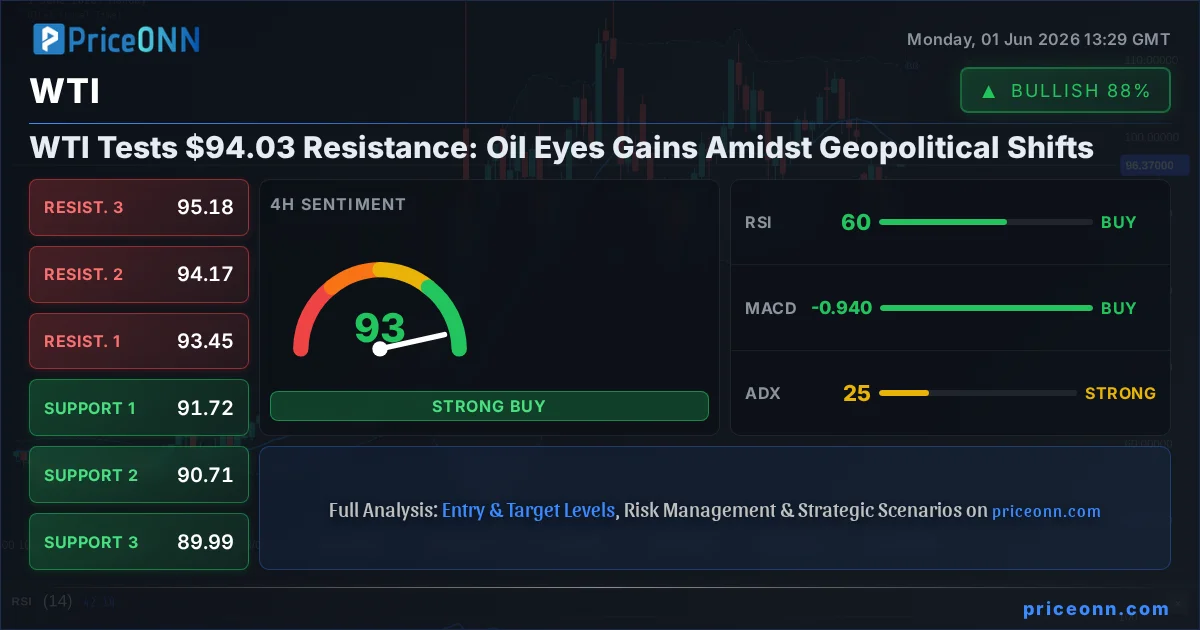
The fundamental forces of supply and demand continue to dictate the trajectory of WTI prices. Global economic health plays a substantial role; robust growth typically fuels increased energy consumption, thereby bolstering demand. Conversely, economic slowdowns often translate to subdued demand and downward pressure on prices. Geopolitical events, including conflicts, political instability, and international sanctions, possess the potent ability to disrupt supply chains, leading to price volatility.
Key Influences on Oil Pricing
The strategic decisions made by the Organization of the Petroleum Exporting Countries (OPEC) and its allies (OPEC+) remain a paramount driver of crude oil values. OPEC, comprising major oil-producing nations, convenes regularly to set production quotas, directly impacting global supply levels. Adjustments to these quotas can tighten or loosen the market, sending ripples through WTI pricing.
Furthermore, the strength of the US Dollar exerts considerable influence. Given that crude oil is predominantly priced in dollars, a weaker dollar generally makes oil more affordable for holders of other currencies, potentially stimulating demand and pushing prices higher. Conversely, a stronger dollar can have the opposite effect, making oil more expensive and potentially dampening demand.
Market participants also closely scrutinize weekly inventory reports released by the American Petroleum Institute (API) and the Energy Information Administration (EIA). These reports offer insights into the balance between crude oil supply and demand. A notable decrease in stockpiles, as indicated by these reports, can signal robust demand and lead to price appreciation. Conversely, an unexpected build in inventories may suggest an oversupply, exerting downward pressure on prices.
While the API releases its data on Tuesdays and the EIA follows on Wednesdays, their findings often align closely, typically within a 1% variance about three-quarters of the time. The EIA's figures are generally considered more authoritative due to their governmental status. The broader OPEC+ alliance, which includes key non-member producers like Russia, further amplifies the impact of these cartel decisions on global oil markets.
Market Ripple Effects
This period of WTI price consolidation near the $100 level, juxtaposed with geopolitical discussions about critical shipping lanes, presents a complex environment for traders and investors. The immediate implication is a heightened sensitivity to news flow, particularly regarding any developments that could threaten oil supply from major producing regions or transit points.
For traders, the $100 psychological barrier for WTI remains a key level to watch. A sustained break above this could signal renewed bullish momentum, potentially driven by escalating geopolitical risks or stronger-than-anticipated demand data. Conversely, a failure to hold the $98 area could invite further selling pressure, especially if broader economic concerns intensify or if inventory reports show unexpected builds.
Beyond crude oil itself, several related markets warrant close observation. The US Dollar Index (DXY) will be critical; a weakening dollar could provide an underlying support for oil prices, while dollar strength might act as a headwind. Equity markets, particularly energy sector stocks, will likely track oil price movements, with significant oil price increases potentially boosting profitability for exploration and production companies. Additionally, inflation expectations could be sensitive to sustained high oil prices, influencing bond markets and central bank policy considerations.
The primary risks revolve around unforeseen supply disruptions or a significant escalation in geopolitical tensions that could lead to a rapid price surge. Conversely, a swift resolution of diplomatic concerns or a sharper global economic slowdown could trigger a notable price correction. Investors should monitor the interplay between these geopolitical narratives and macroeconomic data for directional cues.
Track markets in real-time
Empower your investment decisions with AI-powered analysis, technical indicators and real-time price data.
Join Our Telegram Channel
Get breaking market news, AI analysis and trading signals delivered instantly to your Telegram.
Join Channel PriceONN News
(RTTNews) - Oil prices traded sharply lower on Wednesday as U.S.-Iran talks continued despite new American attacks on missile sites and mine-laying ships in the Strait of Hormuz.
PriceONN News
Gold futures broke above $4,500 per ounce on Friday, driven by increasing optimism for a de-escalation in the U.S.-Iran conflict and the potential reopening of the Strait of Hormuz. Silver also saw significant gains, reflecting a broader shift towards precious metals as geopolitical tensions ease.
PriceONN News
(RTTNews) - After moving sharply lower earlier in the day, the price of gold has shown a significant turnaround over the course of the trading session on Thursday.
PriceONN News
Gold prices fell below the $4500 mark on Wednesday, extending previous losses as oil prices tumbled and geopolitical tensions between the US and Iran remained a key market driver. Investors are weighing inflation concerns against hopes of de-escalation.
PriceONN News
Gold prices surged by 1% to approximately $4,556 on Monday as market participants reacted to developing news of a potential US-Iran peace deal. The speculation weakened the US Dollar and sent oil prices tumbling.
PriceONN News
(RTTNews) - Gold prices traded higher on Monday, oil prices tumbled nearly 5 percent and the dollar hovered near a one-week low after U.S. President Donald Trump said on Saturday a peace deal with Iran had been "largely negotiated."
PriceONN News
Gold prices fell on Friday as concerns over crude oil inventories and the prolonged closure of the Strait of Hormuz fueled inflation anxieties, overshadowing U.S.-Iran peace talks. The June Comex Gold contract settled down 0.55% at $4,517.40.
PriceONN News
(RTTNews) - Gold prices have edged lower on Friday as crude oil inventory concerns and the extended delay in the reopening of the Strait of Hormuz increased inflation-related apprehensions, overshadowing the positive signals from the developments in the U.S.-Iran negotiations.
PriceONN News
(RTTNews) - Gold prices have soared on Friday amid rising optimism about an end to the Middle East war with the chances of reopening of the Strait of Hormuz and resumption of oil and energy trade growing stronger.
PriceONN News
(RTTNews) - Gold held firm above $4,500 an ounce on Friday, the dollar headed for a small weekly loss on improved risk sentiment in markets, and oil prices slipped to a one-month low amid investor optimism that the Middle East conflict is inching toward an end and that the reopen
PriceONN News
Gold prices experienced a significant decline on Wednesday, falling over 1% as diplomatic optimism surrounding U.S.-Iran talks grew, despite ongoing military actions. The June gold contract settled at $4,444.50.
PriceONN News
Gold prices experienced a significant downturn, shedding 2% this week to settle near $4,444.50 per ounce. This decline is attributed to evolving U.S.-Iran diplomatic efforts and concerns over potential central bank rate hikes.