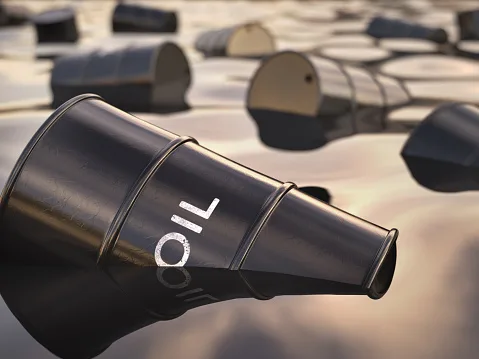
Oil Prices Tumble as IEA Unleashes Record Reserve Release

Oil markets are reeling today as the International Energy Agency (IEA) announced a historic release of 400 million barrels of crude from strategic reserves. The coordinated action, aimed at stabilizing prices amid ongoing geopolitical tensions, is putting significant downward pressure on crude benchmarks, even as U.S. inventory data presented a mixed picture.
Market Context
The IEA's decision follows a period of intense volatility in oil markets, driven by concerns over supply disruptions stemming from the war involving Iran and its impact on tanker traffic through the Strait of Hormuz. This critical waterway, responsible for approximately 20% of global oil and LNG trade, has become a focal point of anxiety, leading to sharp price swings. Prior to the IEA announcement, oil had spiked from around $70 per barrel to nearly $120 before retreating somewhat. The IEA's move is intended to provide a buffer against these disruptions and alleviate concerns about potential shortages.
Adding to the complexity, the U.S. Energy Information Administration (EIA) reported a surprise increase in U.S. crude oil inventories. For the week ending March 6, inventories rose by 3.8 million barrels, bringing total commercial stockpiles to 443.1 million barrels. While this figure is still 2% below the five-year average for this time of year, it contrasts with earlier estimates of a drawdown, highlighting the challenges in accurately assessing the supply-demand balance. Before the EIA numbers were released, Brent crude was trading at $90.63 a barrel, a jump of $2.83, or 3.35% and WTI also experienced gains, trading at $86.10 a barrel, up $2.65, or 3.18%.
Analysis & Drivers
The IEA's decision is clearly the dominant factor impacting oil prices today. The sheer scale of the release – the largest in the agency's history – signals a strong commitment to stabilizing the market. The move is designed to counter the perception of a supply crunch and reassure traders that ample reserves are available. The IEA’s member countries collectively possess roughly 1.8 billion barrels of emergency stockpiled crude and refined fuels, which can be deployed during periods of severe disruption.
However, the increase in U.S. crude inventories adds a layer of nuance. While seemingly bearish, the data must be viewed in the context of broader market dynamics. Decreases in gasoline and distillate inventories, which fell by 3.7 million barrels and 1.3 million barrels respectively, suggest continued strength in consumer demand. Total products supplied averaged 21.0 million barrels per day over the past four weeks, a 1.9% increase compared to the same period last year. Gasoline demand averaged 8.8 million barrels per day over the last four weeks, while distillate fuel demand averaged 4.1 million barrels per day, a 0.4% increase year-over-year.
Furthermore, the strength of the U.S. dollar is also playing a role. A stronger dollar typically makes oil more expensive for international buyers, potentially dampening demand and putting downward pressure on prices. Conversely, a weaker dollar can make oil more affordable, boosting demand. The current strength of the dollar is therefore contributing to the bearish sentiment in the oil market.
Trader Implications
Traders should closely monitor the impact of the IEA release on global crude supplies. Key levels to watch for WTI crude include the $80 per barrel mark, which could act as a support level if prices continue to decline. A break below this level could signal further downside potential. Conversely, any signs of a rebound could see WTI test resistance around $88-90 per barrel.
It's also crucial to pay attention to ongoing developments in the Strait of Hormuz. Any escalation in tensions or further disruptions to tanker traffic could quickly reverse the current downward trend. Traders should be prepared for heightened volatility and consider adjusting their positions accordingly.
Furthermore, monitor the weekly inventory reports from both the API and EIA. Discrepancies between the two reports can create short-term trading opportunities, but it's essential to focus on the overall trend rather than reacting to individual data points. The EIA data, being a government source, is generally regarded as more reliable.
Consider these factors for trading:
- Monitor the Strait of Hormuz: Escalations can rapidly change the oil price outlook.
- Watch for inventory data: EIA and API reports provide insights into supply and demand.
- Track the USD: A stronger USD can weigh on oil prices.
Ultimately, traders need to balance the bearish impact of the IEA release with the underlying strength in demand and the potential for further supply disruptions. Risk management is paramount in this environment.
Looking ahead, the market will be closely watching for further announcements from the IEA regarding the specific allocations from each member country. The effectiveness of the release in stabilizing prices will also depend on the duration of the geopolitical tensions and the extent to which they continue to disrupt global supply chains. Market sentiment is likely to remain bearish in the short term, but a sustained recovery in prices could occur if supply concerns re-emerge or if demand proves more resilient than anticipated.
Track markets in real-time
Empower your investment decisions with AI-powered analysis, technical indicators and real-time price data.
Join Our Telegram Channel
Get breaking market news, AI analysis and trading signals delivered instantly to your Telegram.
Join Channel