
Why Are Flights and Packages More Expensive? Oil Spikes Beyond the Gas Pump


The impact of escalating global oil prices is extending far beyond the familiar pain at the pump, with consumers now facing higher costs for essential services such as package delivery and air travel. Geopolitical tensions, particularly concerning the Strait of Hormuz, have significantly tightened oil supply, leading to a dramatic price surge that industry players are now integrating into their long-term operational strategies.
Market Context
The benchmark Brent crude futures for May delivery have experienced a remarkable climb, surging by over 55% in March. This trajectory positions it for its largest monthly gain since 1998. U.S. benchmark oil prices are also showing substantial gains, with a 49% increase month-to-date. This sharp rise in the cost of a fundamental commodity is forcing businesses to re-evaluate their pricing models and operational expenses.
Analysis & Drivers
The primary driver behind this oil price escalation is the heightened geopolitical risk, specifically the ongoing conflict and potential disruptions around the critical Strait of Hormuz. This chokepoint is vital for global oil transit, and any threat to its unimpeded flow directly impacts supply and fuels price volatility. Market data indicates that this isn't being treated as a short-term anomaly; organizations are adjusting their business plans to account for sustained higher energy costs. This strategic recalibration means the inflationary pressure will likely filter through to a wider array of consumer goods and services.
Trader Implications
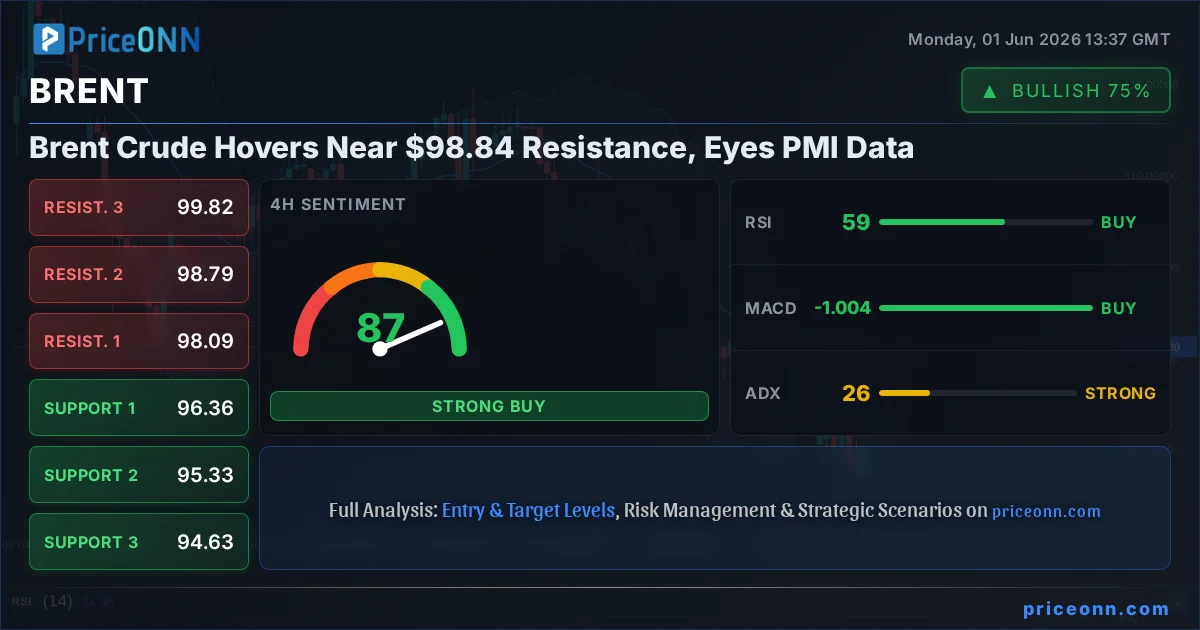
Traders should monitor the geopolitical developments impacting the Strait of Hormuz closely, as any escalation or de-escalation will have immediate repercussions on crude oil prices. Key support levels for Brent crude are being tested, with resistance expected around the recent highs. For those trading energy markets, the current volatility presents both risk and opportunity. The proposed surcharge by the U.S. Postal Service, pending regulatory approval, suggests that transportation and logistics costs are becoming a significant factor. Airlines are also adjusting their strategies, indicating that airfares could see upward pressure. Traders should watch for announcements from major carriers regarding fuel surcharges and their potential impact on ticket prices.
The U.S. Postal Service has already signaled its intent to pass on a portion of these increased operational costs. The agency has announced plans for a temporary 8% surcharge on package and express mail deliveries, which could take effect as early as late April and potentially extend into 2027, subject to regulatory approval. This move underscores the broad economic impact of rising energy prices, highlighting that the inflationary effects are reaching beyond the fuel tank.
Outlook
The coming weeks will be crucial for determining the sustained direction of oil prices. Continued geopolitical tensions could push Brent crude towards new highs, potentially triggering further surcharges across various service industries. Conversely, any signs of de-escalation or increased supply from other producers could lead to a price correction. For consumers, the expectation should be for higher costs in transportation-related services, making it essential to budget for these increasing expenses. The market will be keenly watching upcoming economic data releases for inflation indicators and consumer spending patterns.
Frequently Asked Questions
What is causing the recent surge in oil prices?
The primary driver is increased geopolitical risk, particularly concerning potential disruptions in the Strait of Hormuz, a critical oil transit route. This has led to a supply crunch, pushing Brent crude up over 55% in March.
How will higher oil prices affect consumers beyond gas?
Consumers will likely see higher prices for services like package delivery, with the USPS proposing an 8% surcharge. Airfares are also expected to rise as airlines adjust to increased fuel costs.
What should traders watch for in the oil market?
Traders should closely monitor geopolitical developments affecting the Strait of Hormuz and key price levels. Brent crude is experiencing significant volatility, with the potential for further price increases if tensions persist.
Track markets in real-time
Empower your investment decisions with AI-powered analysis, technical indicators and real-time price data.
Join Our Telegram Channel
Get breaking market news, AI analysis and trading signals delivered instantly to your Telegram.
Join Channel PriceONN News
US consumer confidence fell slightly to 93.1 in May, a modest decline from April's 93.8, driven by persistent inflation linked to Middle Eastern geopolitical events. While beating expectations, the drop signals growing household pressure.
PriceONN News
The upcoming U.S. employment report for May is poised to reveal a labor market that is stabilizing but not accelerating, potentially influencing Federal Reserve policy. Traders are closely watching key inflation indicators from ISM surveys and Eurozone CPI data.
PriceONN News
Upcoming U.S. employment data is poised to reveal a labor market showing signs of stabilization rather than robust growth, potentially influencing Federal Reserve policy. Traders are closely watching key inflation indicators within the ISM surveys.
PriceONN News
Canadian headline inflation rose to 2.8% in April, largely driven by gasoline prices, but core measures remain stable, suggesting the Bank of Canada has room to maintain a patient stance on interest rates.
PriceONN News
A robust US employment report showing stronger-than-expected job gains and stable unemployment initially lifted stock markets, but lingering geopolitical risks are tempering broader investor enthusiasm.
PriceONN News
Long-term unemployment can have ramifications on financial, emotional and family health that linger even after reentry into the workforce.
PriceONN News
Upcoming U.S. employment data for May is expected to reveal a labor market that is no longer deteriorating but also failing to show significant improvement, with nonfarm payrolls projected to rise by 105,000 and the unemployment rate ticking up to 4.4%.
PriceONN News
Markets are closely watching Friday's U.S. employment report for May, with expectations of 105,000 new jobs and a 4.4% unemployment rate, which could indicate a labor market not deteriorating but also not significantly improving.
PriceONN News
Canadian headline inflation rose to 2.8% in April, primarily driven by gasoline prices, yet core inflation metrics showed surprising stability, offering the Bank of Canada room for a patient monetary policy stance.
PriceONN News
New York's manufacturing sector experienced a significant boost in May, with the Empire State Manufacturing Index jumping to 19.6, nearly three times the expected consensus. This marks the strongest reading since April 2022, signaling a robust expansion in regional industrial activity.
PriceONN News
US inflation is projected to rise modestly in April, with headline CPI approaching 3.8% year-over-year, driven by escalating energy costs impacting food and services, even as shelter inflation cools. This data will be crucial for upcoming Federal Reserve policy decisions.
PriceONN News
US inflation data for April is anticipated to show a modest uptick, with headline CPI potentially reaching 3.8% year-over-year. This rise is attributed to elevated energy prices impacting food and services, even as shelter costs continue to moderate. Retail sales are also expected to grow, though primarily driven by price increases rather than volume.