
Why Qatar's LNG Halt Won't Trigger a Long-Term Global Price Spiral
 PriceONN Editorial Desk
Multi-source verification
PriceONN Editorial Desk
Multi-source verification
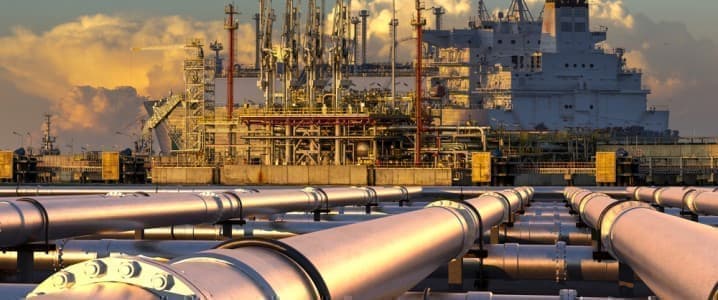
Initial Price Spike and Market Assessment
Natural gas markets reacted sharply to the confluence of two critical events: QatarEnergy's suspension of LNG output and the impediment of maritime traffic through the Strait of Hormuz, both occurring amidst escalating geopolitical tensions in the Middle East. The immediate consequence was a substantial price increase, exemplified by a 52% surge at Europe’s Title Transfer Facility (TTF) benchmark on March 2nd. However, a new analysis from Rystad Energy suggests that this initial shock will likely have a contained and transient effect on the broader global gas and liquefied natural gas landscape.
The core rationale behind this outlook rests on the assumption that the disruptions will be relatively short-lived and manageable in terms of overall volume reductions. The analysts emphasize the critical role of Qatar in the global LNG market, but also point to the potential for alternative supply sources and demand adjustments to mitigate the impact.
Potential Supply Disruptions and Mitigation Strategies
"The cessation of Qatari LNG production, coupled with the Strait of Hormuz closure, is poised to constrict global LNG availability significantly, a dynamic already evident in recent price escalations," analysts noted.
The magnitude of the supply shortfall hinges on two key variables: the extent of any infrastructural damage sustained and the duration of the Strait's inaccessibility to shipping. Rystad's analysis presents several scenarios:
- Limited Disruption (15-day halt): In a scenario characterized by minimal damage and a swift resolution of hostilities, resulting in a 15-day production stoppage, the projected decline in 2026 output is estimated at 4.3%, equivalent to approximately 3.3 million tonnes (Mt).
- Prolonged Disruption: A more protracted disruption could lead to a loss of around 5.6 Mt of supply.
- Worst-Case Scenario (4-5 week closure): A full-scale interruption, with the Strait remaining closed to commercial traffic for four to five weeks, could translate into a loss of roughly 11.2 Mt for the entire year of 2026.
However, given Qatar's pivotal role in the global LNG market and the economic imperative to restore production, the expectation is that operations will resume within weeks rather than months.
Furthermore, even in a severe disruption scenario, alternative supply sources could emerge. Opportunistic producers have the potential to bring up to 15 Mt of incremental LNG to market, while the reintegration of Russian LNG could add another 18 Mt. However, the latter is contingent on sanctions relief and logistical considerations.
Demand-Side Adjustments and Regional Impacts
The report emphasizes that the most vulnerable nations are primarily price-sensitive, developing economies. These countries are more likely to resort to fuel-switching, prioritizing thermal coal over other energy sources, rather than engaging in aggressive bidding wars for available LNG cargoes.
"The impact is likely to fall most heavily on price-sensitive South Asian buyers... Rather than on premium markets willing to bid aggressively for cargoes," the report stated.
The analysis concludes that while the initial price spike was significant, the underlying market dynamics and potential mitigation strategies suggest that a prolonged global price spiral is unlikely. The situation is further complicated by the evolving geopolitical landscape and the potential for both supply and demand adjustments to rebalance the market.
Track markets in real-time
Empower your investment decisions with AI-powered analysis, technical indicators and real-time price data.
Join Our Telegram Channel
Get breaking market news, AI analysis and trading signals delivered instantly to your Telegram.
Join Channel PriceONN News
South Korea’s state-run utility Korea Electric Power Corp. (KEPCO) has won a $1.4-billion deal with Saudi oil giant Aramco to build and operate Phase 2 of Saudi Arabia’s Jafurah cogeneration power plant at the major gas project estimated to need $100 billion of total investments. KEPCO’s cogeneration project entails building a 331-MW cogeneration facility capable of producing about 465 tons of steam per hour by June 2029. The plant is expected to supply electricity and steam to Aramco for 17...
PriceONN News
BP will sell 5% in the $35-billion Browse LNG project in Australia, which Australian energy giant Woodside is looking to progress, the UK-based supermajor told Reuters on Monday. BP is selling the 5% stake, out of its total of its 44% interest, to South Korea's GS Energy. “The dilution reflects BP’s disciplined approach to portfolio management by bringing in a committed partner,” BP said in a statement emailed to Reuters. The Browse LNG project in Australia, proposed by Woodside Energy, entails...
PriceONN News
Iran's oil exports fell to their lowest level in at least six years in May as the U.S. naval blockade continued to choke off crude shipments and leave tens of millions of barrels stranded at sea. According to shipping data from Vortexa, Iran exported just 209,000 barrels per day (bpd) of crude oil and condensate in May, down from 1.34 million bpd in April and nearly 1.9 million bpd in March. Kpler had estimated May exports slightly higher at 260,000 bpd, but still the lowest level since the...
PriceONN News
Africa's biggest refinery is getting bigger. Nigeria's Dangote refinery has started work on a second crude processing unit that will add another 700,000 barrels per day (bpd) of capacity, putting the complex on track to rival the world's largest refining site and giving billionaire owner Aliko Dangote a much larger role in global fuel markets. According to Dangote Petroleum Refinery CEO David Bird, construction is already underway at the Lekki site outside Lagos. The new refinery is expected to...
PriceONN News
The Iran war suddenly turned what had started as a year of oversupply in global oil and LNG markets into the worst oil and gas supply disruption in history. Three months after the U.S.-Israeli strikes on Iran began on February 28, the world has already lost 1 billion barrels of crude oil supply, oil and gas prices have found a new, much higher floor, and whipsaw with violent volatility nearly every day, trade routes have shifted, and tanker rates have spiked. Actual supply shortages are...
PriceONN News
Nuclear fuel is becoming a geopolitical battleground as the world increasingly turns to nuclear energy to contend with skyrocketing energy demand projections. The combination of an oil-based energy crisis emanating out of the Strait of Hormuz, the enormous and ballooning energy needs of artificial intelligence, and the urgent imperative of decarbonization is garnering a renewed interest in nuclear energy as a carbon-free, efficient, and round-the-clock power source. Moreover, nuclear energy can...
PriceONN News
Over the last two decades, solar panels have fallen in price while efficiency has increased. Greater uptake and high levels of investment in research and development have led to vast improvements in solar power technology. As panel prices fall and governments worldwide look to diversify their energy mix and cut emissions, several developers are now launching mega-projects to meet the growing demand. Most major solar projects developed in recent years provide hundreds of megawatts of clean...
PriceONN News
China has been cited as an example of a country that has managed to insulate itself relatively well against oil crises. With over a billion barrels in estimated inventories before the war in the Middle East started, China was the poster child of forward planning in energy security. But this could change, and if it does, it would make an already severe crisis even worse. Kpler sounded the alarm about that prospect earlier this month, reporting that Chinese refiners have reduced their purchases...
PriceONN News
The Iran war has handed the United States a rare opportunity: a new dawn of energy dominance in an increasingly fractured world. With coordinated US-Israeli strikes disrupting the Strait of Hormuz from late February, roughly 20% of global LNG supply has been stripped from the market since early March. Prices have surged across Asia and Europe. And into that vacuum, American gas has flowed. The numbers speak for themselves. US LNG exports to Asia jumped sharply in April, with nearly a quarter of...
PriceONN News
Cuba has been experiencing a worsening energy crisis for several years, which previously led it to rely heavily on Venezuela for its fuel. Following the United States’ intervention in Venezuela in February, the energy crisis has grown even worse, as Cubans face regular blackouts and the economy suffers. Cuba requires about 100,000 barrels a day to power its grid and meet the regular transportation demands. It fulfils just 40 percent of this demand domestically. In January, the Trump...
PriceONN News
Crude oil prices experienced a significant drop, with WTI futures falling over 1.8% to $87.25, as optimism grew for a U.S.-Iran deal potentially reopening the Strait of Hormuz.
PriceONN News
Crude oil prices experienced a significant downturn as market sentiment shifted towards optimism about a potential US-Iran Memorandum of Understanding that could reopen the Strait of Hormuz. WTI futures fell nearly 2% on the news.