
Will Carbon Credits Offset Big Tech's AI-Driven Emissions Spike?
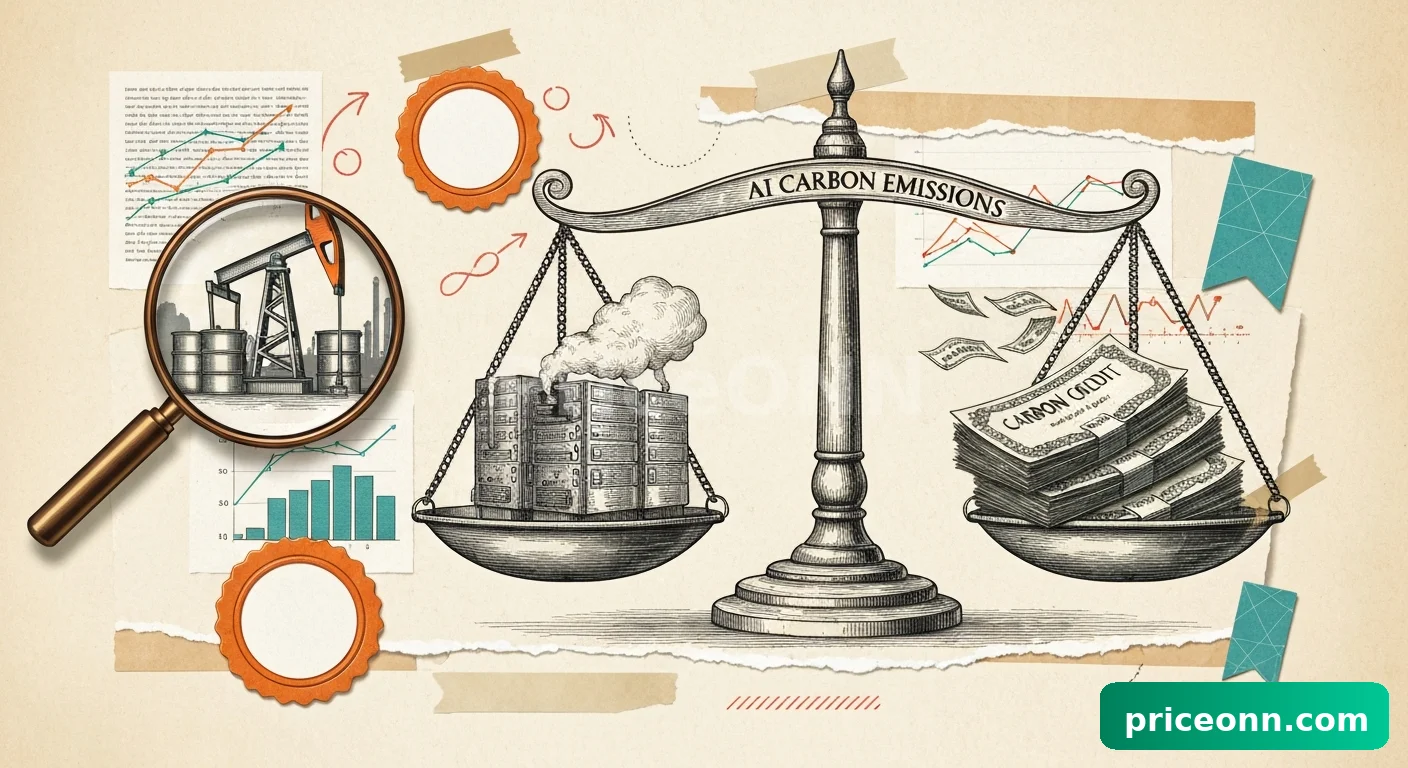
The insatiable demand for artificial intelligence is propelling a massive build-out of global data centers, creating an enormous energy appetite that threatens to undermine environmental commitments by major technology firms.
As AI capabilities advance, the computational power required escalates dramatically. This has led leading tech companies to accelerate the expansion of their data center infrastructure worldwide. To meet these burgeoning power needs, corporations are diversifying their energy strategies, exploring options from renewable energy sources like solar and wind to even nuclear power projects. However, a significant and increasingly scrutinized strategy is the substantial investment in carbon credits, an attempt to offset the rising carbon footprint associated with their AI ambitions.
Market Context: AI's Energy Thirst and Emissions Rise
Market data reveals a stark reality: global electricity consumption by data centers has been increasing at an average of 12 percent annually since 2017. More alarmingly, the power demand for these AI-centric facilities is now escalating at a pace roughly four times faster than for all other sectors combined. This surge in electricity usage is directly translating into higher carbon emissions, especially given that a substantial portion of the global energy grid still relies on fossil fuels.
The consequences are already becoming apparent. Major players like Google, Meta, and Microsoft have reported an increase in their carbon emissions in recent years, a trend that appears to conflict with their public net-zero targets. Currently, data centers are estimated to contribute at least 0.5 percent to global greenhouse gas emissions. Projections from industry analysts suggest this figure could climb to approximately 1.4 percent within the next five years, a level comparable to the annual emissions of an industrialized nation like Japan.
Analysis & Drivers: The Carbon Credit Conundrum
In response to this escalating environmental impact and growing scrutiny, several prominent tech corporations are channeling significant capital into the carbon credit market. Since intensifying their AI deployments in 2022, companies such as Amazon, Google, Meta, and Microsoft have notably increased their acquisition of carbon removal credits. These credits are intended to represent a ton of carbon dioxide removed from the atmosphere or avoided from being emitted.
However, the efficacy and integrity of many existing carbon credit schemes have faced widespread criticism. Concerns range from the additionality of the projects (whether they would have happened without the credit funding) to issues of permanence and accurate measurement of emission reductions. This has led many market observers and environmental advocates to question whether these investments represent a genuine commitment to sustainability or merely a form of greenwashing. The core challenge lies in ensuring that carbon credits drive real, verifiable emission reductions rather than simply allowing high-emitting activities to continue under a guise of environmental responsibility.
Trader Implications: Watching the Offset Market
For traders and investors in the energy and technology sectors, the growing reliance on carbon credits presents a complex landscape. The demand from Big Tech for these credits could provide a significant tailwind for companies operating in the voluntary carbon market, potentially driving up credit prices and investment in carbon capture and renewable energy projects. Traders should monitor:
- Regulatory Developments: Increased scrutiny on carbon credit quality could lead to stricter verification standards, impacting the value and availability of certain credits.
- Corporate Commitments: Watch for announcements regarding the scale and nature of carbon credit purchases by major tech firms. A significant increase could signal sustained demand.
- Renewable Energy vs. Credits: Observe the balance between direct investment in renewable energy infrastructure and investment in carbon credits. A shift towards more credits might suggest a less aggressive direct decarbonization strategy.
- Key Price Levels: Track the average price of voluntary carbon credits, particularly those from high-quality removal projects. A sustained rise could indicate robust demand from the corporate sector.
The fundamental driver remains the escalating energy demand for AI. As this demand grows, so too will the pressure on companies to demonstrate environmental responsibility. The carbon credit market is a key battleground where this pressure is being met, albeit with significant questions about its overall effectiveness.
Outlook: The Balancing Act Continues
The trajectory for Big Tech's emissions and their proposed solutions remains a critical area to watch. While carbon credits offer a mechanism to address immediate emission concerns, the long-term sustainability of AI growth hinges on a fundamental shift towards cleaner energy sources and more energy-efficient computing. The market will likely see continued tension between the rapid expansion of AI infrastructure and the efforts to mitigate its environmental consequences. Traders should anticipate ongoing debate and potential regulatory shifts surrounding carbon offsetting mechanisms, which could introduce volatility into both the energy and carbon credit markets.
Frequently Asked Questions
What is the current estimated contribution of data centers to global greenhouse gas emissions?
Data centers are currently estimated to contribute at least 0.5 percent to global greenhouse gas emissions. Analysts project this figure could rise to approximately 1.4 percent within five years if current trends continue.
Why are tech companies investing in carbon credits?
Tech companies are investing in carbon credits primarily to offset the significant increase in carbon emissions generated by the massive energy consumption of their AI-driven data center expansions. This is an effort to meet their stated net-zero or sustainability commitments.
What are the main concerns regarding the effectiveness of carbon credits?
Key concerns include questions about the 'additionality' of projects (whether they would have occurred without credit funding), the permanence of carbon removal, and the accuracy of emissions reduction measurements. Critics worry these credits might not lead to sufficient real-world emission reductions.
Track markets in real-time
Empower your investment decisions with AI-powered analysis, technical indicators and real-time price data.
Join Our Telegram Channel
Get breaking market news, AI analysis and trading signals delivered instantly to your Telegram.
Join Channel



PriceONN