Will the Fed Hold Rates Steady as Inflation Fears Mount?
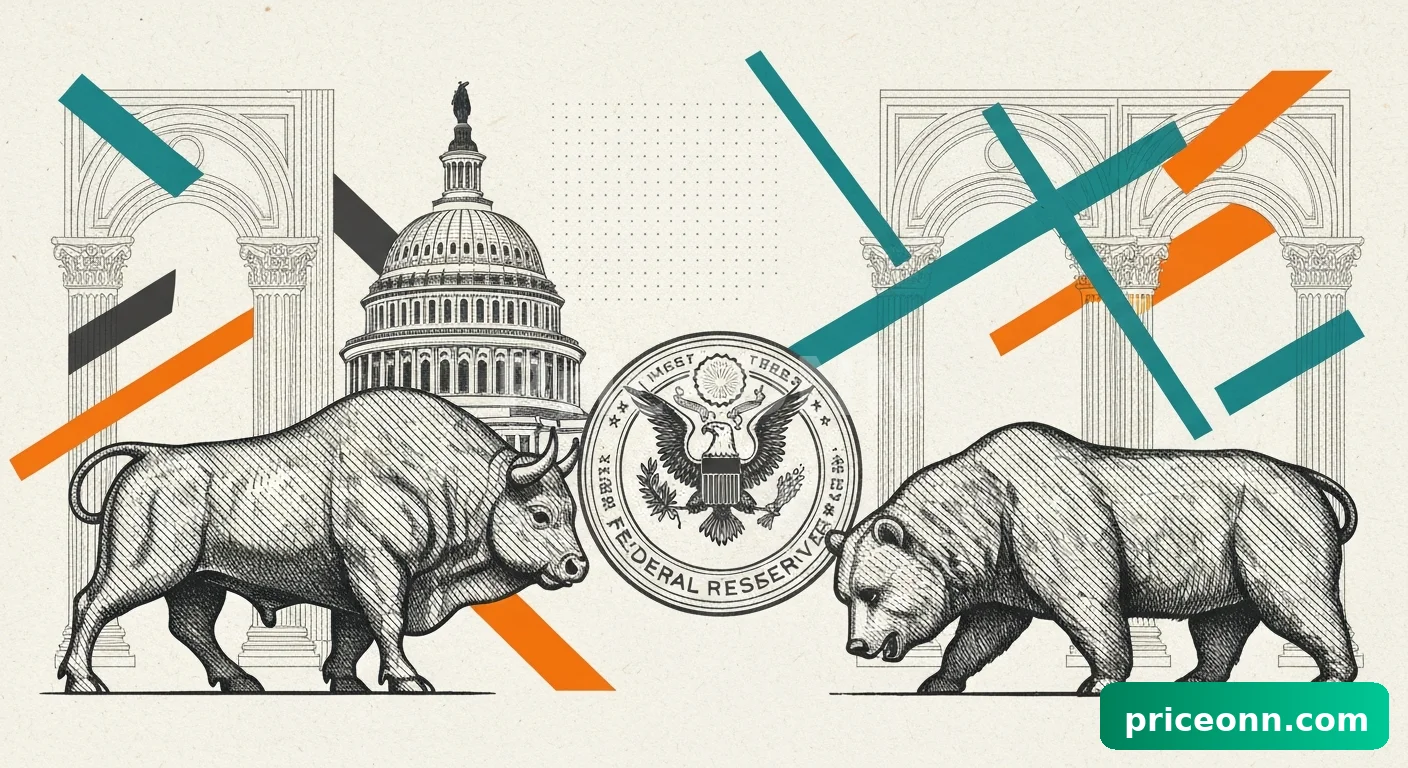
The market is anticipating a pivotal moment as the Federal Reserve's Federal Open Market Committee (FOMC) prepares to convene on March 18, 2026. Expectations are high for a decision to hold the federal funds rate steady, a move colloquially termed a “hawkish hold.” This stance is being shaped by a complex interplay of rising inflation pressures, particularly from energy costs, and a cooling labor market, creating a challenging environment for policymakers.
Market Context
The prevailing sentiment among market participants is that the Fed will keep its benchmark interest rate unchanged. This decision comes at a time when the economic narrative has shifted from anticipated normalization to a more uncertain “wait-and-see” approach. The conflict in the Middle East has significantly impacted global energy markets, sending oil prices on an upward trajectory and complicating the Fed's objective of returning inflation to its 2% target. Recent economic data presents a mixed picture: a February jobs report indicated a slowdown, with payrolls falling by approximately 92,000 and the unemployment rate ticking up to 4.4%, suggesting a need for monetary easing. However, with Personal Consumption Expenditures (PCE) inflation remaining stubbornly near 3% and energy costs escalating, the risk of unanchoring inflation expectations discourages a premature rate cut.
Analysis & Drivers
The primary driver behind the potential “hawkish hold” is the resurgence of inflation concerns. Beyond the immediate impact of surging oil prices, analysts note that food prices are also expected to rise due to increased fertilizer costs, directly linked to the ongoing geopolitical tensions. Furthermore, manufactured goods are experiencing “downstream” price increases, indicating broader inflationary pressures. This has led to signs of an “uptick” in inflation expectations, which had previously been well-anchored. The Fed's dual mandate-maximum employment and price stability-is under strain. While the labor market shows signs of softening, the renewed energy shock and broader price pressures necessitate a cautious approach to avoid reigniting uncontrolled inflation. The Summary of Economic Projections (SEP) will be closely scrutinized for updated inflation forecasts and the potential shift of the anticipated 2026 rate cut further into 2027.
Trader Implications
The prospect of a “hawkish hold” by the Federal Reserve carries significant implications for currency markets, particularly for the US Dollar Index (DXY). Market data suggests that an extended period of higher-for-longer interest rates in the United States, relative to other major economies, could fuel further appreciation for the dollar. Traders should monitor key support and resistance levels for DXY, with 105.00 acting as a significant psychological level. For equity markets, such as the Dow Jones Industrial Average, the environment presents a “risk triangle.” Elevated yields can pressure corporate valuations, rising oil prices can squeeze corporate margins, and geopolitical uncertainty adds a layer of volatility. Investors may need to reassess portfolio allocations to account for increased market choppiness and potentially higher borrowing costs for longer than previously anticipated.
Outlook
Looking ahead, the Federal Reserve's upcoming decision and updated projections will be a key determinant of market direction in the short to medium term. If the Fed signals a higher inflation outlook and pushes back the timeline for rate cuts, the US Dollar could see sustained strength, while risk assets may face headwinds. Traders will be keenly watching for any shifts in language regarding inflation persistence and the labor market's resilience. The next FOMC meeting will provide crucial clarity on the path forward, with the market recalibrating its expectations based on the Fed's latest assessment of the economic landscape.
Frequently Asked Questions
What is a “hawkish hold” by the Federal Reserve?
A “hawkish hold” refers to the Federal Reserve keeping interest rates unchanged while signaling a more aggressive stance on inflation, suggesting that future rate cuts may be delayed or less likely than previously anticipated. This can be accompanied by upward revisions to inflation forecasts.
What are the key economic indicators influencing the Fed's decision?
The Fed is balancing a softening labor market, indicated by falling payrolls and a rising unemployment rate to 4.4%, against persistent inflation, with PCE inflation near 3% and rising energy costs. Inflation expectations are also a critical factor.
What is the expected impact on the US Dollar Index (DXY)?
Market data suggests that a “hawkish hold” scenario, implying higher-for-longer interest rates in the U.S., could lead to an extended rally for the US Dollar Index (DXY). Traders will be watching if it can maintain levels above 105.00.
Track markets in real-time
Empower your investment decisions with AI-powered analysis, technical indicators and real-time price data.
Join Our Telegram Channel
Get breaking market news, AI analysis and trading signals delivered instantly to your Telegram.
Join Channel