
Will UK Inflation Remain Stubbornly High in February?

Traders and economists are closely monitoring the upcoming release of the United Kingdom's February Consumer Price Index (CPI) data, scheduled for Wednesday at 07:00 GMT. Market expectations are firming around a report that will likely highlight ongoing inflationary challenges, indicating that price pressures continue to exert a significant influence on the British economy and remain well above the Bank of England's (BoE) target.
Market Context
The February CPI figures, to be released by the Office for National Statistics (ONS), are critical for assessing the current state of the UK economy. Inflation, defined as the rate at which the general level of prices for goods and services is rising, directly impacts consumer purchasing power. The data is typically presented as a month-on-month (MoM) and year-on-year (YoY) percentage change. A particularly scrutinized component is core inflation, which excludes volatile food and energy prices. This metric is a primary guide for central banks like the BoE, which generally targets an inflation rate of around 2% to ensure economic stability and predictable price growth.
Analysis & Drivers
Persistent high core inflation suggests underlying economic pressures that may necessitate a tighter monetary policy stance from the Bank of England. Should the February CPI print confirm these expectations, it could reinforce the case for higher interest rates. Historically, when core inflation remains stubbornly above the 2% target, central banks often resort to increasing interest rates to cool demand and curb price increases. This strategy aims to make domestic assets more attractive to foreign investors seeking higher yields, potentially strengthening the currency. However, the relationship between inflation, interest rates, and currency value can be complex. While higher rates can attract capital, persistent inflation can also erode the real value of assets and dampen economic growth, creating a delicate balancing act for policymakers.
Trader Implications
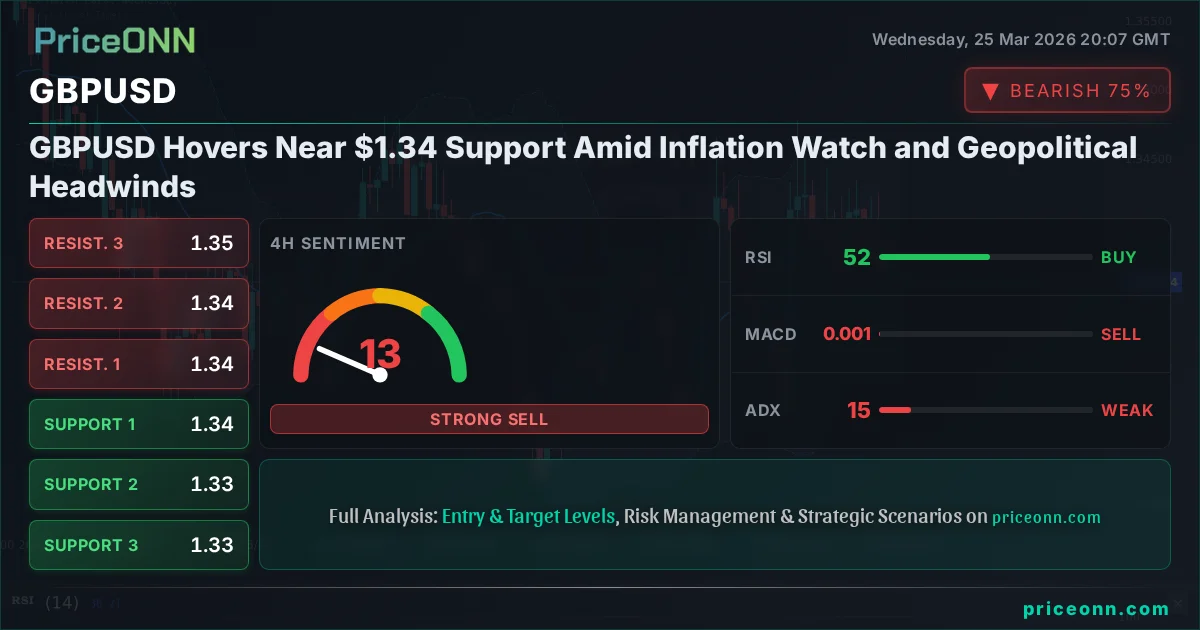
For forex traders, particularly those focused on the British Pound (GBP), the upcoming inflation data represents a significant event. A CPI reading that confirms persistent inflation above expectations could bolster the Pound as markets price in a higher probability of continued restrictive monetary policy from the BoE. Key levels to watch for GBP/USD would include immediate resistance around 1.2750 if the data is hawkish, and support near 1.2600 if inflation surprises to the downside. Traders should also pay attention to market sentiment regarding future BoE rate decisions. Any indication that the BoE might maintain higher rates for longer due to sticky inflation would likely support GBP. Conversely, a surprisingly low inflation print could trigger a sell-off in the Pound as expectations for rate cuts increase.
Outlook
The February UK inflation figures are poised to be a pivotal data point, offering crucial insights into the trajectory of price pressures and the Bank of England's future monetary policy decisions. If inflation remains elevated, it could signal a prolonged period of higher interest rates, impacting economic growth and currency markets. Conversely, any signs of disinflation could open the door for potential rate cuts later in the year, shifting market sentiment. Investors and traders will be scrutinizing not only the headline CPI but also the core inflation figures and any accompanying commentary from the ONS for clues about the underlying strength of inflationary forces.
Frequently Asked Questions
What is the expected UK inflation rate for February?
While specific figures vary, market consensus anticipates that the UK's February Consumer Price Index (CPI) will remain significantly above the Bank of England's 2% target, indicating persistent inflationary pressures.
How might this inflation data affect the British Pound (GBP)?
If inflation remains high, it could lead the Bank of England to maintain higher interest rates, potentially strengthening GBP. Traders will be watching for moves above 1.2750 against the USD as a sign of upward momentum.
What is the significance of core inflation in this report?
Core inflation, which excludes volatile food and energy prices, is a key indicator for the Bank of England's monetary policy decisions. Persistent high core inflation suggests underlying economic demand is driving prices, potentially requiring a longer period of restrictive interest rates.
Track markets in real-time
Empower your investment decisions with AI-powered analysis, technical indicators and real-time price data.
Join Our Telegram Channel
Get breaking market news, AI analysis and trading signals delivered instantly to your Telegram.
Join Channel



PriceONN