
Will the Yen Rebound as Japanese Inflation Hits a Four-Year Low?


The Japanese Yen experienced renewed downward pressure as the nation's core inflation figure for April revealed a significant cooling, falling to its lowest level in four years. This development poses a substantial challenge to the Bank of Japan (BoJ) policymakers who have been signaling a potential shift towards tighter monetary policy.
Market Context
Data released for April showed that Japan's core Consumer Price Index (CPI), which excludes volatile fresh food prices, dropped to 1.4% year-on-year. This reading was notably below market expectations of 1.7% and represents the slowest pace of inflation since March 2022. The headline CPI also saw a slight decrease, moving from 1.5% to 1.4% year-on-year, marking the fourth consecutive month inflation has remained below the BoJ's 2% target. This broad-based deceleration suggests that domestic price pressures are not only failing to accelerate but are actively receding, undermining the case for immediate interest rate hikes.
Analysis & Drivers
The primary driver behind this inflation slowdown appears to be a moderation in price momentum, particularly evident in the core-core inflation rate (excluding fresh food and energy), which eased from 2.4% to 1.9% year-on-year. The services sector, a key indicator of sustained inflation, also showed weakness, with price growth moderating significantly to 0.9%. A substantial drag came from education fees, which fell by a steep -10.6%, offsetting price increases in other service categories. Furthermore, the fading impact of previous supply-side shocks is becoming apparent. For example, rice prices saw a modest 0.6% year-on-year increase, a stark contrast to the 98.4% surge recorded in April of the previous year. These factors collectively indicate that the inflationary pressures that had emerged are proving to be less persistent than initially anticipated, making it difficult for the BoJ to justify a hawkish pivot.
Trader Implications
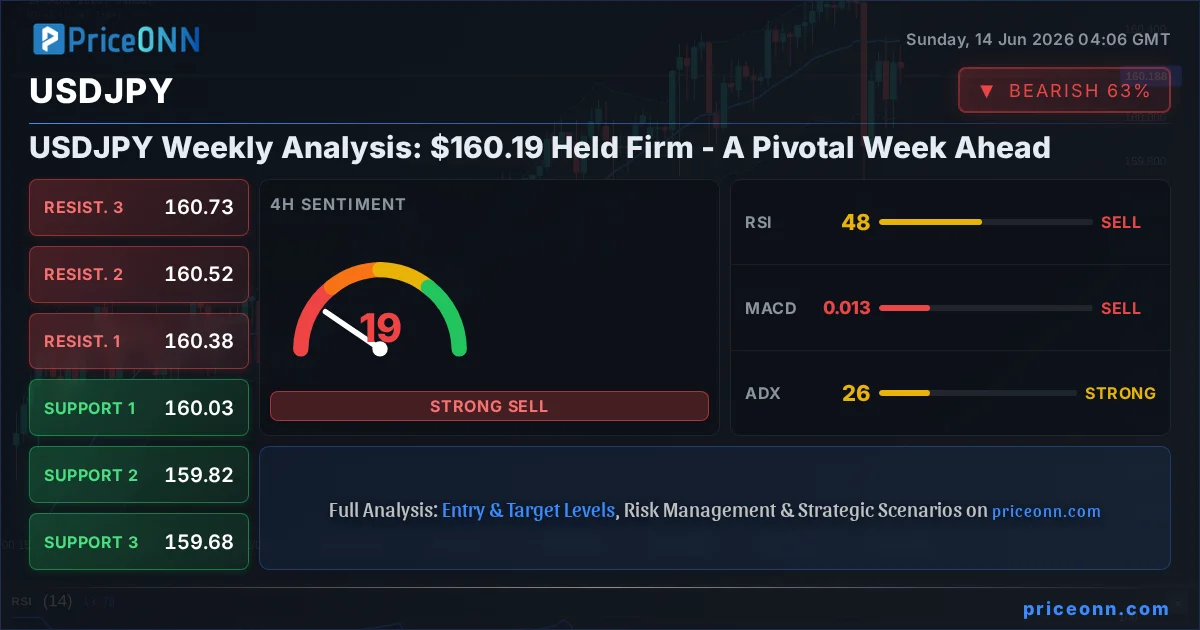
The softer inflation data directly impacts the monetary policy outlook for the Bank of Japan. With inflation undershooting targets and domestic price pressures waning, the likelihood of an imminent interest rate hike diminishes significantly. This could lead to a widening interest rate differential between Japan and other major economies, particularly the United States, putting further downward pressure on the Japanese Yen. Traders will be closely monitoring comments from BoJ officials for any shifts in their rhetoric. Key levels to watch for USD/JPY include the recent highs around 155.00, with a sustained move above this level potentially signaling further Yen weakness. Conversely, any unexpected hawkish signals from the BoJ could trigger a short-covering rally in the Yen. The 150.00 level will be a critical support zone to watch for potential reversals.
Outlook
The subdued inflation print complicates the Bank of Japan's path forward. While some policymakers have adopted a hawkish tone, the economic reality of cooling price pressures suggests that a rapid normalization of monetary policy is unlikely. This environment is likely to favor continued weakness in the Japanese Yen against major currencies, especially if other central banks maintain a tighter stance. Market participants will be looking ahead to upcoming BoJ meetings and economic data releases for further clues on the central bank's policy direction, but for now, the data points towards a more dovish outlook than previously expected.
Frequently Asked Questions
What is the current core inflation rate in Japan?
Japan's core inflation rate for April 2026 stood at 1.4% year-on-year, marking a significant slowdown and the lowest level since March 2022.
How does this inflation data affect the Bank of Japan's policy?
The weaker inflation data makes it more challenging for the Bank of Japan to justify near-term interest rate hikes. It suggests that domestic price pressures are not as strong as anticipated, potentially leading to a more cautious monetary policy stance.
What is the outlook for the Japanese Yen following this inflation report?
The softer inflation data is likely to exert downward pressure on the Japanese Yen, especially if interest rate differentials with other major economies widen. Traders may look for USD/JPY to test levels above 155.00 if the BoJ maintains its dovish stance.
Track markets in real-time
Empower your investment decisions with AI-powered analysis, technical indicators and real-time price data.
Join Our Telegram Channel
Get breaking market news, AI analysis and trading signals delivered instantly to your Telegram.
Join Channel PriceONN News
• The Bank of Japan is ready to raise the overnight rate. • Speculators are closing out their long positions on the US dollar. The US dollar opened with a downside gap, which is unlikely to be closed any time soon. Donald Trump announced a deal with Iran and the reopening of the Strait of […] The post The Yen: Time for a Hike! appeared first on ActionForex.
PriceONN News
Investors are focused on the Bank of Japan’s policy meeting on 16 June. According to a published on 10 June, the majority of economists expect the benchmark interest rate to be raised to 1% - a level not seen for decades. The market is also reacting to the Producer Price Index (PPI) data […] The post Nikkei 225 Strengthens Ahead of the Bank of Japan Decision appeared first on ActionForex.
PriceONN News
Will the Fed Blink? Markets Enter High-Stakes Week of Global Rate Decisions Markets are entering a week where almost every major central bank is expected to stand still. Yet it could still become one of the most volatile policy weeks of the year. Decisions from the Federal Reserve, Bank of Japan, Reserve Bank of Australia, […] The post Will the Fed Blink? Markets Enter High-Stakes Week of Global Rate Decisions appeared first on ActionForex.
PriceONN News
SpaceX’s success and geopolitics are driving the S&P 500 higher. Investors are hoping for future Fed rate cuts. Rumours of an imminent end to the conflict in the Middle East, SpaceX’s successes, positive news from the US economy and a decline in the likelihood of the Fed tightening policy have allowed the S&P 500 to […] The post S&P 500: on Track for a Recovery appeared first on ActionForex.
PriceONN News
The EURUSD pair is starting Monday’s trading session near 1.1468. This week, global financial markets will closely monitor two pivotal drivers: the prospects of a US-Iran nuclear deal and the upcoming Federal Reserve meeting. Any signs of progress in the negotiations could strip the geopolitical premium out of oil prices, subsequently weakening safe-haven demand for […] The post EUR/USD Ahead of the New Week: Expecting High Volatility appeared first on ActionForex.
PriceONN News
The biggest geopolitical breakthrough of 2026 may have just given Gold the catalyst it needed. Gold opened the week with a bullish gap and surged back above 4,300 after Washington and Tehran announced a formal Memorandum of Understanding to end their months-long war. The agreement, brokered through intensive mediation by Pakistan and Qatar, includes: Ceasefire: […] The post Gold’s Bullish Reversal Takes Shape After US-Iran Breakthrough, 4366 Key Test Ahead appeared first on ActionForex.
PriceONN News
At its policy meeting on 11 June, the ECB raised its deposit rate by 25 basis points to 2.25%. This automatically raises the refinancing rate to 2.40% and the marginal lending rate to 2.65%. This decision was unanimous, based entirely on the forecasts of the Eurosystem’s economists and advocated by ECB Chief Economist Lane. The […] The post The ECB’s Interest Rate Hike Is More Than an Insurance Hike, but No Signal for a Start of a Tightening Cycle appeared first on ActionForex.
PriceONN News
As the chart shows, the US Dollar Index (DXY) has gained more than 4% from its January lows, with the move accelerating from February 2026 onwards. Today, the dollar finds itself at a technically and fundamentally critical point, one that could define the near-term direction not only of the greenback itself, but of equity indices, […] The post US Dollar Index Analysis: Dollar at a Crucial Point, What’s Next? appeared first on ActionForex.
PriceONN News
• Rumours of an imminent peace deal in the Middle East sent the USD index tumbling. • The ECB raised interest rates but did not signal that the cycle would continue. The US dollar recorded its worst daily fall in over a month amid de-escalation in the Middle East, the ECB’s tightening of monetary policy […] The post Dollar: De-Escalation Sends Bulls Fleeing appeared first on ActionForex.
PriceONN News
Oil prices extended their sharp decline on today as markets grew increasingly confident that a breakthrough in US-Iran negotiations could eventually restore normal energy flows through the Strait of Hormuz. Brent crude slipped back into the $86-87 region, with the break below the psychologically important $90 level reinforcing the view that traders are beginning to […] The post Oil Collapses on Hormuz Optimism, EUR/CAD Rally May Be Just Getting Started appeared first on ActionForex.
PriceONN News
Platinum (PL) surged to fresh record highs in late January, marking a potential inflection point toward a long‑term secular bull market. This article explores the metal’s extended outlook and the evolving Elliott Wave framework that underpins its advance. Platinum (PL) Monthly Elliott Wave Chart The monthly Platinum chart highlights a decisive breakout into record territory, […] The post Platinum Elliott Wave View: Double Three Correction in Play appeared first on ActionForex.
PriceONN News
The Eurozone recorded a EUR 1.0bn deficit in goods trade with the rest of the world in April, a sharp deterioration from the EUR 8.7bn surplus recorded a year earlier. While exports continued to grow, stronger import demand more than offset the gains, highlighting the impact of rising external purchases on the region’s trade position. […] The post EU and Eurozone Trade Balances Slip Into Deficit Amid Strong Import Growth appeared first on ActionForex.