

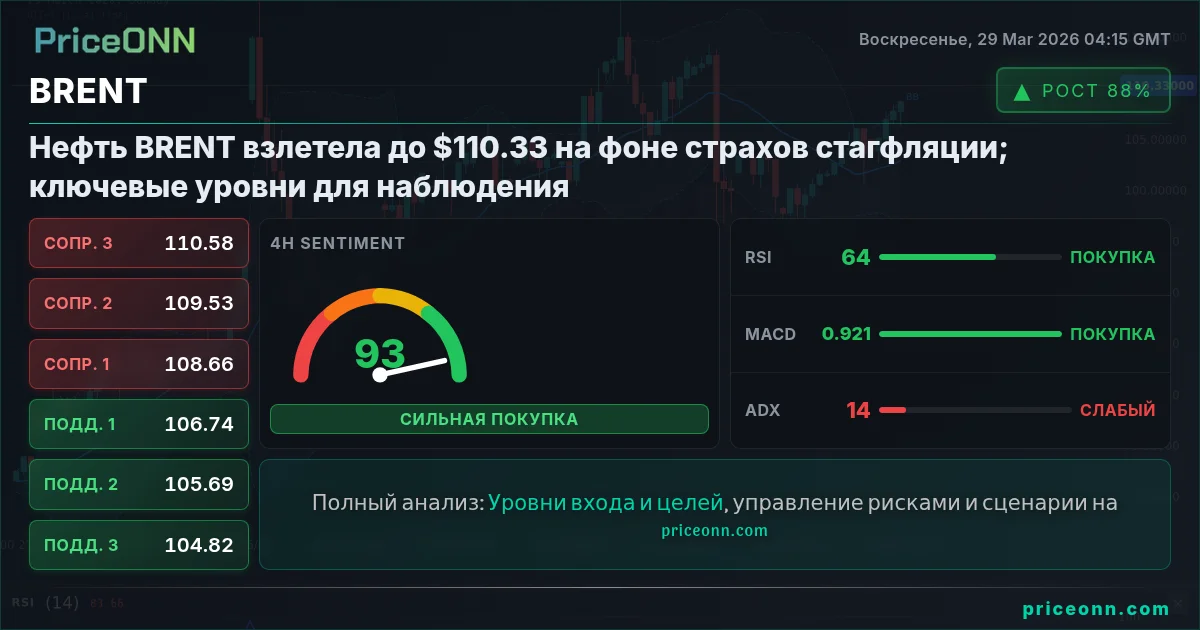
Призрак стагфляции, пугающий экономический сценарий, сочетающий застойный рост с высокой инфляцией, вновь навис над мировыми рынками. Нигде это не проявляется так ярко, как на энергетическом комплексе, где нефть BRENT не только преодолела психологическую отметку в $100 за баррель, но и взлетела до $110.33. Этот драматический скачок, подпитываемый стечением геополитических напряжений и устойчивыми инфляционными тенденциями, заставляет инвесторов и политиков пересматривать свои стратегии. Вопрос, который волнует всех, - это не только сбои в поставках, но и более широкие экономические последствия цен на нефть на этих повышенных уровнях. Сможет ли мировая экономика выдержать такой удар, или мы стоим на пороге значительного спада, усугубляемого стремительным ростом цен на энергоносители? Этот анализ углубляется в многогранные факторы, стоящие за ростом BRENT, его корреляцию с другими крупными рынками и критические технические уровни, за которыми трейдерам и инвесторам следует следить на предстоящей неделе. Анализ нефти бренд сегодня показывает явный восходящий импульс.
- Нефть BRENT торгуется на уровне $110.33, отражая резкий дневной прирост в 6,48%.
- Страхи стагфляции усиливаются из-за роста цен на нефть и доходности казначейских облигаций, что влияет на глобальный аппетит к риску.
- Ключевая поддержка для BRENT определена на уровне $108.01, с немедленным сопротивлением на уровне $110.77.
- Индикатор ADX на уровне 14.32 предполагает боковой рынок, но сильный дневной тренд и RSI на уровне 69.18 указывают на восходящий импульс.
Рост нефти BRENT выше $110.33 - это больше, чем просто движение цены; это мощный сигнал underlying экономических тревог. Недавние новостные сообщения, в том числе от Reuters и Bloomberg, подчеркнули растущую обеспокоенность по поводу возможного возрождения стагфляции в стиле 1970-х годов. Этот экономический спад, характеризующийся токсичным сочетанием вялого экономического роста и неуправляемой инфляции, является именно той средой, которая охлаждает инвестиции и потребительские расходы. Эскалация геополитической напряженности на Ближнем Востоке, регионе, критически важном для мировых поставок нефти, несомненно, сыграла ключевую роль. По сообщениям, Международное энергетическое агентство (МЭА) бьет тревогу по поводу потенциального дефицита энергии в мире, что, естественно, толкает цены на нефть вверх. Кроме того, неожиданная нерешительность американских производителей нефти наращивать добычу, несмотря на стремительный рост цен, предполагает, что реакция предложения может быть сдержанной, что еще больше поддерживает бычий прогноз для нефти в краткосрочной и среднесрочной перспективе. Этот хрупкий баланс между спросом, предложением и геополитическим риском создает нестабильную среду, делая динамику цен BRENT важнейшим барометром мирового экономического здоровья.
Навигация в шторме стагфляции: межрыночные корреляции
Понимание траектории BRENT требует взгляда за пределы самих нефтяных рынков и изучения его сложной взаимосвязи с другими основными классами активов. Индекс доллара (DXY), торгующийся около 99.79, часто движется обратно пропорционально сырьевым товарам, таким как нефть. Укрепление доллара может оказывать давление на цены нефти, делая ее дороже для держателей других валют. Однако текущий нарратив более сложен. Хотя DXY демонстрирует бычий тренд с ADX 31.93 на дневном графике, указывая на сильный восходящий импульс, его корреляция с нефтью может быть временно ослаблена доминирующими страхами стагфляции. Инвесторы, ищущие хеджирования от инфляции, все чаще обращаются к сырьевым товарам, включая нефть, независимо от силы доллара. Эта динамика еще больше усиливается показателями американских акций. S&P 500, торгующийся на уровне 6355.66, и Nasdaq 100 на уровне 23076.09, оба испытали значительные дневные падения более чем на 2% и 2,3% соответственно. Это снижение аппетита к риску обычно сигнализирует о переходе к активам-убежищам. Хотя золото обычно выигрывает, текущая инфляционная среда в сочетании с геополитическим риском также поддерживает нефть как потенциальное средство хеджирования инфляции. Взаимодействие между растущей доходностью казначейских облигаций, которая сигнализирует об инфляционных ожиданиях и ужесточает финансовые условия, и спросом на активы, защищенные от инфляции, такие как нефть, создает сложную сеть корреляций, которую трейдеры должны тщательно распутывать.
Анализ корреляций распространяется и на рынок облигаций. Рост доходности казначейских облигаций, обычное явление в периоды повышенных инфляционных ожиданий, может увеличить стоимость капитала для бизнеса и потребителей, потенциально снижая экономический рост. В этом суть дилеммы стагфляции: растущие цены в сочетании с замедляющейся экономической активностью. Для нефти более высокая доходность может быть неоднозначной. С одной стороны, она отражает инфляционное давление, которое обычно повышает цены на сырьевые товары. С другой стороны, она сигнализирует об ужесточении денежно-кредитной политики и потенциально более медленном будущем спросе, что может ограничить цены на нефть. Текущие рыночные данные показывают индикаторы ADX для основных индексов, таких как SP500 и Nasdaq, на уровне 47.68 и 45.07 соответственно на дневном таймфрейме, что указывает на сильные нисходящие тренды. Этот настроения «риск-офф» может, парадоксально, поддержать цены на нефть, если они вызваны шоками со стороны предложения (например, конфликтом на Ближнем Востоке), а не чисто уничтожением спроса. Здесь важен нарратив: рынок продает акции из-за инфляционных опасений или из-за надвигающегося глобального замедления? Первый сценарий часто выгоден сырьевым товарам, таким как BRENT, а второй означает проблемы для всех рисковых активов.
При анализе BRENT всегда учитывайте силу тренда DXY (ADX > 25) и дневную волатильность SP500. Сильный DXY и резкая распродажа акций часто создают среду «риск-офф», которая может либо повысить цены на нефть (если они обусловлены предложением), либо обрушить их (если они обусловлены спросом).
Техническая картина: расхождение сигналов?
С технической точки зрения, нефть BRENT представляет собой увлекательную, хотя и сложную картину. Дневной график показывает сильный восходящий тренд, на что указывает показание ADX 62.63 - уровень, указывающий на очень сильный тренд. RSI(14) на уровне 69.18 уверенно находится в верхнем диапазоне, предполагая бычий импульс, хотя он еще не достиг экстремально перекупленной территории, которая могла бы сигнализировать о неминуемом развороте. Однако стохастический индикатор на дневном графике (K=39.39, D=46.4) показывает медвежий сигнал, поскольку %K пересек ниже %D, намекая на потенциальное охлаждение импульса. Это расхождение между бычьим уклоном RSI и медвежьим пересечением стохастика является классическим признаком осторожности.
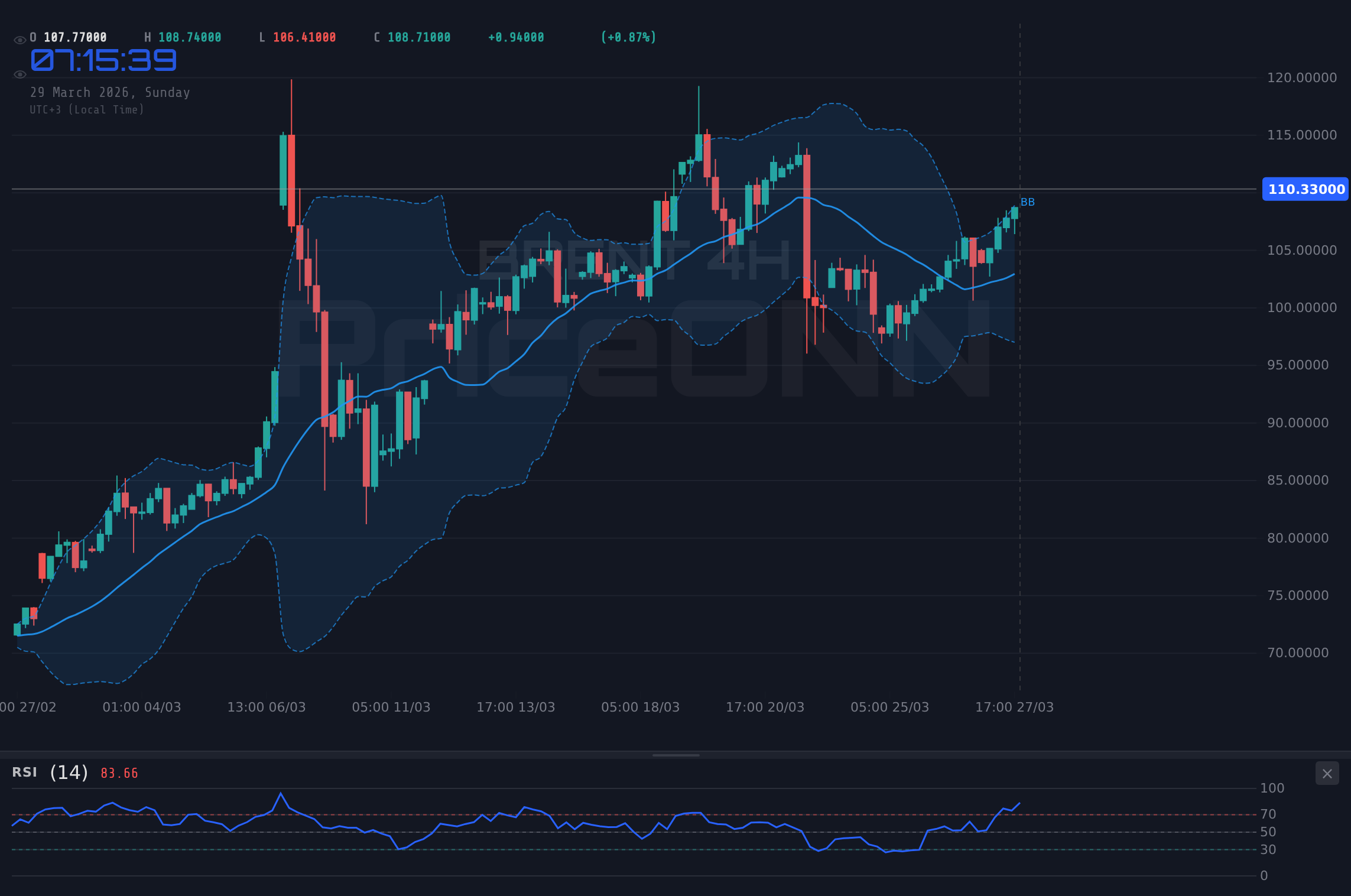
Приближение к более коротким таймфреймам выявляет дальнейшие нюансы. На 1-часовом графике тренд классифицируется как сильный (Power: 95%) и бычий, с RSI 78.32 - уверенно в зоне перекупленности. Это предполагает, что немедленный восходящий импульс может столкнуться с продавцами. MACD положительный, и цена торгуется выше средней линии полос Боллинджера, усиливая краткосрочный бычий уклон. Однако стохастик на 1-часовом графике (K=89.61, D=85.89) также находится в экстремальных условиях перекупленности, указывая на потенциал краткосрочной коррекции. Именно здесь показание ADX 19.28 становится важным; оно означает слабый тренд на 1-часовом таймфрейме. Это подразумевает, что текущий бычий импульс может не обладать достаточной силой для устойчивого прорыва, делая его уязвимым для резких разворотов. Для скальперов и краткосрочных трейдеров индикаторы перекупленности на 1-часовом графике предполагают осторожность против погони за ралли выше без дальнейшего подтверждения или отката.
4-часовой таймфрейм предлагает несколько иную перспективу. Тренд в настоящее время классифицируется как нейтральный (Power: 50%), но ADX на уровне 14.32 указывает на слабый тренд, предполагая волатильные или боковые условия. Это критическое наблюдение для свинг-трейдеров. Хотя дневной тренд сильный, 4-часовой ADX предполагает, что рынок может консолидироваться перед следующим крупным движением. RSI здесь находится на уровне 64.46, в нейтральной зоне, но растет, в то время как стохастик (K=93.27, D=82.7) глубоко перекуплен, отражая предупреждающие знаки на 1-часовом графике. Этот конфликт между таймфреймами - сильный дневной тренд, но слабые и перекупленные сигналы на более коротких - подчеркивает важность терпения. Это предполагает, что, хотя долгосрочный уклон может быть бычьим, путь вверх может быть волатильным, со значительными возможными коррекциями перед возобновлением устойчивого ралли. Текущая цена $110.33 находится чуть ниже 4-часового сопротивления $110.77, что делает этот уровень критической краткосрочной точкой разворота.
Расхождение между дневным RSI (69.18) и дневным стохастиком (K=39.39, D=46.4) является ключевым предупреждающим знаком. Хотя цена достигает новых максимумов, базовый импульс может ослабевать, предполагая, что текущее ралли может быть уязвимо для коррекции, особенно если ключевые уровни поддержки не удержатся.
Геополитическая напряженность и шоки предложения: премия за войну
Наиболее значимым фактором недавнего роста BRENT, несомненно, является растущая премия за геополитический риск. Ближний Восток, регион, поставляющий значительную часть мировой сырой нефти, снова находится в центре глобальных проблем безопасности. Отчеты из таких изданий, как CNBC и Financial Times, подробно описывают усиление напряженности, вызывая опасения по поводу возможных сбоев в поставках. Будь то прямой конфликт, санкции или сбои в морских путях, таких как Ормузский пролив, любая нестабильность в этом регионе немедленно и заметно влияет на цены на нефть. Предупреждения МЭА о потенциальном дефиците энергии - это не просто спекуляции; они основаны на реальной возможности сокращения добычи или экспортных блокад. Эта неопределенность создает «премию за страх» на нефтяном рынке, где цены растут не только на основе текущих фундаментальных показателей спроса и предложения, но и на основе ожидания будущего дефицита. Эта премия может быть на удивление волатильной, добавляя еще один уровень сложности для трейдеров, пытающихся точно оценить BRENT. Реакция рынка демонстрирует, что в условиях, уже борющихся с инфляцией, любая угроза энергетической безопасности усиливается, что приводит к быстрому росту цен.
Кроме того, более широкий геополитический ландшафт способствует этому настроению «риск-он» для сырьевых товаров. Продолжающийся конфликт в Восточной Европе продолжает омрачать мировые энергетические рынки, особенно влияя на энергетическую безопасность Европы. Хотя санкции и рыночные корректировки несколько смягчили немедленное воздействие по сравнению с первоначальным шоком, фундаментальная уязвимость остается. Эта длительная неопределенность поддерживает базовый уровень поддержки цен на нефть. Кроме того, более широкие геополитические трения, такие как отношения США и Китая или другие региональные конфликты, могут косвенно влиять на нефтяные рынки, влияя на мировую торговлю, ожидания экономического роста и общий настрой к риску. Когда инвесторы воспринимают более высокий глобальный риск, они часто стекаются к материальным активам, таким как нефть и золото, как к предполагаемым убежищам или средствам хеджирования инфляции, повышая их цены. Текущая цена BRENT в $110.33 отражает не только непосредственные проблемы с поставками, но и более широкую геополитическую нестабильность, которая делает прогнозы будущих поставок весьма неопределенными.
Рынок закладывает в цены значительную премию за геополитический риск. Любая эскалация на Ближнем Востоке или в Восточной Европе может легко подтолкнуть цены BRENT к $120 или выше, в то время как деэскалация может привести к резкой коррекции.
- Аналитик энергетического рынкаЭкономические тенденции: инфляция, ставки и проблемы роста
Рост нефти BRENT неразрывно связан с более широкой макроэкономической средой, особенно с инфляционной динамикой и политикой центральных банков. Как подчеркивалось в недавних рыночных новостях, возрождение опасений стагфляции является серьезной проблемой. Рост цен на нефть напрямую способствует инфляции в экономике, влияя на транспортные расходы, производство и потребительские товары. Это входит в более широкие инфляционные показатели, такие как CPI и PPI. Текущий экономический календарь показывает смешанные сигналы. Хотя некоторые прошлые данные по США, такие как «Факт: 210 | Прогноз: 211 | Предыдущее: 205», предполагают некоторое охлаждение в определенных секторах, постоянное восходящее давление со стороны затрат на энергию нельзя игнорировать. Задача для центральных банков, таких как Федеральная резервная система и Европейский центральный банк (ЕЦБ), огромна. Они оказались между попытками обуздать инфляцию, что обычно требует повышения процентных ставок, и риском усугубления экономического спада. Текущая доходность казначейских облигаций, отраженная в растущем DXY и сильном ADX на дневных графиках, указывает на то, что рынки учитывают это инфляционное давление и потенциально более ястребиную позицию центральных банков, или, по крайней мере, длительный период более высоких ставок.
Эта среда создает деликатный баланс. Более высокие процентные ставки увеличивают стоимость заимствований, что может подавлять экономическую активность и, следовательно, спрос на нефть. Однако, если основным драйвером инфляции являются шоки со стороны предложения, такие как те, что наблюдаются на энергетических рынках из-за геополитических событий, то простое повышение ставок может оказаться неэффективным в контроле цен и вместо этого усугубить стагфляцию. Реакция рынка на предстоящие экономические данные, такие как любые запланированные для EUR или GBP, будет иметь решающее значение. Например, если предстоящие инфляционные показатели окажутся выше ожидаемых, это может еще больше укрепить опасения стагфляции, потенциально приведя к более агрессивному монетарному ужесточению и замедлению спроса. И наоборот, признаки охлаждения инфляции или ослабления экономического роста могут привести к ожиданиям снижения ставок, что может обеспечить некоторое облегчение для цен на сырьевые товары. Цена BRENT в $110.33 в настоящее время торгуется в диапазоне, где она значительно влияет на прогнозы инфляции, делая ее ключевым фактором в принятии решений центральными банками. Взаимодействие между ценами на энергоносители, инфляционными ожиданиями и денежно-кредитной политикой остается доминирующей темой для мировой экономики.
Текущая стагфляционная среда представляет собой сценарий «проигрыш-проигрыш» для центральных банков. Борьба с инфляцией путем повышения ставок рискует рецессией, в то время как смягчение политики может привести к еще более высокой инфляции. Эта дилемма политики добавляет неопределенности и волатильности на рынок, особенно для сырьевых товаров, таких как BRENT.
Настроения рынка и психология трейдеров
Понимание рыночных настроений имеет решающее значение для интерпретации динамики цен BRENT. Преобладающее настроение, по-видимому, характеризуется растущей осторожностью, граничащей со страхом, вызванным нарративом стагфляции и геополитической нестабильностью. Это отражается в значительном падении фондовых рынков (SP500 и Nasdaq снизились более чем на 2% за день) и укреплении DXY. В такой среде инвесторы часто переходят от рисковых активов к активам-убежищам. Хотя традиционные убежища, такие как золото, могут выиграть, нефть также находит спрос как средство хеджирования инфляции, особенно когда факторы предложения являются основной проблемой. RSI на дневном графике на уровне 69.18 указывает на сильный восходящий импульс, но приближается к зоне перекупленности, предполагая, что текущие бычьи настроения могут достигать пика. Однако ADX на уровне 62.63 на дневном графике сигнализирует об очень сильном тренде, подразумевая, что импульс может поддерживать ралли, несмотря на условия перекупленности на более коротких таймфреймах.
Психология трейдеров играет значительную роль в усилении ценовых движений. Страх упустить выгоду (FOMO) может толкать цены вверх во время сильных ралли, в то время как панические продажи могут ускорить спад. Учитывая противоречивые сигналы на разных таймфреймах - сильный дневной тренд против условий перекупленности и более слабых трендов на внутридневных графиках - существует явное разделение рыночных настроений. Краткосрочные трейдеры могут опасаться гнаться за ралли выше $110.33 из-за индикаторов перекупленности, в то время как долгосрочные инвесторы, сосредоточенные на нарративе хеджирования инфляции и геополитических рисках, могут рассматривать откаты как возможности для покупки. Показатель ADX на уровне 14.32 на 4-часовом графике особенно показателен; он предполагает, что рынок может консолидироваться или торговаться в боковом диапазоне в краткосрочной перспективе, несмотря на сильный дневной тренд. Это означает, что, хотя общий тренд может быть восходящим, путь может характеризоваться резкими, непредсказуемыми колебаниями, поскольку разные типы трейдеров реагируют на противоречивые сигналы и новостные события. Терпение и управление рисками становятся первостепенными в такой изменчивой среде.
Что следует учитывать разным трейдерам
Для скальперов непосредственное внимание сосредоточено на 1-часовом графике. Перекупленные стохастик (K=89.61, D=85.89) и RSI (78.32) предполагают поиск краткосрочных откатов. Прорыв ниже 1-часовой поддержки на уровне $108.01 может сигнализировать о временном развороте, предлагая возможность для короткой позиции с целью на следующей поддержке на уровне $107.33. Потребуется подтверждение, возможно, пересечение MACD или прорыв ниже средней линии 1-часовых полос Боллинджера.
Свинг-трейдеры должны внимательно следить за 4-часовым графиком и ключевым уровнем около $110.77 (сопротивление). Устойчивый прорыв выше этого уровня, подтвержденный увеличением объема и прорывом сигнала слабого тренда 4-часового ADX, может открыть путь к более высоким целям. И наоборот, неспособность пробить $110.77 и последующее падение ниже 4-часовой поддержки на уровне $108.01 аннулируют краткосрочный бычий прогноз, потенциально сигнализируя о движении вниз к $106.74. Расхождение между дневными и краткосрочными индикаторами требует тщательного навигации.
Долгосрочные инвесторы, особенно те, кто сосредоточен на хеджировании инфляции, будут следить за более широким геополитическим ландшафтом и устойчивостью нарратива стагфляции. Для них сильный дневной тренд (ADX 62.63) более актуален. Они могут рассматривать любые значительные откаты в диапазон $100-$105 как потенциальные зоны накопления, при условии, что геополитические риски остаются высокими, а инфляция продолжает вызывать озабоченность. Однако устойчивый прорыв ниже дневной поддержки на уровне $100.77 будет сигнализировать о значительном сдвиге, потенциально указывая на то, что опасения по поводу уничтожения спроса перевешивают опасения по поводу предложения.
Исторический контекст: уроки 1970-х и далее
Нынешние опасения по поводу стагфляции перекликаются со сложными экономическими условиями 1970-х годов. То десятилетие характеризовалось стремительным ростом цен на нефть, вызванным шоками предложения ОПЕК, в сочетании с устойчивой инфляцией и вялым экономическим ростом. Уроки, извлеченные из той эпохи, суровы: стагфляция - это особенно трудная экономическая среда для управления. Центральные банки боролись с инфляцией, не вызывая глубоких рецессий, а фискальная политика часто оказывалась неэффективной. Нефтяные шоки 1970-х годов привели к значительным корректировкам потребления энергии, инвестициям в альтернативные источники энергии и фундаментальному переформатированию мирового энергетического ландшафта. Хотя сегодняшние обстоятельства не идентичны - глобализированные рынки, различные инструменты денежно-кредитной политики и технологические достижения играют свою роль - основная задача балансирования контроля над инфляцией с поддержкой роста остается. Текущий рост нефти BRENT до $110.33 является ярким напоминанием о том, насколько уязвима мировая экономика перед шоками цен на энергоносители, особенно когда инфляция уже вызывает озабоченность.
Заглядывая в более недавнюю историю, пандемия COVID-19 и последующие сбои в цепочках поставок создали другой, но столь же инфляционный шок. Быстрое восстановление спроса в сочетании с ограниченным предложением привело к резкому росту цен на различные сырьевые товары. Хотя тот период характеризовался скорее инфляцией спроса, текущая ситуация все больше склоняется к инфляции издержек, вызванной энергетическими и геополитическими факторами. Это делает текущую инфляционную среду более упорной и потенциально более разрушительной для роста. Устойчивость, продемонстрированная ценами на нефть, даже перед лицом мировых экономических трудностей, подчеркивает критическую роль предложения энергии в поддержании ценовой стабильности. Тот факт, что BRENT вырос выше $110.33, в то время как основные индексы падают, подчеркивает эту дихотомию. Это предполагает, что, хотя рисковые активы наказываются из-за страха рецессии, хеджирование инфляции вознаграждается из-за проблем с поставками и устойчивого ценового давления. Понимание этих исторических параллелей помогает контекстуализировать текущую рыночную динамику и потенциальные риски в будущем.
Стагфляция 1970-х годов служит предостережением. Сочетание шоков предложения (таких как нефтяное эмбарго) и устойчивой инфляции создало сложный экономический ландшафт. Сегодняшний рост цен на нефть и инфляционные риски предполагают, что подобные проблемы, хотя, возможно, и в другой форме, могут возникнуть, если проблемы с поставками не будут решены.
Ключевые уровни и сценарии ценового действия для BRENT
Текущее ценовое действие BRENT crude на уровне $110.33 представляет собой различные сценарии для трейдеров и инвесторов, в значительной степени зависящие от ключевых технических уровней и развивающихся геополитических новостей. Дневной график показывает сильный восходящий тренд (ADX 62.63), предполагая, что путь наименьшего сопротивления лежит вверх, но краткосрочные индикаторы подают предупреждающие сигналы.
Медвежий сценарий: давление фиксации прибыли нарастает
65% ВероятностьНейтральный сценарий: консолидация около $110
25% ВероятностьБычий сценарий: восходящий импульс продолжается
10% ВероятностьНепосредственное внимание трейдеров будет сосредоточено на уровне поддержки $108.01 на 1-часовом графике. Неспособность удержать этот уровень, особенно при увеличении объема и негативном новостном потоке, может спровоцировать каскад продаж, поскольку краткосрочные трейдеры выходят из позиций. Это будет соответствовать медвежьему сценарию, нацеленному на $107.33 и, возможно, $106.74. С другой стороны, если BRENT сможет консолидироваться выше $110.33 и в конечном итоге прорваться через 4-часовое сопротивление на уровне $110.77, это будет сигнализировать о продолжении бычьего тренда, потенциально открывая путь к уровню дневного сопротивления на уровне $111.91. Однако, учитывая условия перекупленности на более коротких таймфреймах и слабый тренд, указанный 4-часовым ADX (14.32), такой прорыв потребует сильного подтверждения, вероятно, от значительного геополитического развития или изменения рыночных настроений.
Путь вперед: риски и возможности
Заглядывая вперед, траектория нефти BRENT, вероятно, останется крайне чувствительной к геополитическим событиям на Ближнем Востоке и в Восточной Европе, а также к данным по инфляции и ответным мерам центральных банков. Текущая цена $110.33 отражает значительную премию за риск, и любая деэскалация напряженности может привести к резкой коррекции. Напротив, дальнейшая эскалация может подтолкнуть цены значительно выше, потенциально тестируя уровни, невиданные годами. Битва между инфляцией, вызванной предложением, которая благоприятствует более высоким ценам на нефть, и опасениями по поводу уничтожения спроса, которые могли бы их ограничить, будет продолжать доминировать в рыночных нарративах.
Для инвесторов и трейдеров текущая среда требует высокой степени осторожности и стратегического позиционирования. Противоречивые сигналы на разных таймфреймах и индикаторах предполагают рынок, который является волатильным и потенциально подверженным резким разворотам. Терпение - ключ к успеху. Ожидание четких сигналов подтверждения, тщательное управление рисками и понимание более широкого макроэкономического контекста необходимы для навигации по этим бурным водам. Потенциал стагфляции означает, что традиционные корреляции могут нарушиться, а активы, которые обычно движутся вместе, могут разойтись. Поэтому гибкий подход, сосредоточенный на ценовом действии и подтвержденных технических уровнях, будет иметь решающее значение для выявления возможностей и снижения рисков на волатильных энергетических рынках.
Хотя волатильность высока, сильный дневной тренд и сохраняющиеся геополитические риски предполагают, что откаты могут представлять собой возможности для покупки для долгосрочных инвесторов, ориентированных на хеджирование инфляции, особенно если они происходят вблизи ключевых уровней поддержки, таких как $108.01 или $106.74.
Часто задаваемые вопросы: анализ BRENT
Что произойдет, если BRENT пробьет уровень поддержки $108.01?
Прорыв ниже $108.01 на 1-часовом графике, особенно при негативном новостном потоке, аннулирует немедленный бычий прогноз. Это может спровоцировать дальнейшее давление продаж, нацеленное на следующую поддержку на уровне $107.33, поскольку краткосрочные трейдеры выходят из позиций.
Является ли BRENT по цене $110.33 покупкой прямо сейчас, учитывая перекупленный RSI?
Покупка BRENT по цене $110.33 рискованна из-за перекупленного RSI (69.18 на дневном, 78.32 на 1-часовом) и противоречивых сигналов на более коротких таймфреймах. Более разумным подходом было бы дождаться отката к уровню поддержки, такому как $108.01, или подтверждения устойчивого прорыва выше $110.77.
Как показание ADX 14.32 на 4-часовом графике влияет на анализ тренда BRENT?
ADX на уровне 14.32 на 4-часовом графике указывает на слабый тренд или боковой рынок, предполагая консолидацию. Это контрастирует с сильным дневным трендом (ADX 62.63), подразумевая, что, хотя долгосрочное направление может быть восходящим, путь может быть волатильным и изменчивым, с потенциалом резких разворотов.
Как предстоящие данные по инфляции повлияют на цены нефти BRENT около $110.33?
Если предстоящие данные по инфляции окажутся выше ожидаемых, это может усилить опасения стагфляции и поддержать цены BRENT, потенциально толкая их выше из-за опасений по поводу предложения. И наоборот, признаки охлаждения инфляции могут привести к ожиданиям более медленного спроса, ограничивая цены на нефть.
Технический обзор
| Индикатор | Значение | Сигнал | Интерпретация |
|---|---|---|---|
| RSI (14) | 69.18 | Нейтральный | Приближается к зоне перекупленности, следите за откатами. |
| Гистограмма MACD | Положительная | Бычий | Импульс благоприятствует росту, но следите за расхождениями. |
| Стохастик | K=39.39, D=46.4 | Медвежий | Медвежье пересечение в зоне перепроданности; следите за подтверждением. |
| ADX | 62.63 | Бычий | Очень сильный тренд; ожидайте продолжения или резкого разворота. |
| Полосы Боллинджера | Прорыв средней линии | Бычий | Цена выше средней линии предполагает восходящее давление. |
Ключевые уровни
Уровни поддержки
Уровни сопротивления
Отслеживайте рынки в реальном времени
ИИ-анализ и данные в реальном времени.