
Chart Pattern Reliability; Which Ones Work Best for Forex?
Not all chart patterns are created equal. Discover which forex chart patterns offer the highest reliability and how to use them effectively.
Chart patterns are a cornerstone of technical analysis, offering traders potential insights into future price movements. However, not all patterns are created equal. Some exhibit higher reliability than others, meaning they are more likely to produce the expected outcome. Understanding which patterns to trust, and under what conditions, is crucial for any forex trader looking to enhance their strategy.
- Learn which chart patterns have the highest historical reliability in forex trading.
- Understand how factors like market context and time frame affect pattern performance.
- Discover practical strategies to confirm pattern validity and manage risk effectively.
- Why chart pattern reliability is crucial for making informed trading decisions.
What Are Chart Patterns?
Chart patterns are distinct formations on a price chart that suggest potential future price movements based on historical data. They represent repeating trends or market behaviors that traders use to identify potential entry and exit points.
Chart Pattern: A recognizable configuration of price movement on a chart that traders use to forecast future price direction.
These patterns can be either reversal patterns, indicating a potential change in the current trend, or continuation patterns, suggesting the trend will continue. Recognizing and interpreting these patterns is a fundamental skill in technical analysis.
Think of chart patterns as road signs for traders. A sign indicating a sharp curve ahead warns drivers to slow down. Similarly, a chart pattern warns traders of a potential shift in market direction.
Why Does Chart Pattern Reliability Matter?
Reliability is paramount because it directly impacts the success rate of your trading strategy. A pattern with high reliability is more likely to perform as expected, leading to profitable trades. Conversely, relying on unreliable patterns can lead to frequent false signals and losses.
Imagine you're a weather forecaster. If your weather models are unreliable, you'll give inaccurate predictions, leading people to make poor decisions about their activities. Similarly, unreliable chart patterns can lead traders to make poor trading decisions.
Consider a scenario where a trader consistently uses a specific chart pattern that has a historical success rate of only 40%. Over time, this trader is more likely to experience losses than gains, regardless of their other skills. Focusing on patterns with proven reliability significantly increases the odds of success.
Factors Affecting Chart Pattern Reliability
Several factors influence the reliability of chart patterns. Understanding these factors can help traders filter out less reliable signals and focus on high-probability setups.
Market Context
The overall market environment plays a crucial role. A pattern that forms during a strong trending market may be more reliable than one that forms during a choppy, range-bound market. Trend direction, volatility, and economic news can all impact pattern performance.
Think of it like planting a seed. A seed planted in fertile soil during the right season is more likely to thrive than one planted in poor soil during a harsh winter. Similarly, a chart pattern forming in a favorable market environment is more likely to succeed.
Time Frame
The time frame on which a pattern forms also affects its reliability. Patterns on higher time frames (e.g., daily or weekly charts) tend to be more reliable than those on lower time frames (e.g., 5-minute or 15-minute charts). This is because higher time frames filter out more noise and short-term fluctuations.
Imagine trying to navigate a city. Using a detailed city map (higher time frame) will give you a clearer picture of the overall layout than trying to rely on street-level glances (lower time frame).
Volume
Volume can provide additional confirmation of a pattern's validity. A breakout from a chart pattern accompanied by high volume suggests strong buying or selling pressure, increasing the likelihood of the breakout being sustained. Conversely, a breakout on low volume may be a false signal.
Think of volume as the engine of a car. A car with a powerful engine (high volume) can easily climb a steep hill (breakout). A car with a weak engine (low volume) may struggle and stall.
Pattern Clarity
The clarity and definition of a chart pattern are important. A well-defined pattern with clear entry and exit points is generally more reliable than a poorly formed, ambiguous pattern. Avoid forcing patterns to fit your analysis; stick to those that are clearly visible on the chart.
Imagine trying to read a sign with faded or unclear lettering. It's difficult to understand the message. Similarly, a poorly defined chart pattern is difficult to interpret and may lead to incorrect conclusions.
Most Reliable Forex Chart Patterns
While no chart pattern guarantees success, some have historically shown higher reliability than others. Here are a few of the most reliable patterns:
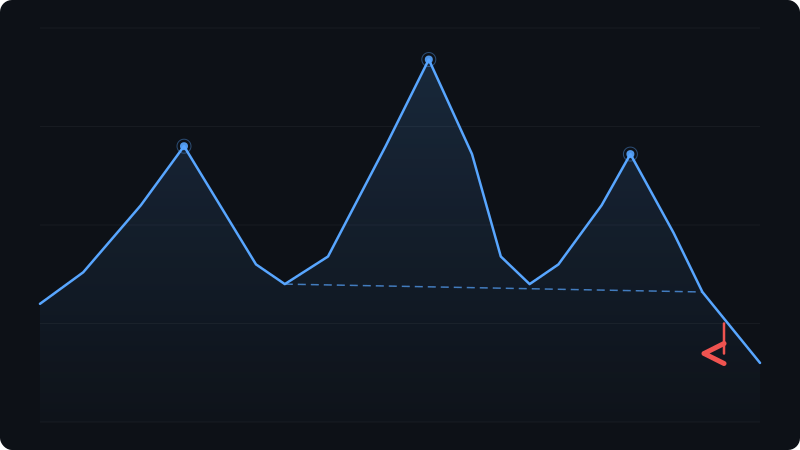
- Head and Shoulders: This reversal pattern is highly reliable when it forms after a sustained uptrend. Look for a clear neckline and a strong breakout to confirm the pattern.
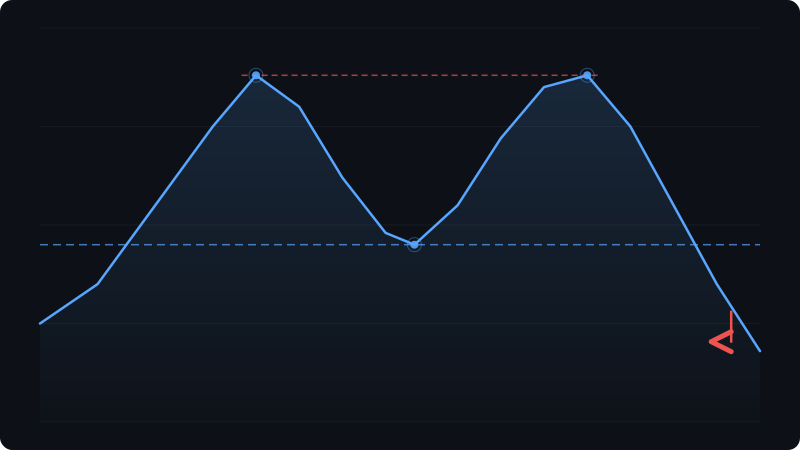
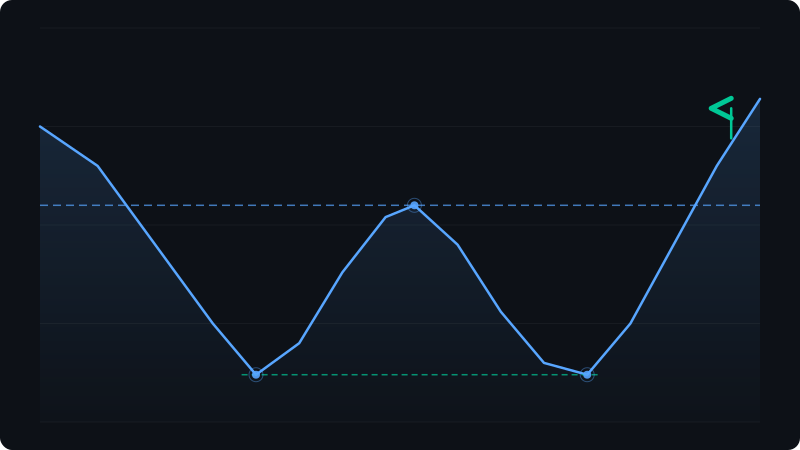
- Double Top/Bottom: These patterns signal potential trend reversals. The reliability increases when the second top or bottom fails to reach the level of the first, indicating weakening momentum.
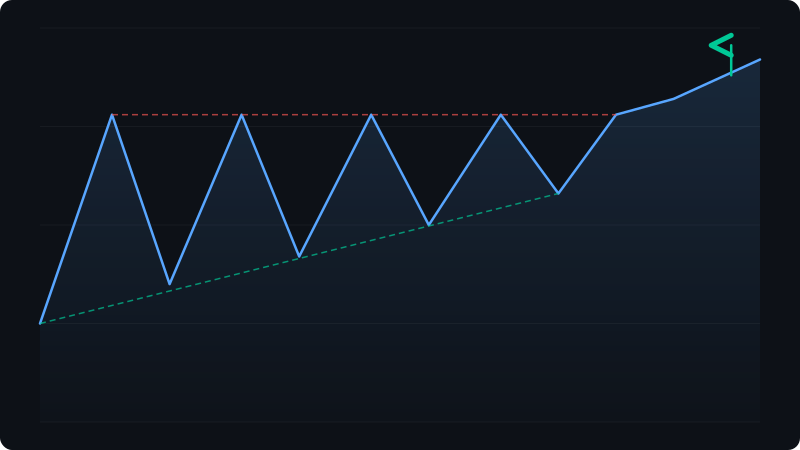
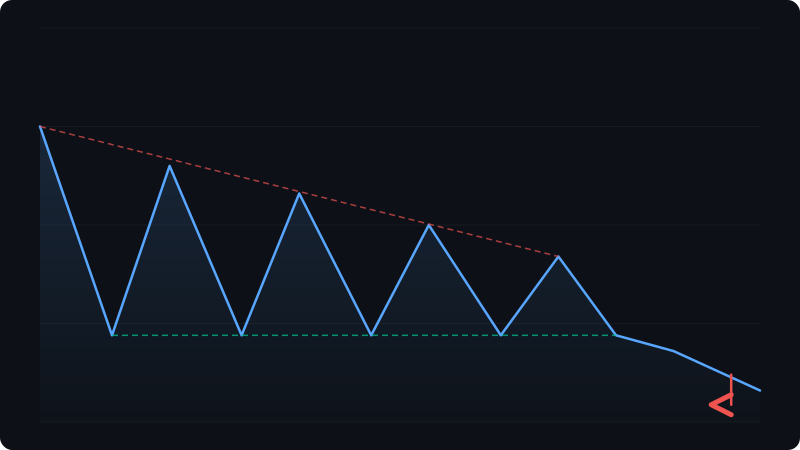
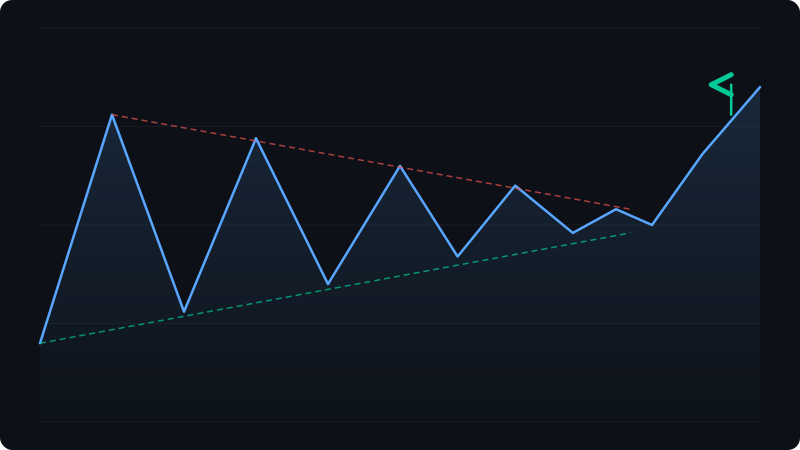
- Triangles (Ascending, Descending, Symmetrical): Triangle patterns are continuation patterns that often lead to breakouts in the direction of the prevailing trend. Ascending triangles are generally considered more bullish, while descending triangles are more bearish.
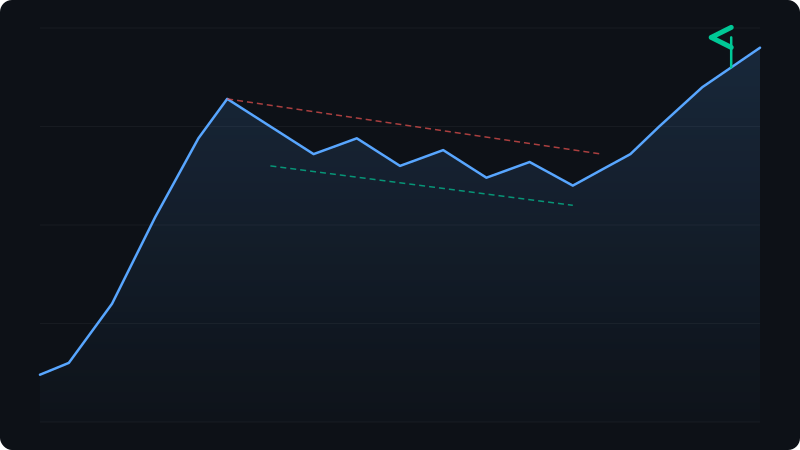
- Flag and Pennant: These are short-term continuation patterns that form after a strong price move. They represent a brief pause before the trend resumes. Look for a breakout in the direction of the prior trend to confirm the pattern.
How to Confirm Chart Pattern Validity
Even with reliable patterns, it's crucial to confirm their validity before entering a trade. Here are several techniques to use:
- Volume Analysis: Look for increased volume during breakouts from chart patterns. This confirms that the breakout is supported by strong buying or selling pressure.
- Candlestick Patterns: Use candlestick patterns to confirm potential reversals or continuations signaled by chart patterns. For example, a bullish engulfing pattern forming at the bottom of a double bottom increases the likelihood of a bullish reversal.
- Moving Averages: Use moving averages to identify the prevailing trend. Trade chart patterns that align with the direction of the trend. For example, look for bullish patterns above a rising moving average.
- Fibonacci Levels: Use Fibonacci retracement levels to identify potential support and resistance areas. These levels can provide additional confirmation for entry and exit points based on chart patterns.
Practical Examples
Let's look at a couple of hypothetical examples to illustrate how to assess chart pattern reliability.
Example 1: Head and Shoulders Pattern
Suppose you identify a head and shoulders pattern on the daily chart of EUR/USD after a sustained uptrend. The pattern has a clear neckline around 1.1000. To confirm the pattern's validity, you check the volume during the breakout below the neckline. If volume increases significantly during the breakout, it provides strong confirmation of the pattern's reliability. You might then look for a short entry near 1.0990, with a stop-loss above the right shoulder and a target based on the height of the head.
Example 2: Ascending Triangle Pattern
Suppose you spot an ascending triangle pattern on the 4-hour chart of GBP/USD. The triangle has a clear horizontal resistance level around 1.2500. To confirm the pattern's validity, you check the volume as price approaches the resistance level. If volume is consistently increasing, it suggests strong buying pressure. You might then look for a long entry after a breakout above 1.2500, with a stop-loss below the rising trendline and a target based on the height of the triangle.
Common Mistakes to Avoid
Beginner traders often make mistakes when interpreting chart patterns, leading to losses. Here are some common pitfalls to avoid:
- Forcing Patterns: Don't try to force patterns to fit your analysis. Stick to well-defined, clear patterns.
- Ignoring Market Context: Always consider the overall market environment. A pattern that looks promising in isolation may be unreliable in the context of a strong trend or economic news.
- Relying Solely on Patterns: Don't rely solely on chart patterns. Use them in conjunction with other technical indicators and fundamental analysis.
- Ignoring Risk Management: Always use stop-loss orders to limit your potential losses. No chart pattern is guaranteed to succeed.
Practical Tips and Key Takeaways
Here are some practical tips to improve your chart pattern trading:
- Practice: Practice identifying and trading chart patterns on a demo account before risking real money.
- Backtest: Backtest different chart patterns to determine their historical reliability.
- Keep a Journal: Keep a trading journal to track your results and identify patterns that work best for you.
- Stay Disciplined: Stick to your trading plan and avoid making impulsive decisions based on emotions.
Frequently Asked Questions
What is the most reliable chart pattern for forex trading?
There's no single "most reliable" pattern, as reliability depends on market conditions and confirmation. However, head and shoulders, double tops/bottoms, and triangle patterns generally exhibit higher reliability when properly confirmed with volume and other indicators.
Are chart patterns effective on all time frames?
Chart patterns are generally more reliable on higher time frames (daily, weekly) because they filter out short-term noise. Lower time frames (5-minute, 15-minute) can be used, but require more confirmation and carry higher risk.
How can I confirm a chart pattern breakout?
Confirm breakouts with volume analysis (increased volume during the breakout), candlestick patterns (strong directional candles), and other indicators like moving averages.
What if a chart pattern fails?
Always use stop-loss orders to limit your losses if a chart pattern fails to perform as expected. No pattern is foolproof, and risk management is crucial for long-term success.
Mastering chart pattern reliability is an ongoing process that requires practice, patience, and discipline. By understanding the factors that affect pattern performance and using confirmation techniques, you can significantly improve your trading results. Remember that no pattern is guaranteed to succeed, and effective risk management is always essential.