
Chart Patterns Explained; A Complete Guide for Forex Beginners
Unlock the power of chart patterns! Learn to identify formations, understand their implications, and improve your trading decisions. A beginner's guide to forex chart patterns.
Have you ever looked at a price chart and wondered if there was a hidden language within the peaks and valleys? Chart patterns are a fundamental aspect of technical analysis, offering insights into potential future price movements based on historical formations. This guide will equip you with the knowledge to understand, identify, and use chart patterns effectively in your forex trading.
- Learn to recognize and interpret common chart patterns.
- Understand the psychology behind these patterns and what they signify.
- Apply chart patterns to your trading strategy for better decision-making.
- Avoid common mistakes when identifying and trading chart patterns.
What Are Chart Patterns?
Chart patterns are distinctive formations that appear on price charts, suggesting potential future price movements. They are visual representations of the collective psychology of buyers and sellers. Recognizing these patterns can give traders an edge by anticipating potential breakouts or reversals.
Chart Pattern: A recognizable configuration of price movement identified using a series of trendlines and/or curves.
Think of chart patterns like road signs for traders. Just as a yield sign alerts drivers to potential merging traffic, a chart pattern alerts traders to potential shifts in market sentiment and price direction.
Why Are Chart Patterns Important?
Chart patterns are important because they provide traders with potential entry and exit points, as well as insights into the strength and direction of a trend. They can help traders make more informed decisions by providing visual cues based on historical price action. By understanding the psychology behind these patterns, traders can better anticipate market movements.
Imagine you're navigating a maze. Chart patterns are like the clues and hints you find along the way, guiding you toward the exit (profit) and helping you avoid dead ends (losses). They provide a framework for understanding market behavior.
Types of Chart Patterns
Chart patterns are broadly classified into two main categories: reversal patterns and continuation patterns. Reversal patterns indicate a potential change in the current trend, while continuation patterns suggest that the existing trend is likely to continue.
- Reversal Patterns: These patterns signal a potential change in the prevailing trend. Common examples include:
- Head and Shoulders
- Inverse Head and Shoulders
- Double Top
- Double Bottom
- Triangles (Symmetrical, Ascending, Descending)
- Flags
- Wedges (Rising, Falling)
How to Identify Chart Patterns; A Step-by-Step Guide
Identifying chart patterns requires careful observation and practice. Here's a step-by-step guide to help you get started:
- Identify the Trend: Determine the current trend (uptrend, downtrend, or sideways). This will help you anticipate whether a pattern is likely to be a reversal or continuation pattern.
- Look for Formations: Scan the price chart for recognizable formations. Pay attention to the shape, size, and duration of the pattern.
- Draw Trendlines: Use trendlines to connect the highs and lows of the pattern. This will help you visualize the pattern and confirm its validity.
- Confirm the Pattern: Wait for a breakout or breakdown from the pattern to confirm its validity. A breakout occurs when the price moves above the resistance level, while a breakdown occurs when the price moves below the support level.
- Set Entry and Exit Points: Once the pattern is confirmed, set your entry and exit points based on the pattern's characteristics. For example, you might enter a long position after a breakout from a bullish pattern, or enter a short position after a breakdown from a bearish pattern.
- Manage Risk: Always use stop-loss orders to limit your potential losses. Place your stop-loss order below the support level for long positions, or above the resistance level for short positions.
Just as an archaeologist carefully unearths and analyzes artifacts, a trader carefully examines price charts to identify and interpret chart patterns. The process requires patience, attention to detail, and a systematic approach.
Examples of Common Chart Patterns
Let's take a look at some common chart patterns and how to trade them:
Head and Shoulders Pattern
The Head and Shoulders pattern is a bearish reversal pattern that consists of three peaks: a higher peak (the head) flanked by two lower peaks (the shoulders). A neckline connects the troughs between the peaks.
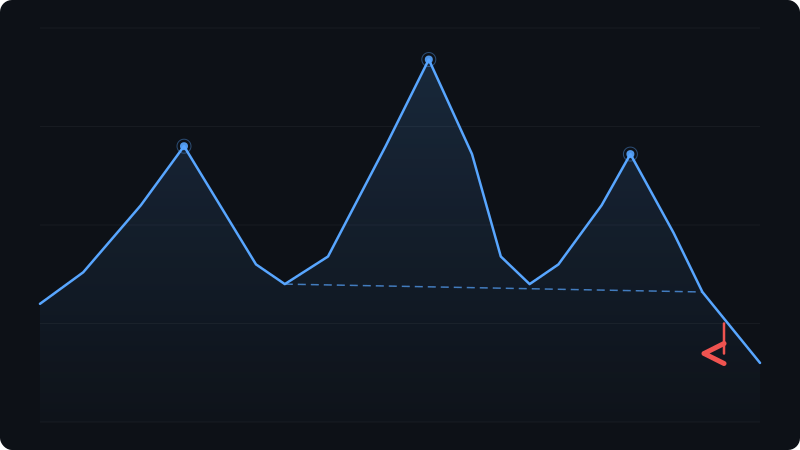
Trading the Head and Shoulders Pattern:
- Identify the Pattern: Look for the formation of three peaks with a neckline.
- Confirm the Breakdown: Wait for the price to break below the neckline.
- Enter a Short Position: Enter a short position after the breakdown.
- Set a Stop-Loss Order: Place your stop-loss order above the right shoulder.
- Set a Target Price: Measure the distance between the head and the neckline, and project that distance downward from the breakdown point to determine your target price.
Double Top Pattern
The Double Top pattern is another bearish reversal pattern that consists of two equal highs followed by a decline below the support level.
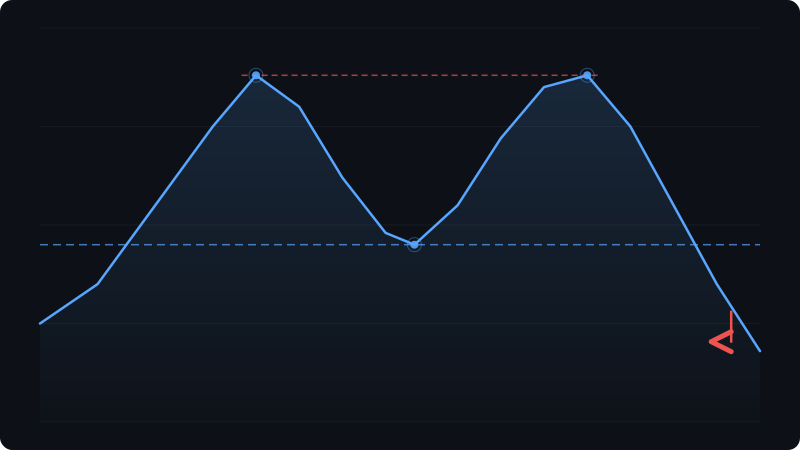
Trading the Double Top Pattern:
- Identify the Pattern: Look for the formation of two equal highs.
- Confirm the Breakdown: Wait for the price to break below the support level.
- Enter a Short Position: Enter a short position after the breakdown.
- Set a Stop-Loss Order: Place your stop-loss order above the two highs.
- Set a Target Price: Measure the distance between the highs and the support level, and project that distance downward from the breakdown point to determine your target price.
Ascending Triangle Pattern
The Ascending Triangle pattern is a bullish continuation pattern that consists of a horizontal resistance level and an ascending support level.
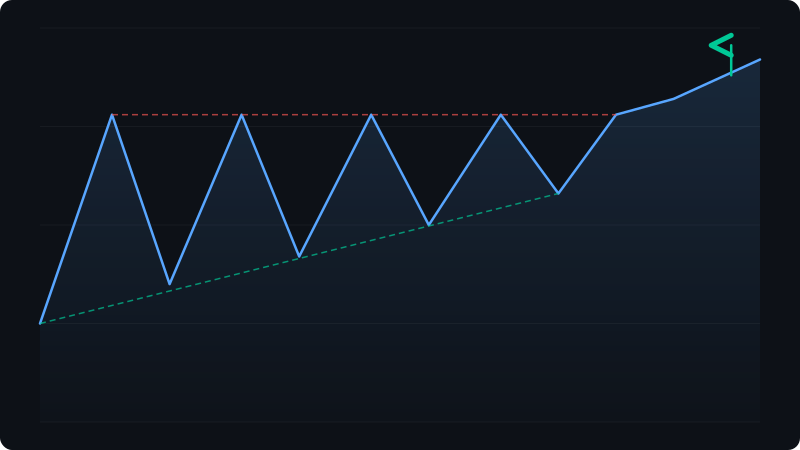
Trading the Ascending Triangle Pattern:
- Identify the Pattern: Look for the formation of a horizontal resistance level and an ascending support level.
- Confirm the Breakout: Wait for the price to break above the resistance level.
- Enter a Long Position: Enter a long position after the breakout.
- Set a Stop-Loss Order: Place your stop-loss order below the ascending support level.
- Set a Target Price: Measure the distance between the resistance level and the widest part of the triangle, and project that distance upward from the breakout point to determine your target price.
Practical Examples
Let's look at a couple of hypothetical trading scenarios using chart patterns:
Example 1: Trading the Head and Shoulders Pattern
Suppose you identify a Head and Shoulders pattern on the EUR/USD chart. The head is at 1.1000, the shoulders are at 1.0950, and the neckline is at 1.0900. You wait for the price to break below the neckline at 1.0900 and enter a short position at 1.0890. You set your stop-loss order above the right shoulder at 1.0960. To determine your target price, you measure the distance between the head and the neckline (1.1000 - 1.0900 = 0.0100) and project that distance downward from the breakdown point (1.0900 - 0.0100 = 1.0800). Your target price is 1.0800.
Example 2: Trading the Ascending Triangle Pattern
Suppose you identify an Ascending Triangle pattern on the GBP/USD chart. The horizontal resistance level is at 1.2500, and the ascending support level is at 1.2400. You wait for the price to break above the resistance level at 1.2500 and enter a long position at 1.2510. You set your stop-loss order below the ascending support level at 1.2390. To determine your target price, you measure the distance between the resistance level and the widest part of the triangle (1.2500 - 1.2400 = 0.0100) and project that distance upward from the breakout point (1.2500 + 0.0100 = 1.2600). Your target price is 1.2600.
Common Mistakes to Avoid
Here are some common mistakes that beginners make when identifying and trading chart patterns:
Identifying Patterns Prematurely: Don't jump to conclusions before the pattern is fully formed and confirmed. Wait for a breakout or breakdown before taking action.
Ignoring the Overall Trend: Always consider the overall trend before trading chart patterns. Trading against the trend can be risky.
Over-Reliance on Chart Patterns: Chart patterns are just one tool in your trading arsenal. Don't rely solely on them to make trading decisions. Use them in conjunction with other technical indicators and fundamental analysis.
Tips for Trading Chart Patterns
- Practice: The more you practice identifying chart patterns, the better you'll become at it.
- Use Multiple Timeframes: Analyze chart patterns on multiple timeframes to get a more comprehensive view of the market.
- Be Patient: Wait for the right opportunities to trade chart patterns. Don't force trades.
- Manage Risk: Always use stop-loss orders to limit your potential losses.
Frequently Asked Questions
What is the most reliable chart pattern?
There's no single "most reliable" chart pattern, as reliability depends on market conditions and confirmation. Patterns with clear breakouts and confluence with other indicators tend to be more reliable.
How do I confirm a chart pattern breakout?
Confirm a breakout by observing increased volume and sustained price movement beyond the breakout level. A retest of the breakout level as support (for bullish breakouts) can also add confidence.
Can I use chart patterns on all timeframes?
Yes, chart patterns can be used on all timeframes, but their significance may vary. Longer timeframes tend to produce more reliable patterns, while shorter timeframes can offer more frequent trading opportunities.
What's the difference between a flag and a pennant pattern?
Both are continuation patterns, but flags are rectangular, while pennants are triangular. Flags tend to be short-term, while pennants can last longer and often precede significant price moves.
Chart patterns are a valuable tool for forex traders. By understanding how to identify and trade these patterns, you can gain a competitive edge in the market and improve your trading decisions. Remember to practice, be patient, and always manage your risk.