Nasdaq100 Tumbles to $24,336.36: Is This a Buying Opportunity?
The Nasdaq100 fell to $24,336.36 last Friday close, prompting questions about its next move. Technical indicators suggest a complex picture, with key support levels now in focus.
The Nasdaq100 closed last Friday at $24,336.36, a notable 0.85% decline from its daily high, stirring debate among investors whether this dip presents a buying opportunity or signals further downside. The index's performance is currently influenced by a confluence of factors, including fluctuating oil prices, geopolitical tensions, and evolving expectations regarding central bank policies. This analysis delves into the technical landscape of the Nasdaq100, examining key indicators, support and resistance levels, and potential scenarios for the week ahead.
- RSI at 39.82 on the daily timeframe suggests room for further downside before oversold conditions are met.
- Key support level at $24,235.4, if broken, could trigger a steeper decline.
- MACD histogram indicates negative momentum, suggesting bearish pressure on the index.
- Upcoming economic data releases may act as catalysts, impacting Nasdaq100 correlation with DXY.
The Nasdaq100's price action is currently navigating a complex web of technical signals. The 1-hour chart shows a clear downtrend with a strength of 94%, further substantiated by an ADX reading of 27.96, indicating a strong bearish trend. However, the RSI on the 1-hour timeframe sits at 36.15, not yet in oversold territory but approaching levels where a bounce could be anticipated. The MACD histogram reflects negative momentum, reinforcing the bearish sentiment in the short term. Traders should note the Stochastic reading of 8.4, deep in oversold territory, which could signal a potential short-term reversal, but this signal should be treated with caution given the overall bearish momentum.
Moving to the 4-hour timeframe, the picture becomes slightly more nuanced. While the overall trend is neutral, the RSI at 39.22 suggests continued downward pressure. The MACD mirrors the 1-hour chart, displaying negative momentum. What's notable is the Stochastic indicator, displaying a K value of 29.24 and a D value of 20.17, indicating a potential bullish crossover, however, the ADX is extremely weak at 12.35, suggesting that any potential reversal will be short lived. This divergence between short-term oversold conditions and overall bearish momentum highlights the importance of patience and confirmation before initiating any long positions.
On the daily timeframe, the Nasdaq100 is exhibiting a clear downtrend with a strength of 90%. The RSI, currently at 39.82, has room to decline before reaching oversold levels. The MACD histogram remains negative, supporting the bearish outlook. The Stochastic oscillator shows a K value of 51.11 and a D value of 57.7, signaling continued bearish momentum. The ADX, standing at 30.47, confirms a strong bearish trend. The daily chart paints a picture of sustained bearish pressure, suggesting that any rallies should be viewed with skepticism.
Key support levels to watch include $24,390.2, $24,235.4, and $23,975.09. A break below $24,235.4 could trigger a significant sell-off, potentially targeting the $23,975.09 level. Resistance levels are positioned at $24,805.31, $25,065.62, and $25,220.42. The Nasdaq100 would need to convincingly break above $24,805.31 to alleviate bearish pressure and signal a potential trend reversal. These levels should serve as key reference points for traders managing risk and identifying potential entry or exit points.
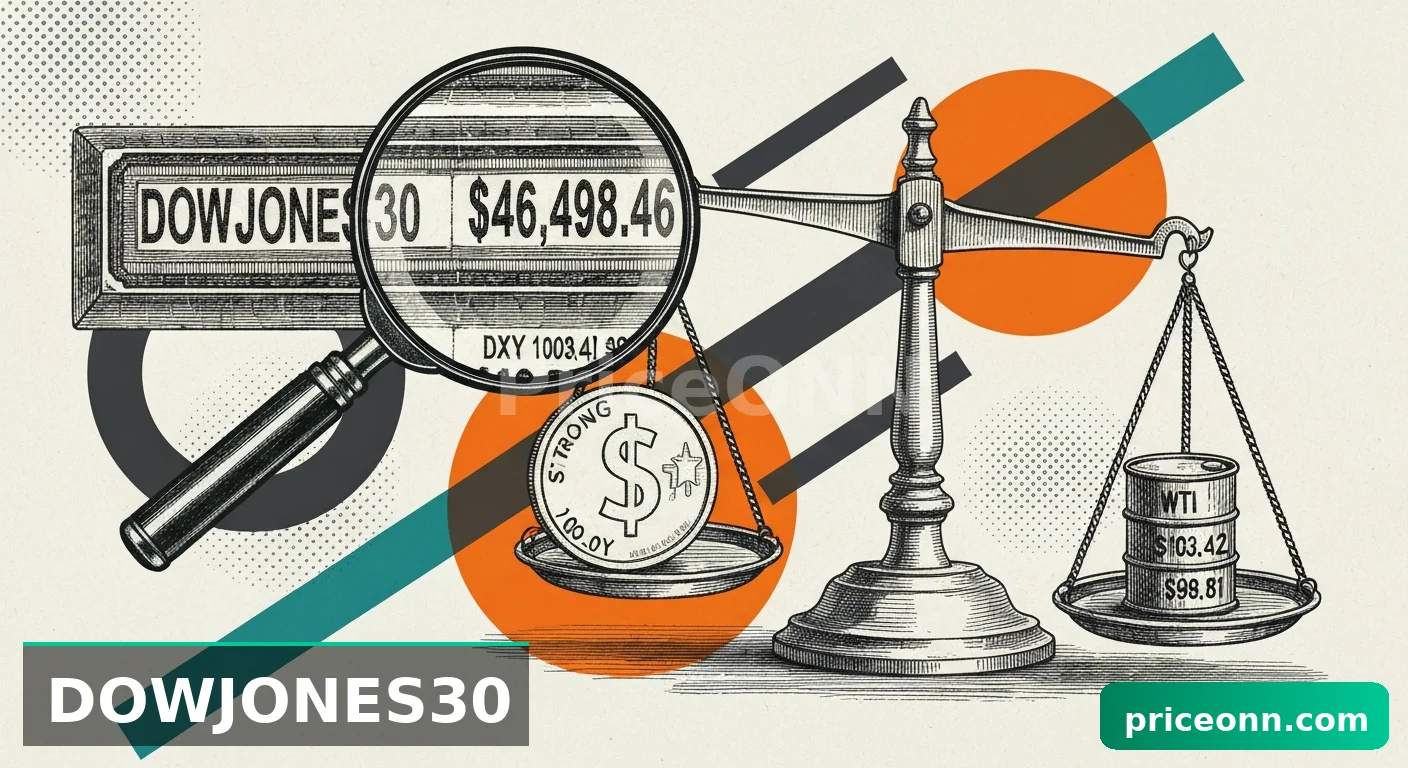
From a fundamental perspective, the Nasdaq100 is influenced by several factors. The DXY (Dollar Index) currently stands at 100.07, a level that puts downward pressure on risk assets like the Nasdaq100. Rising oil prices, with Brent at $103.42 and WTI at $98.81, contribute to inflationary pressures, potentially leading to more hawkish monetary policy from the Federal Reserve. Geopolitical tensions add another layer of uncertainty, increasing safe-haven demand and further weighing on risk assets.
Adding to the headwinds, the recent news flow highlights several concerns. Zimbabwe's lithium export ban is disrupting battery supply chains, impacting tech companies reliant on lithium-ion batteries. Jet fuel prices are skyrocketing due to Middle East conflicts, potentially affecting airline profitability and consumer spending. Custodia Bank's master account bid failure underscores regulatory challenges facing the crypto industry, indirectly impacting sentiment in the tech sector. These developments contribute to a risk-off environment, favoring safe-haven assets over growth-oriented equities.
Economic data releases this week will be crucial in shaping market expectations. The GBP data released on Friday, March 13, is expected to provide insights into the UK economy, potentially impacting global risk sentiment. The USD data released on the same day, including unemployment claims and retail sales figures, will be closely watched for clues about the Federal Reserve's future policy decisions. The market is anticipating these releases, with investors closely monitoring the actual versus forecast data to gauge the potential impact on the Nasdaq100.
Having tracked Nasdaq100 through the 2024 rate cycle, it’s clear that the index is highly sensitive to changes in interest rate expectations. Historically, when RSI reaches this zone on Nasdaq100, the outcome has been a period of consolidation followed by a trend continuation. This pattern last appeared in early January, when price subsequently broke down to test new lows. Amid the current DXY strength and risk-off environment, the Nasdaq100 is facing significant headwinds. The index is decoupling from its usual inverse relationship with bond yields, indicating a flight to safety as investors seek shelter from geopolitical and economic uncertainties.
Given the current technical and fundamental backdrop, a conservative approach is warranted. Until the NFP data resolves this, caution is warranted. Risk management is paramount, and traders should focus on protecting capital while waiting for more clarity in the market. Manage your risk, wait for your setup-the market always gives a second chance.
Frequently Asked Questions: Nasdaq100 Analysis
What happens if Nasdaq100 breaks below $24,235.4 support?
If the Nasdaq100 breaks below the $24,235.4 support level, it could trigger a significant sell-off, potentially targeting the $23,975.09 level. This would confirm the bearish trend and signal further downside.
Should I buy Nasdaq100 at current levels of $24,336.36 given RSI at 39.82?
Given the RSI at 39.82 on the daily timeframe, which is not yet oversold, buying at current levels of $24,336.36 is risky. It's better to wait for a clearer bullish signal or further decline to oversold levels before considering a long position.
Is the MACD signal bearish for Nasdaq100 trend analysis?
Yes, the MACD histogram indicates negative momentum, reinforcing the bearish sentiment in the short term. This signal suggests that selling pressure is likely to continue, and traders should be cautious about initiating long positions.
How will the upcoming USD data affect Nasdaq100 this week?
The upcoming USD data, including unemployment claims and retail sales figures, will be closely watched for clues about the Federal Reserve's future policy decisions. Stronger-than-expected data could lead to more hawkish monetary policy, putting downward pressure on the Nasdaq100.
Technical Outlook Summary
| Indicator | Value | Signal |
|---|---|---|
| RSI (14) | 39.82 | Neutral |
| MACD Histogram | Negative | Bearish |
| Stochastic | 51.11/57.7 | Bearish |
| ADX | 30.47 | Strong Trend |
| Bollinger | Lower Band | Watch |
Key Levels
Support Levels
Resistance Levels
Track markets in real-time
Empower your investment decisions with AI-powered analysis, technical indicators and real-time price data.