

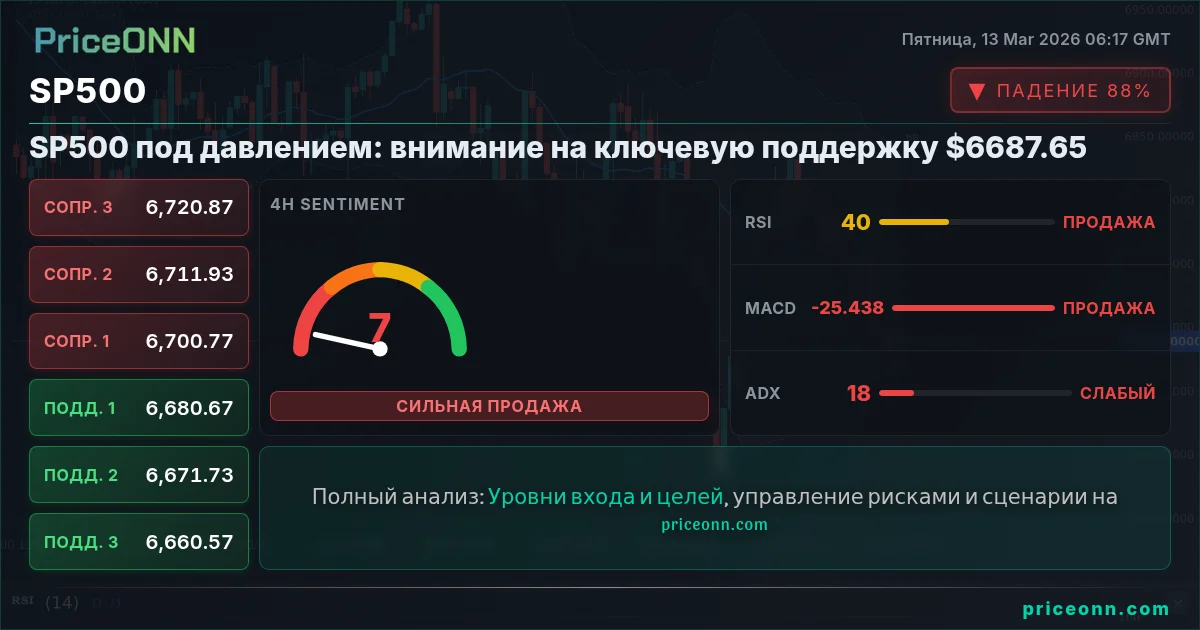
Индекс SP500 в настоящее время торгуется на уровне $6687.65, который является решающим полем битвы между быками и медведями. Индекс сталкивается со значительными встречными ветрами, а технические индикаторы указывают на возможное продолжение медвежьего тренда. Инвесторы внимательно следят за тем, сможет ли удержаться эта ключевая поддержка или пробой приведет к дальнейшему снижению. Исход может определить направление рынка на ближайшие дни и недели, поэтому важно понимать основные движущие силы.
- RSI на 4-часовом графике на уровне 41.9 сигнализирует о дальнейшем потенциале снижения.
- Критическая поддержка находится на уровне $6675, который тестировался несколько раз на этой неделе.
- Гистограмма MACD на дневном графике показывает, что нарастает негативный импульс.
- Рост геополитической напряженности на Ближнем Востоке стимулирует спрос на активы-убежища.
Почему $6675 – это линия фронта
Уровень $6675 представляет собой значимую зону поддержки для SP500. Эта область тестировалась несколько раз в последние сессии, и ее способность удержаться будет иметь решающее значение для определения краткосрочной траектории индекса. Пробой ниже этого уровня может спровоцировать волну давления продаж, потенциально приведя к тестированию более низких уровней поддержки на $6651.6 и $6635.6, согласно данным 4-часового таймфрейма. И наоборот, если SP500 сумеет сохранить свою позицию выше $6675, это может сигнализировать о потенциальном отскоке и движении к более высоким уровням сопротивления. Исход зависит от взаимодействия технических факторов и настроений рынка, при этом геополитические риски добавляют еще один уровень сложности. Сейчас самое время провести анализ sp500 сегодня, чтобы оценить риски.
Дорожная карта быков: сценарий отскока
Чтобы бычий сценарий реализовался, SP500 должен решительно пробить ближайшее сопротивление на уровне $6695.77, как показывают данные 1-часового таймфрейма. Этот прорыв должен сопровождаться сильным объемом и положительным импульсом, сигнализируя о возобновлении интереса к покупкам. Успешное преодоление этого уровня сопротивления может открыть путь к тестированию следующей цели на уровне $6704.03 и, возможно, даже $6709.87. Этот бычий сценарий, вероятно, потребует изменения настроений рынка, вызванного позитивными экономическими данными или деэскалацией геополитической напряженности. Скальперы будут следить за быстрым движением выше $6695.77, чтобы нацелиться на $6704.03, в то время как свинг-трейдеры будут ждать дневного закрытия выше $6709.87, чтобы подтвердить прорыв. Долгосрочные инвесторы могут увидеть в этом возможность увеличить свои позиции, ожидая дальнейшего роста в ближайшие месяцы.
Где медведи берут контроль: сценарий снижения
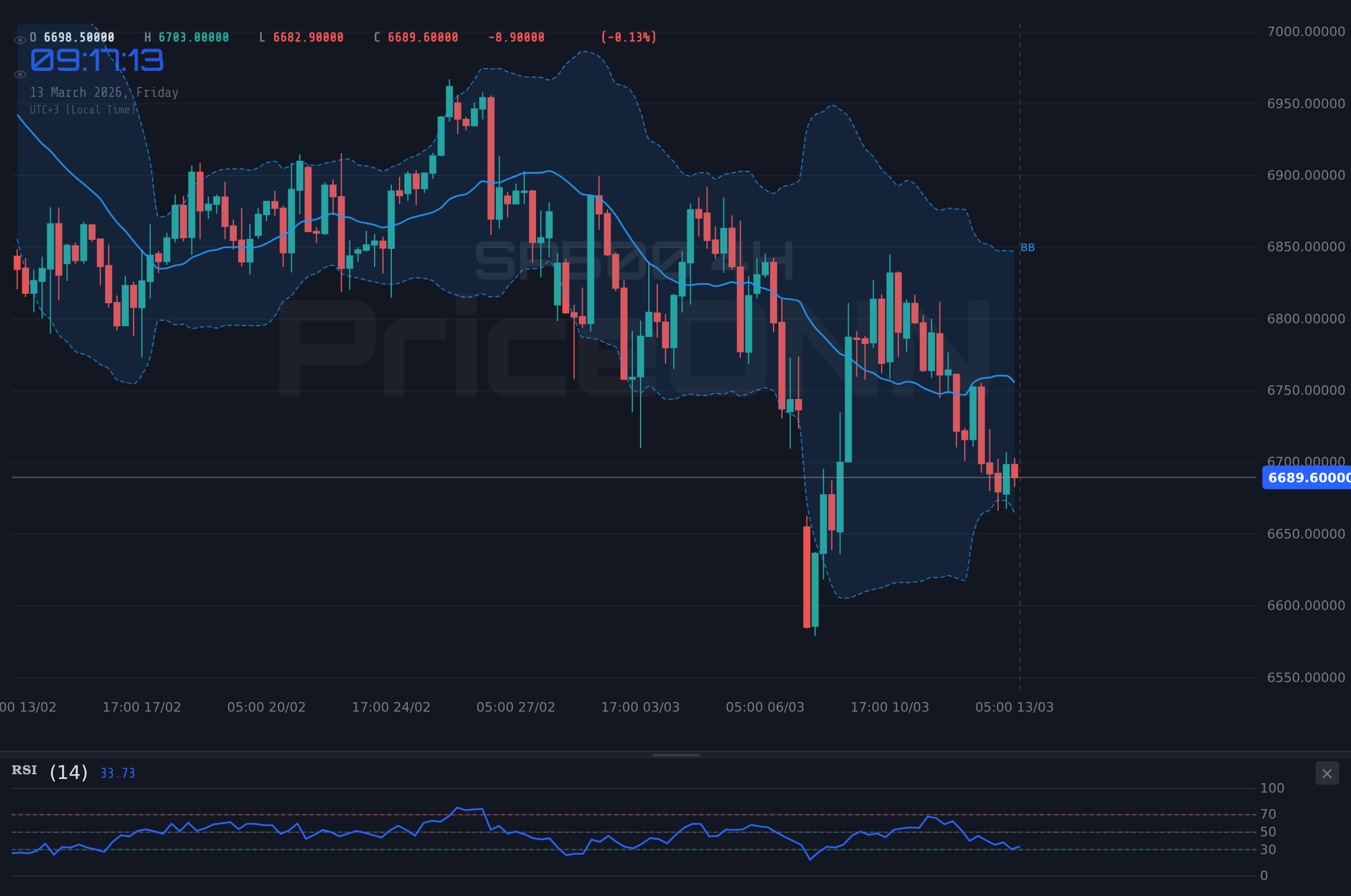
Медвежий сценарий набирает обороты, если SP500 не сможет удержать критическую поддержку на уровне $6675. Пробой ниже этого уровня может спровоцировать резкую распродажу, при этом индекс потенциально нацелится на следующую зону поддержки на уровне $6651.6, за которой следует $6635.6. Данные 4-часового таймфрейма показывают, что пробой ниже $6675 подтвердит медвежий тренд, при этом RSI на уровне 41.9 еще больше поддерживает потенциал снижения. Гистограмма MACD на дневном графике также показывает, что нарастает негативный импульс, что добавляет еще больше веса этому сценарию. Этот медвежий прогноз может быть усугублен эскалацией геополитической напряженности или разочаровывающими экономическими данными. Скальперы, вероятно, будут открывать Short позиции по SP500 при пробое ниже $6675, нацеливаясь на $6651.6 для получения быстрой прибыли. Свинг-трейдеры будут искать устойчивое движение ниже $6635.6, чтобы подтвердить медвежий тренд, в то время как долгосрочные инвесторы могут рассмотреть возможность сокращения своей доли в акциях в ожидании дальнейшего снижения.
Игра в ожидание: сценарий консолидации
Третий сценарий – это продолжение текущей консолидации, когда SP500 остается зажатым между поддержкой на уровне $6675 и сопротивлением на уровне $6695.77. Этот сценарий может разыграться, если участники рынка не решатся занять четкую направленную позицию, ожидая дальнейших катализаторов для движения рынка. Значение ADX 16.46 на 4-часовом таймфрейме предполагает слабую тенденцию, поддерживая возможность консолидации. В этом сценарии скальперы могут заниматься краткосрочной торговлей, покупая на поддержке и продавая на сопротивлении. Свинг-трейдеры, вероятно, останутся в стороне, ожидая четкого прорыва или пробоя для открытия позиции. Долгосрочные инвесторы могут занять выжидательную позицию, наблюдая за рынком на предмет признаков решительного движения в любом направлении.
Текущая борьба SP500 вблизи $6687.65 подчеркивает хрупкий баланс между бычьими и медвежьими силами. Решительный прорыв выше $6695.77 может сигнализировать о бычьем развороте, в то время как падение ниже $6675, вероятно, подтвердит медвежий тренд. Трейдерам следует внимательно следить за этими ключевыми уровнями и соответствующим образом корректировать свои стратегии, надлежащим образом управляя рисками.
Оценка вероятности: что наиболее вероятно?
Основываясь на текущем техническом и фундаментальном фоне, медвежий сценарий представляется наиболее вероятным с оценочной вероятностью 50%. Негативный импульс на дневном графике в сочетании с показаниями RSI и продолжающейся геополитической напряженностью предполагает, что риски снижения повышены. Бычьему сценарию присваивается вероятность 30%, зависящая от решительного прорыва выше $6695.77 и изменения настроений рынка. Сценарию консолидации присваивается вероятность 20%, отражающая возможность продолжения нерешительности на рынке. Однако крупное новостное событие или значительное изменение экономических данных могут быстро изменить эти вероятности, подчеркивая необходимость постоянной бдительности и адаптивности.
Корреляционный анализ: DXY, облигации и нефть
Движения SP500 тесно коррелируют с другими ключевыми рынками, включая DXY (индекс доллара), доходность облигаций и цены на нефть. Поскольку DXY в настоящее время находится на уровне 99.59, рост доллара обычно оказывает давление на акции, поскольку он делает американские активы более дорогими для иностранных инвесторов. Рост доходности облигаций также может оказывать давление на SP500, поскольку он увеличивает стоимость заимствований для компаний и снижает привлекательность акций по сравнению с облигациями. Цены на нефть, с другой стороны, могут оказывать смешанное воздействие. Более высокие цены на нефть могут поддержать энергетический сектор, но также способствуют инфляционному давлению, потенциально приводя к ужесточению денежно-кредитной политики и снижению оценок акций. Недавний скачок цен на сырую нефть, вызванный напряженностью на Ближнем Востоке, добавляет еще один уровень сложности к перспективам SP500, усиливая опасения по поводу инфляции. Трейдерам следует внимательно следить за этими корреляциями, чтобы получить более полное представление о потенциальной траектории SP500. Рост USD/CAD до 1.3620, поскольку геополитические риски оказывают давление на луни, также указывает на неприятие риска, что может еще больше надавить на SP500.
Что я отслеживаю: ключевые триггеры на этой неделе
Несколько ключевых триггеров могут повлиять на направление SP500 на этой неделе. Во-первых, предстоящие публикации данных по USD будут внимательно отслеживаться на предмет подсказок о будущих решениях Федеральной резервной системы в области денежно-кредитной политики. Данные, которые окажутся сильнее, чем ожидалось, могут привести к более ястребиной позиции ФРС, потенциально оказывая понижательное давление на акции. Во-вторых, любая дальнейшая эскалация геополитической напряженности на Ближнем Востоке может спровоцировать бегство в безопасные активы, повысив спрос на активы-убежища, такие как золото и казначейские облигации США, и оказывая давление на рисковые активы, такие как SP500. Наконец, отчеты о прибылях крупных компаний дадут представление о состоянии корпоративного сектора и экономики в целом. Положительные сюрпризы могут поддержать SP500, в то время как отрицательные сюрпризы могут усугубить медвежий тренд. Следите за дневным закрытием выше $6695.77, чтобы сигнализировать о бычьем развороте, или за дневным закрытием ниже $6675, чтобы подтвердить медвежий тренд.
Часто задаваемые вопросы: Анализ SP500
Что произойдет, если SP500 пробьет поддержку на уровне $6675?
Пробой уровня поддержки $6675 может спровоцировать значительную распродажу, потенциально приведя к тестированию следующей зоны поддержки на уровне $6651.6. Этот сценарий, вероятно, подтвердит медвежий тренд и может быть усугублен негативными новостями или эскалацией геополитической напряженности.
Стоит ли покупать SP500 на текущих уровнях $6687.65, учитывая показания RSI?
Учитывая, что RSI на 4-часовом графике находится на уровне 41.9, SP500 еще не перепродан, что предполагает дальнейший потенциал снижения. Поэтому покупка на текущих уровнях сопряжена со значительным риском. Было бы разумно дождаться более перепроданных показаний или подтвержденного бычьего разворота, прежде чем открывать длинную позицию.
Является ли отрицательная гистограмма MACD надежным сигналом на продажу для SP500?
Отрицательная гистограмма MACD на дневном графике указывает на то, что нарастает медвежий импульс. Хотя это не является однозначным сигналом на продажу само по себе, это добавляет вес медвежьему сценарию и предполагает, что следует проявлять осторожность. Рекомендуется подтверждение от других индикаторов и ценового действия, прежде чем открывать Short позицию.
Как предстоящие данные по USD повлияют на SP500 на этой неделе?
Предстоящие публикации данных по USD могут оказать значительное влияние на SP500. Данные, которые окажутся сильнее, чем ожидалось, могут привести к более ястребиной позиции ФРС, потенциально оказывая понижательное давление на акции. И наоборот, данные, которые окажутся слабее, чем ожидалось, могут ослабить опасения по поводу инфляции и поддержать более голубиную ФРС, потенциально обеспечив поддержку SP500.
Технический Обзор
| Индикатор | Значение | Сигнал | Интерпретация |
|---|---|---|---|
| RSI (14) | 41.9 | Медвежий | Дальнейший потенциал снижения |
| MACD Histogram | Отрицательный | Медвежий | Нарастает негативный импульс |
| Stochastic | 16.87 | Нейтральный | Еще не перепродан |
| ADX | 16.46 | Слабый | Тенденция не сильная |
| Bollinger | Средняя полоса | Наблюдать | Цена ниже средней полосы |
Ключевые Уровни
Уровни Поддержки
Уровни Сопротивления
Отслеживайте рынки в реальном времени
ИИ-анализ и данные в реальном времени.