
AUD/USD Drops as Australian Unemployment Rate Surprises to the Upside

The Australian Dollar experienced a notable decline against its US counterpart on Friday, with the AUD/USD pair trading near the 0.7080 level during Asian trading hours. This downward pressure stemmed from the latest Australian employment figures, which revealed a surprise increase in the nation's unemployment rate for February. The unexpected rise suggests a potential softening in the domestic labor market, a development that typically acts as a headwind for currency valuations.
Market Context
The release of Australia's unemployment data showing an increase in February has directly impacted the AUD/USD exchange rate. While specific figures for the unemployment rate were not detailed in the initial report, the market reaction indicates a deviation from expectations. This data point is crucial as it provides insight into the health of the Australian economy, influencing investor sentiment and RBA policy considerations. Alongside this, the decision by the People's Bank of China (PBOC) to hold its key lending rates steady provided a backdrop of stability from Australia's largest trading partner, though it did little to offset the negative impact of the domestic employment figures on the Aussie.
Analysis & Drivers
Several fundamental factors typically influence the Australian Dollar's trajectory. The monetary policy stance of the Reserve Bank of Australia (RBA), particularly its benchmark interest rates, is paramount. Given Australia's significant role as a global resource provider, the price fluctuations of its primary export, iron ore, also exert considerable influence. Furthermore, the economic vitality of China, its largest trading partner, alongside domestic inflation trends, economic growth trajectories, and the nation's trade balance, are critical determinants of AUD's strength. Market sentiment, often characterized by 'risk-on' or 'risk-off' environments, plays a crucial, albeit sometimes volatile, role. A prevailing 'risk-on' mood typically bolsters the AUD, while a 'risk-off' sentiment tends to diminish its appeal.
The RBA influences the economy through interest rate adjustments, aiming to keep inflation within the 2% to 3% target band. Relatively high interest rates compared to other major central banks tend to support the AUD, while lower rates have the opposite effect. The RBA also employs tools like quantitative easing and tightening, which can influence credit conditions, with easing generally being AUD-negative and tightening AUD-positive. The current rise in unemployment suggests that the RBA might face increased pressure to reassess its hawkish stance or at least pause further tightening, especially if inflation shows signs of moderating.
Trader Implications
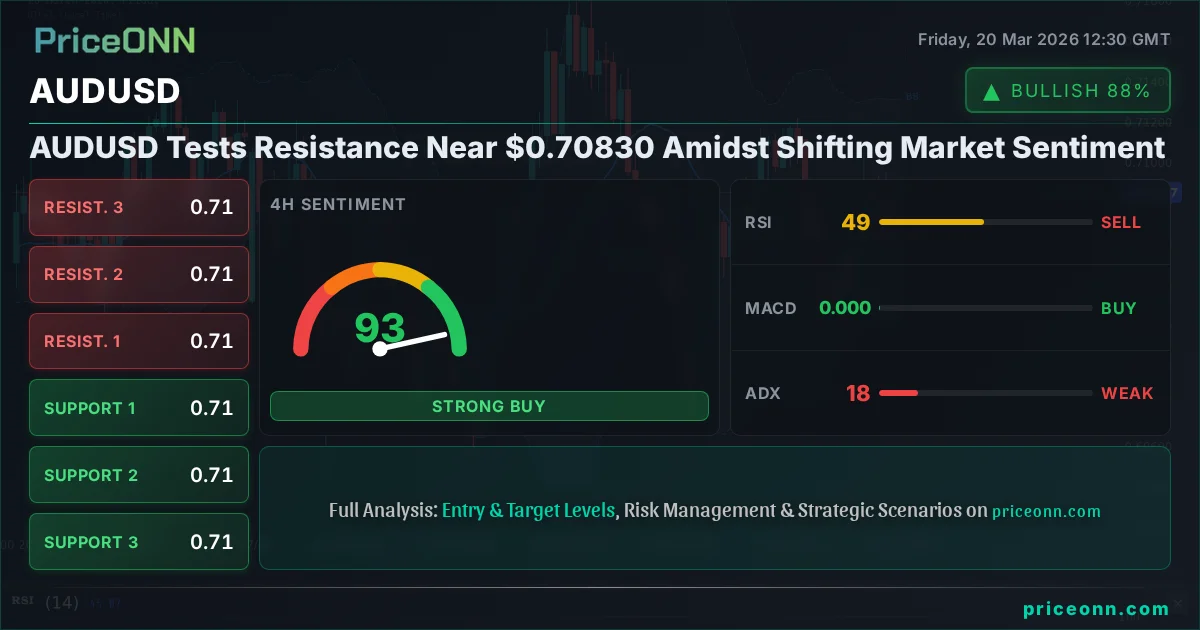
Traders will be closely monitoring upcoming Australian economic data, particularly inflation reports and retail sales figures, to gauge the RBA's next move. Key support levels for AUD/USD are being tested around the 0.7080 mark. A sustained break below this level could open the door for further downside, potentially targeting the 0.7050 region. On the upside, a recovery above the 0.7100 handle would be necessary to alleviate immediate bearish pressure, with a more significant move required to challenge higher resistance levels around 0.7150.
The divergence in monetary policy expectations between the US Federal Reserve and the RBA could also become a more significant driver. If the Fed signals a more hawkish outlook while the RBA leans towards a pause or even easing due to domestic economic concerns, this could exacerbate AUD/USD weakness. Conversely, any unexpected strength in Australian inflation or employment figures could quickly reverse the current sentiment.
Outlook
The immediate outlook for AUD/USD appears cautious following the disappointing employment data. While the PBOC's steady rates offer some stability, the focus will remain on Australian domestic conditions and the RBA's response. Traders should remain vigilant for any further shifts in market sentiment or significant economic releases from either Australia or the United States. A potential rise in unemployment could lead to a reassessment of the RBA's tightening path, creating headwinds for the Australian Dollar in the short to medium term.
Frequently Asked Questions
What caused the AUD/USD to decline on Friday?
The AUD/USD pair fell as Australia's unemployment rate unexpectedly rose in February, signaling potential labor market cooling. This data release overshadowed the People's Bank of China holding its interest rates steady.
What are the key levels to watch for AUD/USD?
Traders should watch the 0.7080 level as immediate support. A break below this could lead to a test of 0.7050. On the upside, a move back above 0.7100 is needed to ease bearish pressure.
What is the outlook for the Australian Dollar?
The outlook for the Australian Dollar is cautious due to rising unemployment. If this trend persists, it could prompt the RBA to pause its tightening cycle, creating headwinds for the AUD against currencies like the USD.
Track markets in real-time
Empower your investment decisions with AI-powered analysis, technical indicators and real-time price data.
Join Our Telegram Channel
Get breaking market news, AI analysis and trading signals delivered instantly to your Telegram.
Join Channel



PriceONN