
Is Bitcoin Outperforming Stocks as Equities Face Renewed Pressure?

Bitcoin and the broader cryptocurrency market are showing resilience, with total market capitalization holding near a crucial uptrend line despite a recent 3.4% pullback to $2.36 trillion. This performance stands in stark contrast to the recent struggles in equity markets, where indices such as the Nasdaq 100 have resumed a downward trajectory, revisiting earlier weekly lows.
Market Context: Diverging Fortunes
While the Nasdaq 100 has been in a consistent decline since late January, cryptocurrencies have demonstrated a different pattern since early February. Following a brief test of the 200-week moving average, which for Bitcoin currently sits around the $60,000 mark, digital assets have consistently established higher local lows. This key long-term technical level has historically acted as a significant support base.
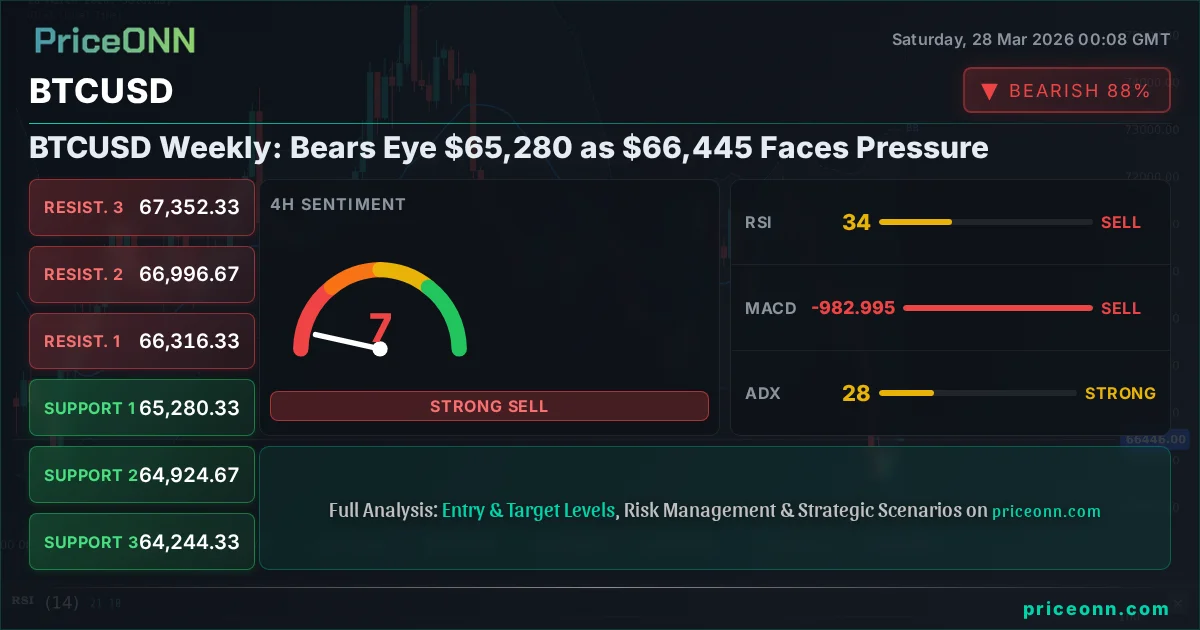
Bitcoin itself has recently dipped below the $69,000 threshold, challenging its 50-day moving average and the robust support derived from its two-month upward trend. The prevailing cautious sentiment across global financial markets introduces a degree of vulnerability for digital assets, with potential for cascading sell-offs if systemic risk events were to materialize.
Analysis & Drivers: Mining Operations and Investor Sentiment
Beneath the price action, significant operational shifts are occurring within the Bitcoin mining sector. Marathon Digital Holdings (MARA), a major publicly traded miner, recently divested 15,133 BTC, generating approximately $1.1 billion. The company plans to utilize these funds to repurchase its outstanding bonds, aiming to strengthen its financial structure. Following this sale, MARA's reported Bitcoin reserves stand at 38,689 BTC. Industry data indicates that the operational cost of mining Bitcoin for publicly traded entities has been a key factor influencing their strategic decisions, especially during periods of price volatility.
The divergence in performance between crypto and equities can be attributed to several factors. Firstly, the institutional adoption narrative continues to underpin the digital asset space, providing a floor for prices even amidst broader market uncertainty. Secondly, the unique uncorrelated nature of Bitcoin, at times, allows it to move independently of traditional assets. However, it is crucial to note that during periods of extreme market stress, correlations can increase, posing a risk to all asset classes.
Trader Implications: Key Levels and Risk Management
Traders should closely monitor the $60,000 level for Bitcoin, which represents a critical support zone tied to its 200-week moving average. A sustained break below this level could signal a deeper correction. Conversely, a successful retest and hold above the recent highs, potentially re-challenging the $70,000 range, would indicate a continuation of the bullish trend.
Key factors to watch include the performance of major stock indices, particularly the Nasdaq 100, as continued weakness there could spill over into crypto markets. Additionally, any significant regulatory news or developments regarding institutional investment in digital assets could heavily influence market sentiment. For traders, maintaining robust risk management strategies, including appropriate stop-loss orders, is paramount given the inherent volatility. The recent actions by miners, such as MARA's BTC sale, suggest a focus on financial prudence, which could influence selling pressure.
Outlook
The near-term outlook for cryptocurrencies appears cautiously optimistic, provided they can maintain their position above key support levels while equity markets remain under pressure. The ongoing trend of higher lows suggests underlying strength, but the influence of macroeconomic factors and broader market sentiment cannot be ignored. Traders will be looking for confirmation of upward momentum as Bitcoin approaches key resistance levels, while also preparing for potential downside risks should global market turmoil intensify.
Frequently Asked Questions
What is Bitcoin's current critical support level?
Bitcoin is currently being supported by its 200-week moving average, which is approximately at the $60,000 mark. A sustained hold above this level is crucial for maintaining the current bullish trend.
How has Bitcoin performed compared to the Nasdaq 100 recently?
While the Nasdaq 100 has shown a steady downward trend since late January, Bitcoin has consistently made higher local lows since early February, indicating a relative outperformance.
What are the key factors to watch for Bitcoin's future price movement?
Traders should monitor the Nasdaq 100's performance for potential spillover effects, as well as any significant regulatory news or institutional adoption updates. Key price levels to watch are $60,000 for support and the $70,000 range for potential resistance.
Track markets in real-time
Empower your investment decisions with AI-powered analysis, technical indicators and real-time price data.
Join Our Telegram Channel
Get breaking market news, AI analysis and trading signals delivered instantly to your Telegram.
Join Channel


PriceONN