
Brent Crude Eyes $100 as Strait of Hormuz Tensions Escalate


Brent crude oil is poised to close above $100 per barrel for the first time since August 2022, as escalating tensions surrounding the Strait of Hormuz intensify. This price surge occurs despite the US government's temporary easing of sanctions on Russian oil and the potential release of strategic petroleum reserves (SPR) by the International Energy Agency (IEA), indicating the severity of the current supply concerns.
Market Context
The Strait of Hormuz, a critical chokepoint for global oil supplies, has become a focal point of geopolitical instability. Recent events, including attacks on vessels and infrastructure, have significantly disrupted the flow of oil and liquefied natural gas (LNG) from the region. Industry reports indicate that Iran has struck at least 18 vessels since the US-Iran conflict began two weeks ago, exacerbating the situation.
The disruption has already had a significant financial impact. Oil producers in the Arab Gulf are estimated to have lost over $15 billion in oil and gas revenues since the beginning of the conflict, according to commodities analytics firm Kpler. The de facto closure of the Strait has choked off millions of barrels per day of crude oil and refined petroleum products, as well as approximately 20% of the global LNG supply, since March 1.
Analysis & Drivers
The primary driver behind the price surge is the perceived risk to supply. Iran's new Supreme Leader has pledged to continue blocking the Strait of Hormuz, viewing it as a crucial strategic asset. This stance, coupled with recent attacks on tankers, has heightened fears of a prolonged disruption to oil flows. The EU has stated it does not see any 'immediate concern' regarding the security of its oil supplies, even though Germany, France, and Italy have all announced SPR releases in line with the IEA’s guidance. Meanwhile, the US Energy Secretary has acknowledged the difficulties in providing Navy escorts for oil tankers through the Strait, further fueling market anxieties.
The situation is compounded by the limited capacity to bypass the Strait of Hormuz. While alternative routes exist, such as Saudi Arabia's East-West pipeline to the Yanbu terminal on the Red Sea, their capacity is insufficient to fully offset the lost supply. The East-West pipeline has a nominal capacity of 7 million barrels per day (bpd), but the actual loading capacity at Yanbu is estimated to be around 3 million bpd. Gulf producers have already slashed their combined oil output by at least 10 million barrels per day, according to the IEA, due to storage filling up and limited export options.
Trader Implications
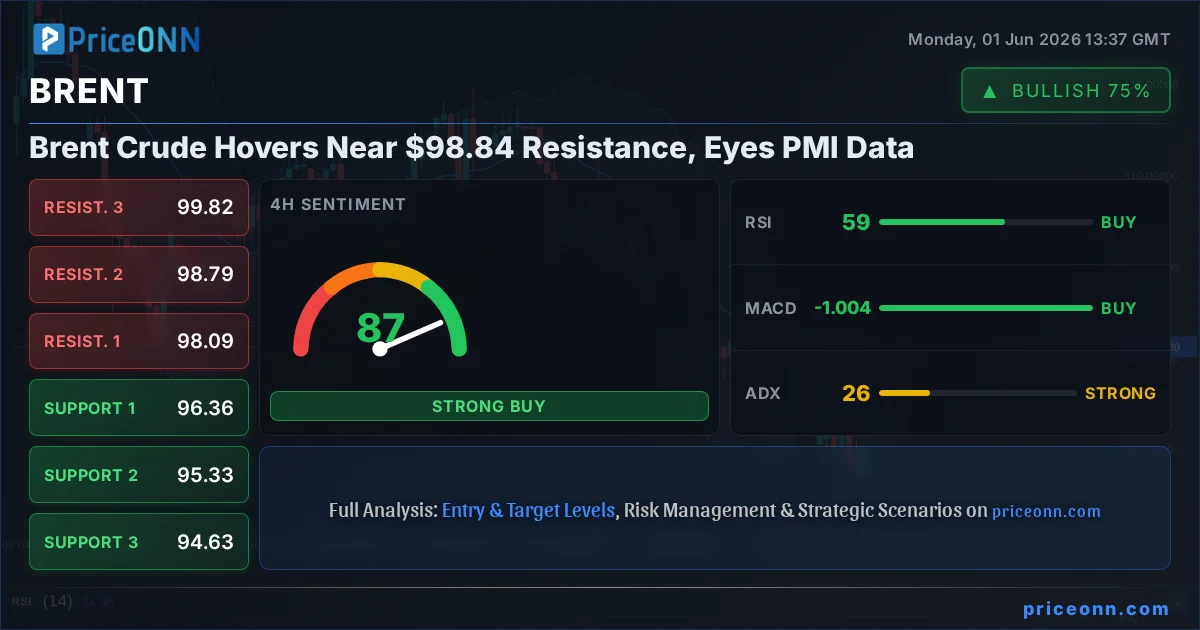
Traders should closely monitor geopolitical developments in the Middle East, particularly any escalations or de-escalations of the conflict. Key levels to watch for Brent crude are $100 as a potential resistance level and $95 as an initial support level. A break above $100 could trigger further upward momentum, while a failure to hold above $95 could signal a potential pullback.
- Risk factors include further attacks on oil tankers or infrastructure, which could lead to even greater supply disruptions and price spikes.
- Traders should also pay attention to statements from OPEC+ members, as any announcements regarding production increases or decreases could significantly impact prices.
- The US government's decision to temporarily ease sanctions on Russian oil may provide some relief to the market, but its impact is likely to be limited given the scale of the disruption in the Strait of Hormuz.
Given the current environment, traders may consider:
- Long positions in Brent crude oil, with appropriate stop-loss orders to manage risk.
- Options strategies to capitalize on potential price volatility.
- Monitoring shipping rates and insurance costs for tankers operating in the region, as these can provide early indications of escalating risks.
A senior oil market analyst noted, "The market is pricing in a significant risk premium due to the uncertainty surrounding the Strait of Hormuz. Any resolution to the conflict could lead to a sharp correction in prices, but until then, upward pressure is likely to remain."
Outlook
In the near term, oil prices are likely to remain elevated due to the ongoing tensions in the Strait of Hormuz. Upcoming events to watch include any diplomatic efforts to de-escalate the conflict, as well as the release of official oil inventory data from major consuming countries. Market sentiment is currently bullish, but any signs of a potential resolution or increased supply could quickly shift the outlook. Traders should remain vigilant and adapt their strategies accordingly.
Track markets in real-time
Empower your investment decisions with AI-powered analysis, technical indicators and real-time price data.
Join Our Telegram Channel
Get breaking market news, AI analysis and trading signals delivered instantly to your Telegram.
Join Channel PriceONN News
Brent crude prices surged towards the mid-$90s amid fears of supply disruptions from Middle East tensions, only to pare gains later as whispers of a potential US-Iran diplomatic understanding emerged.
PriceONN News
Crude oil futures experienced a dramatic reversal, soaring overnight to $92.52 before plummeting nearly 6% to $89 a barrel. This volatility was driven by escalating US-Iran tensions followed by reports of a potential preliminary diplomatic understanding.
PriceONN News
(RTTNews) - Oil prices were little changed on Thursday, after having fallen over 5 percent in the previous session amid optimism over a possible easing of Middle East tensions. Brent crude futures for July delivery were down 0.3 percent at $104.72 a barrel while WTI crude futures
PriceONN News
Crude oil prices experienced a significant drop, with WTI futures falling over 1.8% to $87.25, as optimism grew for a U.S.-Iran deal potentially reopening the Strait of Hormuz.
PriceONN News
(RTTNews) - Crude oil prices have tumbled on Friday as expectations of the U.S. and Iran signing a Memorandum of Understanding run high. The MoU would allow for immediate reopening of the Strait of Hormuz and pave the way for the resumption of oil and energy trade.
PriceONN News
Crude oil futures experienced a dramatic intraday reversal on Thursday, soaring overnight on geopolitical fears only to pull back significantly as reports of a potential diplomatic understanding between the U.S. and Iran emerged.
PriceONN News
Crude oil futures experienced a dramatic intraday reversal, soaring to $92.52 before pulling back significantly on Thursday. The volatile session was driven by shifting geopolitical narratives and U.S. inventory data.
PriceONN News
(RTTNews) - Crude oil futures skyrocketed overnight but have shown a significant pullback over the course of the trading day on Thursday.
PriceONN News
Crude oil benchmarks experienced a sharp decline of over 5% this week, driven by renewed optimism surrounding U.S.-Iran peace talks and a potential easing of Middle East tensions. Both Brent and WTI futures saw significant drops as market sentiment shifted towards de-escalation.
PriceONN News
Global oil prices are treading water after a significant 5% slump, as market sentiment grapples with cautious optimism over Middle East de-escalation efforts versus lingering geopolitical uncertainties. Brent crude hovers near $104.72 and WTI near $98.07.
PriceONN News
WTI Crude Oil futures experienced a sharp decline of over 5.6%, falling to $98.26 per barrel as diplomatic efforts between the U.S. and Iran gained significant momentum, easing supply disruption fears.
PriceONN News
Crude oil prices experienced a sharp decline, with WTI futures for July delivery falling 5.66% to $98.26. This drop is largely attributed to renewed diplomatic efforts aimed at de-escalating the U.S.-Iran conflict and easing tensions around the Strait of Hormuz.