
Why Did Crude Oil Rally Fizzle After Overnight Spike to $92.52?


Crude oil prices experienced a sharp reversal on Thursday, after an overnight surge propelled futures to a high of $92.52 per barrel. The market's initial aggressive rally, seemingly fueled by escalating geopolitical tensions, lost steam as reports emerged of potential diplomatic progress, leading to a significant unwinding of the risk premium.
Market Context
The trading day on Thursday presented a classic example of market volatility driven by rapidly evolving geopolitical narratives and a fresh look at U.S. energy stockpiles. Crude oil futures, specifically the July delivery contract, began the session with substantial upward momentum. However, this momentum faltered significantly as the day wore on. By the close of trading, prices had pared back gains, with the contract trading up by a mere $0.32, or 0.4 percent, settling around the $89 a barrel mark. This dramatic intraday swing underscores the market's sensitivity to both supply-side concerns and potential de-escalation in global flashpoints.
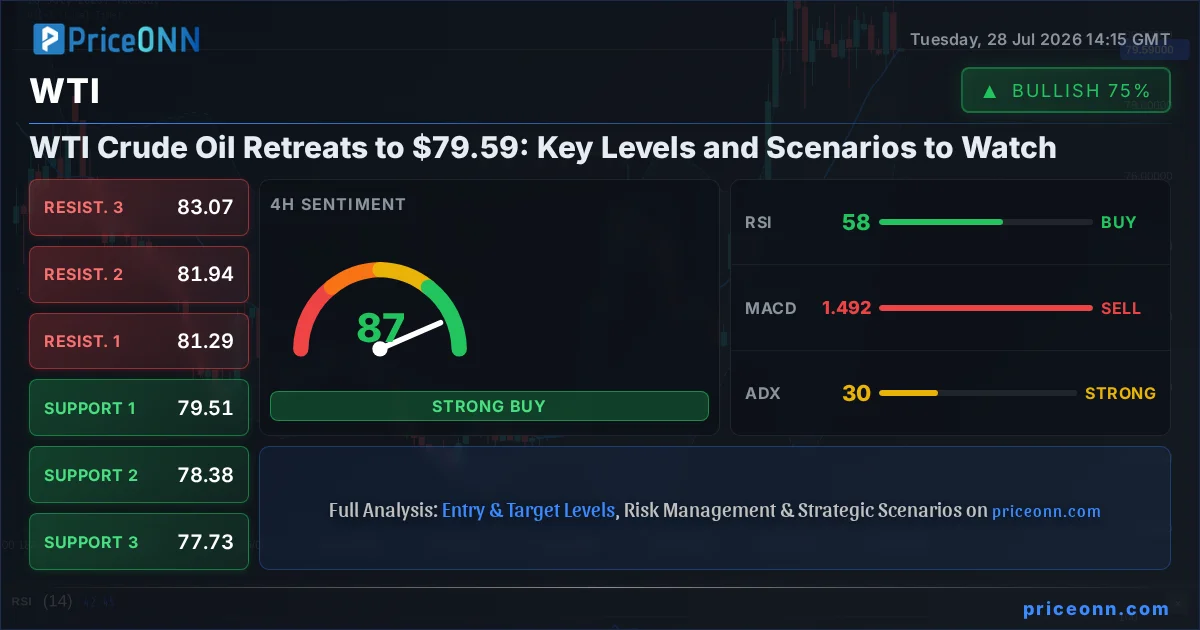
Analysis & Drivers
The initial spike in oil prices appeared to be directly correlated with early reports suggesting a dangerous escalation of conflict in the Middle East. Market data indicated mentions of U.S. forces conducting "self-defense strikes" in southern Iran, which were reportedly met with retaliatory actions targeting a U.S. air base. This narrative of increasing hostilities naturally injected a significant risk premium into oil prices.
However, the sentiment shifted dramatically following a report suggesting that U.S. and Iranian negotiators may have reached a preliminary understanding. This potential 60-day memorandum of understanding, aimed at extending an existing ceasefire and initiating discussions on Iran's nuclear program, acted as a powerful counter-narrative. While final approval from President Donald Trump was pending, the mere suggestion of de-escalation was sufficient to prompt traders to rapidly shed long positions and unwind the geopolitical risk premium that had been built into prices.
Adding another layer to the market's dynamics were the latest U.S. crude oil inventory figures released by the Energy Information Administration (EIA). For the week ending May 22nd, U.S. crude stockpiles decreased by 3.3 million barrels. While this represents a drawdown, it was less than the 5.0 million barrel decrease that economists had projected. This muted draw suggests a potentially slower pace of demand absorption than anticipated, or perhaps a subtle adjustment in supply flows. These inventories now stand at 441.7 million barrels, approximately 2 percent below the five-year historical average for this period. Additionally, gasoline inventories fell by 2.6 million barrels and distillate fuels by 2.1 million barrels, indicating continued pressure on refined product markets.
Trader Implications
For traders, the events of Thursday highlight the critical importance of monitoring geopolitical developments alongside fundamental supply and demand data. The rapid reversal from intraday highs serves as a stark reminder that price action can be heavily influenced by breaking news and shifts in market sentiment. Key levels to watch for the July crude oil contract include the recent high of $92.52 as immediate resistance, with the $89 a barrel level now acting as a crucial support zone.
The less-than-expected draw in crude oil inventories, while overshadowed by geopolitical news, could provide a subtle headwind for prices if diplomatic efforts continue to de-escalate. Traders should closely observe any further statements from U.S. and Iranian officials regarding the MOU, as well as monitor upcoming inventory reports for signs of sustained demand or shifts in supply. A confirmed breakdown below the $89 level could signal further downside, potentially targeting the $85-$86 range, while a resurgence of geopolitical fears could see prices re-test the highs.
The implications of the inventory data are also noteworthy. While the drawdown continues, the slower pace compared to expectations might temper overly bullish sentiment in the short term. Traders should also pay attention to refined product inventories, particularly distillates, which are down approximately 11 percent year-on-year, suggesting persistent tightness in those specific markets.
Outlook
The immediate outlook for crude oil remains highly sensitive to geopolitical developments. Should diplomatic efforts progress and tensions ease, prices could face further pressure as speculative premiums are unwound. Conversely, any renewed escalation or failure to finalize the proposed MOU could see oil prices rebound sharply. Traders will be looking to the upcoming days for clarity on the potential U.S.-Iran deal and continued analysis of EIA inventory reports to gauge the underlying health of the U.S. energy market. The market is currently balanced precariously between geopolitical risk and the prospect of de-escalation, with key price levels offering guidance on the likely direction.
Frequently Asked Questions
What caused crude oil prices to surge overnight?
Crude oil prices surged overnight due to early reports of escalating geopolitical tensions in the Middle East, including mentions of U.S. military actions and potential retaliation. This narrative injected a significant risk premium into the market, pushing prices up to a high of $92.52 per barrel.
Why did crude oil prices pull back so sharply during the day?
The sharp pullback was triggered by reports suggesting a potential diplomatic breakthrough between the U.S. and Iran, including a possible 60-day memorandum of understanding. This news led traders to rapidly unwind the earlier geopolitical risk premium, causing prices to fall from their highs.
What is the outlook for crude oil prices after Thursday's volatility?
The outlook remains uncertain and highly dependent on geopolitical developments. A successful de-escalation could pressure prices lower, potentially testing the $89 support level. However, any renewed tensions or stalled diplomatic talks could lead to a swift rebound, re-testing the $92.52 high.
Track markets in real-time
Empower your investment decisions with AI-powered analysis, technical indicators and real-time price data.
Join Our Telegram Channel
Get breaking market news, AI analysis and trading signals delivered instantly to your Telegram.
Join Channel PriceONN News
WTI crude oil plunged by more than 7% on 27 July 2026 after the US suspended a series of strikes against Iran over the weekend, raising hopes of a diplomatic solution and the reopening of shipping through the Strait of Hormuz. Brent crude also fell below $90 per barrel. Meanwhile, Bloomberg reported […] The post WTI Analysis: Gap Breaks Short-Term Trend as Price Remains Trapped Between the Poc and Profile Boundary appeared first on ActionForex.
PriceONN News
Oil prices continued to trend lower in early Asian trade on Tuesday as a fourth night passed without any attacks from either Iran or the United States. At the time of writing, WTI crude was trading at $81.55 per barrel, down 1.28% on the session, while Brent crude had slipped to $87.36 per barrel, a decline of 1.13%. On Monday, President Trump sought to boost hopes of a diplomatic resolution between Washington and Tehran by claiming that the U.S. was engaged in "good talks" with Iran. Iranian...
PriceONN News
(RTTNews) - Crude oil prices have gone into a tailspin on Monday, extending the losses from Friday's plunge after the U.S. halted nearly two weeks of military attacks against Iran following which near-term oil supply-disruption concerns reduced.
PriceONN News
The Houthi threats to shipping in the Red Sea and its chokepoint, the Bab el-Mandeb Strait, have forced at least one oil tanker carrying Saudi crude to Asia to choose the much longer route through the Suez Canal, the Mediterranean, and around Africa. The supertanker Olympic Luck, partially laden with Saudi crude at Yanbu on the Red Sea, transited the Suez Canal into the Mediterranean late on Sunday, according to shipping data monitored by Bloomberg. The U-turn from Bab el-Mandeb indicates that...
PriceONN News
China is likely to have increased its crude oil imports this month, with the daily average at 7.8 million barrels, according to calculations by Kpler, as cited by Bloomberg. Refiners have been buying more Russian crude and have seen more tankers arrive from the Middle East, the report noted. The figure could add fuel to oil’s rally, as the July average would be a solid increase from the 6.2 million barrels daily that Chinese refiners imported in June. That was the lowest import rate for China...
PriceONN News
Oil prices plunged by more than 5% in early Asian trade on Monday as the U.S. and Iran halted attacks after two weeks of escalation that had driven Brent above $100. At the time of writing, WTI crude was trading at $84.47, down 5.39%, while Brent crude had fallen to $91.80, a decline of 5.15%. The retreat came after Washington signaled on Friday that it would temporarily halt its bombing campaign against Iran. Talking to Face the Nation on Sunday, U.S. Ambassador to the United Nations Mike...
PriceONN News
Less than a month ago, analysts were warning of a looming glut of crude oil as tanker traffic via the Strait of Hormuz began to recover amid a U.S.-Iran ceasefire. Within days of these warnings, the ceasefire was a painful memory, missiles were flying again, and now Yemen’s Houthis are striking tankers in the Red Sea, which makes two blocked oil chokepoints and a very real danger of a global recession. Brent crude this week topped $100 per barrel on reports that the Houthis had struck two Saudi...
PriceONN News
Crude oil prices are retreating after Brent hit $100 again last week as the United States and Iran took a break from hostilities over the weekend. Yet with the outcome of the war still highly uncertain, the outlook for stock markets has dimmed. Add to that Big Tech’s AI spending binge and fresh warnings about energy commodity shortages, and we are looking at extended market turbulence ahead. Last week saw a rare pile-up of adverse market developments that must have shaken the confidence of many...
PriceONN News
Tanker traffic through the Bab el-Mandeb Strait slumped to a multi-month low on Sunday amid Houthi attacks on Saudi oil infrastructure on the Red Sea coast. Only 11 tankers carrying commodities transited the Bab el-Mandeb chokepoint between the Red Sea and the Arabian Sea on Sunday, the lowest in months, according to Kpler’s shipping data cited by Reuters. Tanker traffic at the Red Sea started to slow a week ago after the Iran-aligned Houthis in Yemen announced a blockade on Saudi shipments and...
PriceONN News
European natural gas prices plunged by 8.6% at the open in Amsterdam on Monday as the United States paused strikes on Iran over the weekend and Tehran signaled a halt to retaliatory attacks across the Middle East. Hopes of de-escalation sank oil prices on Monday in Asian trade, too, with Brent Crude dropping to $90 per barrel. Europe’s benchmark natural gas prices, which had surged in the past two weeks amid the renewed hostilities, retreated on Monday from the multi-month highs of last week,...
PriceONN News
U.S. airlines are grappling with soaring jet fuel costs again after the return of hostilities in the Middle East shattered the three-week-long U.S.-Iran ‘deal to make a deal’ and sent Brent crude oil prices soaring past $100 per barrel again. The U.S. jet fuel market has been tightening since March, although there haven’t been concerns about any shortages in America, unlike in Europe, which in April was supposed to run out of stockpiles within six weeks. Europe didn’t see shortages, but the...
PriceONN News
The anti-government protests in Libya over power cuts and high electricity bills over the past few days escalated on Tuesday, with protesters entering the Mellitah Oil and Gas complex and threatening to halt gas and fuel supplies for both the domestic and international markets. Libya’s capital Tripoli has been the main stage of protests against the Government of National Unity led by Abdul Hamid Dbeibah. Protesters blocked streets and roads out of the capital earlier this week as a sign of...