
Oil Market's Glut Narrative Just Blew Up
 PriceONN Editorial Desk
Multi-source verification
PriceONN Editorial Desk
Multi-source verification
Global Oil Arteries Facing Unprecedented Blockade
Just weeks ago, the market narrative was shifting towards a potential crude oil surplus. Optimism stemmed from a perceived de-escalation in tensions around the Strait of Hormuz, with tanker traffic showing signs of recovery. However, that brief window of calm has slammed shut. The fragile U.S.-Iran agreement dissolved, replaced by renewed hostilities. Now, Houthi militants in Yemen are directly targeting vessels in the Red Sea, effectively creating a second major chokepoint under threat, alongside the Strait of Hormuz.
This dramatic turn of events has sent shockwaves through energy markets. Brent crude futures surged this week, decisively breaching the $100 per barrel mark. The catalyst was the alarming news of Houthi strikes on two Saudi tankers. These vessels were transiting the Bab el-Mandeb Strait, a crucial passage Saudi Arabia has recently relied upon for its oil exports due to the ongoing pressures near Iran.
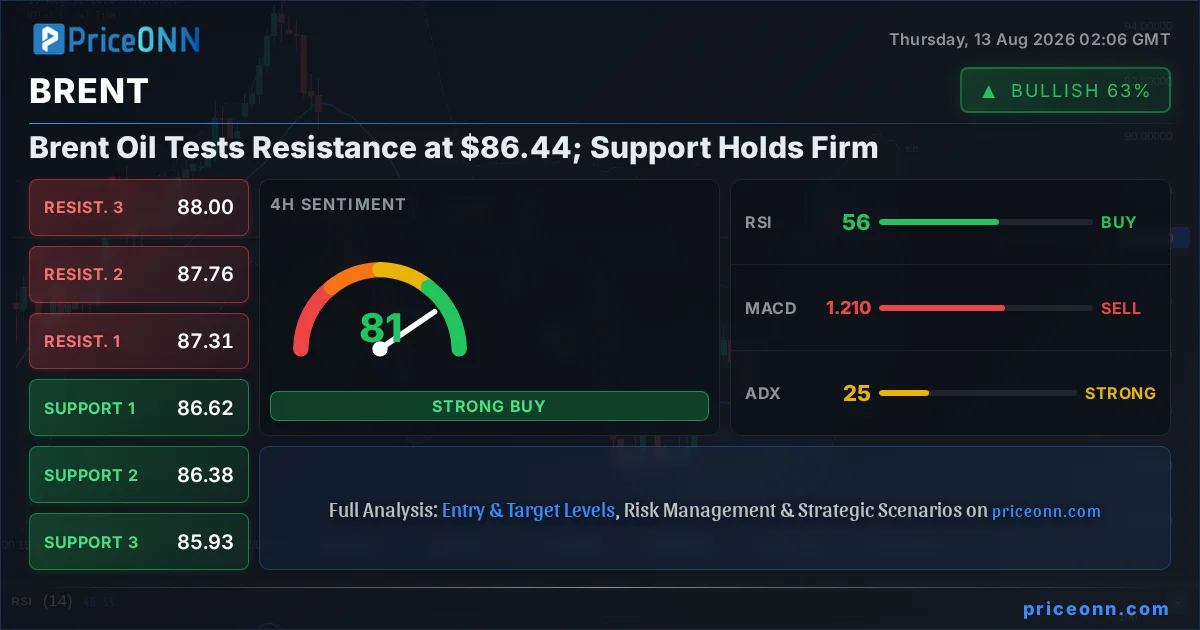
The immediate impact has been a scramble for alternative routes. Tanker operators are now diverting vessels away from the Red Sea waterway, opting for longer and considerably more expensive journeys. This rerouting adds significant costs and delays to the global oil supply chain.
Cascading Disruptions Ripple Through Supply Lines
The turmoil is not confined to the Middle East. Ukrainian drone attacks have crippled critical infrastructure in the Caspian region. Specifically, the Caspian Pipeline System's terminal at the Black Sea port of Novorossiysk has been targeted. This disruption has forced Kazakhstan, a significant oil producer, to halt the majority of its oil exports. Novorossiysk serves as the primary export hub for Kazakh crude destined for international markets.
Adding to the maritime unease, tanker operators are reportedly growing increasingly wary of sending vessels to Novorossiysk. Reports indicate that Ukrainian drones have also been striking ships directly within the port itself, heightening security concerns for those navigating the Black Sea.
Consider the sheer volume of oil that typically flows through these strategic passages. The Strait of Hormuz, historically, facilitated the transit of approximately 20 million barrels per day. This vital artery has now been reduced to a mere trickle. Similarly, the Bab el-Mandeb Strait, which had been handling an estimated 4 to 5 million barrels daily of Saudi crude in recent weeks, now appears to be almost entirely impassable.
When combined with the loss of about 1.7 million barrels per day from Kazakh exports via Novorossiysk, the global oil supply landscape appears exceptionally precarious. The situation is further complicated by ongoing Ukrainian strikes targeting Russian oil refineries. These assaults have already led to a temporary suspension of diesel exports, exacerbating a strained global fuel inventory situation already impacted by the Middle East conflict.
Refined Products Crisis Looms Large
The challenge with refined petroleum products presents a crisis of its own magnitude. "Unlike crude oil, refined products face far fewer mitigation options. Several Middle Eastern refineries remain affected by the ongoing conflict while Russia's diesel export restrictions continue to constrain global availability," noted Ole Hansen, Saxo Bank’s head of commodity strategy, in an analysis earlier this month. He further elaborated, "Refining capacity globally also remains relatively limited, preventing crude supply increases from quickly translating into additional diesel and gasoline production."
This constrained supply environment is starkly reflected in global refining margins, which have climbed to record highs. This serves as definitive evidence of extremely tight fuel markets, even as millions of barrels of crude previously managed to navigate the Strait of Hormuz before peace talks faltered. While International Energy Agency (IEA) countries possess substantial emergency reserves, including over 1 billion barrels of government-controlled stocks, complacency is not an option. Fatih Birol of the IEA emphasized the need for vigilance regarding oil security amidst escalating hostilities and a continuous drawdown of commercial inventories.
Global crude oil demand saw a notable contraction, falling by nearly 5% in the second quarter, according to IEA data. This decline is a direct consequence of the price spikes triggered by geopolitical tensions. This demand destruction may be the most telling indicator of a physically tight market, overshadowing earlier predictions of an impending oil glut that surfaced in June.
Market Ripple Effects
The current geopolitical maelstrom surrounding vital oil chokepoints and the subsequent surge in Brent crude prices have far-reaching implications. Traders and investors must closely monitor the unfolding situation, as it directly impacts energy costs, inflation expectations, and broader market sentiment. The immediate threat is a sustained period of elevated oil prices, which could reignite inflationary pressures and force central banks to reconsider their monetary policy stances.
Several related markets warrant particular attention. The US Dollar Index (DXY) may see renewed strength as a safe-haven asset amid escalating global uncertainty, potentially pressuring other currency pairs. Energy sector equities, particularly integrated oil majors and refining companies, could experience increased volatility and potentially benefit from higher energy prices, though operational risks remain significant. Furthermore, the price of gold might find upward momentum as an inflation hedge and a traditional safe haven, especially if geopolitical risks continue to escalate and trigger broader market sell-offs.
Key risks to watch include further escalation of conflicts in the Middle East and Eastern Europe, leading to more severe supply disruptions. The potential for wider sanctions against oil-producing nations could also dramatically alter market dynamics. On the opportunity side, any signs of de-escalation or successful rerouting of significant oil volumes could lead to sharp price corrections, offering potential entry points for short positions. Monitoring shipping traffic data and official statements from energy ministries will be critical for navigating this complex and volatile environment.
Track markets in real-time
Empower your investment decisions with AI-powered analysis, technical indicators and real-time price data.
Join Our Telegram Channel
Get breaking market news, AI analysis and trading signals delivered instantly to your Telegram.
Join Channel PriceONN News
Brent Crude oil prices rose above $89 per barrel in early trade in Europe on Wednesday as Iran and the United States offered contrasting claims about who controls the Strait of Hormuz. Brent Crude prices were up by 0.64% at $89.60 in the morning in Europe, and WTI Crude was rising by 0.94% at $83.90, amid persistent supply concerns and risks despite claims from the U.S. that traffic at Hormuz had normalized. Iran, for its part, said on Tuesday that the Strait of Hormuz will remain closed unless...
PriceONN News
The IEA has slashed its 2026 global oil supply forecast, with output now expected to plunge 4.3 million barrels per day this year as the failure to reopen the Strait of Hormuz pushes the market deeper into deficit. The latest forecast is considerably worse than the 3.7-million-bpd decline the agency projected just last month and would leave global supply at 102.02 million bpd, its lowest forecast for 2026 yet. Supply is now expected to fall 1.27 million bpd short of demand for the year,...
PriceONN News
Oil flows from the Middle East have normalized, with Sunday traffic alone above pre-conflict averages, U.S. Secretary of Energy Chris Wright said on Tuesday in a claim that appears not to be backed by ship-tracking data. On Tuesday, Secretary Wright posted on X that “Thanks to the coordinated efforts of the U.S. military and our gulf allies, the seven-day average for oil leaving the Strait of Hormuz is currently up to almost 9 million barrels per day.” He went on to add that “When combined with...
PriceONN News
The latest Bloomberg data show that shipping transits through the Strait of Hormuz remained largely disrupted Monday morning, even as Iran and Oman reportedly moved closer to a deal. Brent crude futures traded near $85 a barrel as markets priced in the possibility that a deal to reopen the maritime chokepoint could be imminent. Yet global supply-chain stress remains near its highest level since the pandemic, and any normalization could take months, even if shipping traffic resumes. UBS senior...
PriceONN News
Indian state-controlled oil refiners continue to search the market for spot crude supply as term deliveries are constrained by the ongoing crisis in the Middle East and its key oil chokepoint, the Strait of Hormuz. Mangalore Refinery and Petrochemicals Limited (MRPL) and Hindustan Petroleum Corporation Limited (HPCL) are looking to buy a combined 6 million barrels of crude oil via spot tenders, Reuters reported on Wednesday, citing tender documents it has seen. HPCL is seeking up to 4 million...
PriceONN News
(RTTNews) - Crude oil prices have surged on Tuesday, extending the gains from the two previous sessions as the U.S.-Iran stalemate over new demands for compensation for war-related damages continued, diminishing the expectations of an early reopening of the Strait of Hormuz.
PriceONN News
Hormuz tensions are flaring again as Iranian exports collapse, pushing Brent toward $87 and raising the risk of another run toward $100. China’s Crude Drawdown Puts Iranian Barrels Back in Demand - Shrinking crude inventories in China might spur a buying spree over the upcoming weeks, particularly for Russian and Iranian crude, buoyed by a record-high July stock draw in Shandong. - Chinese teapots are expected to boost their purchases of Iranian oil in the upcoming days as stockpiles in the...
PriceONN News
Libya’s National Oil Corporation may declare force majeure on exports from the Zawya oil terminal as a result of drone attacks on the facility. The Zawya terminal has a daily capacity of 120,000 barrels, sourced from the country’s largest oil field, Sharara, which can produce up to 300,000 barrels daily, Reuters noted in a report on the possibility of a force majeure declaration. According to reports, a drone strike had destroyed a storage tank and another drone had targeted an oil blending...
PriceONN News
A drone has struck a power station at the Zawiya oil export terminal in Libya, suggesting continued attacks on one of the country’s main oil hubs. The power plant is in close proximity to the largest oil refinery in Libya, the AP noted in a report on the news. The attack follows earlier ones that caused an explosion at an oil storage tank. No one has claimed responsibility for the drone attacks, the AP also reported. The tank, according to the company operating the facility, had 4.5 million...
PriceONN News
Whatever officially occurs next in the on-again/off-again negotiations towards a peace deal between the U.S. and Iran, unofficially Tehran knows that it has established de facto control over both the world’s two key maritime energy transit routes -- the Strait of Hormuz and the Bab el-Mandeb Strait -- for at least as long as the Islamic regime remains in place in Iran. Washington, London, Brussels, Beijing, and Moscow know it too. The Strait of Hormuz remains effectively controlled by vast...
PriceONN News
The Middle East conflict and the heightened threats to shipping in the Red Sea have prompted China to boost the use of the Arctic to move containers from the Chinese east coast to Europe. The fast-melting Arctic ice offers an alternative shipping route in the summer as the Houthi threats to shipping in the Red Sea and the Bab el-Mandeb Strait make cargo operators more cautious in transiting the key chokepoints in the Middle East. Shipping through the Arctic is not something new, but this time...
PriceONN News
The American Petroleum Institute (API) estimated that crude oil inventories in the United States rose by 9.072 million barrels in the week ending August 7, compared to analyst expectations for a 500,000-barrel draw. In the week prior, U.S. crude oil inventories rose by 2.69 million barrels. The larger-than-expected build was driven in part by higher crude imports relative to exports during the week. Commercial crude oil inventories excluding the SPR have lost just over 49 million barrels over...