
Can CAD Recover as Inflation Fears Reignite Amidst Middle East Tensions?

Canadian Dollar (CAD) traders are navigating a complex landscape as geopolitical tensions in the Middle East inject fresh uncertainty into the global economic outlook, with particular implications for energy markets and inflation.
Market Context
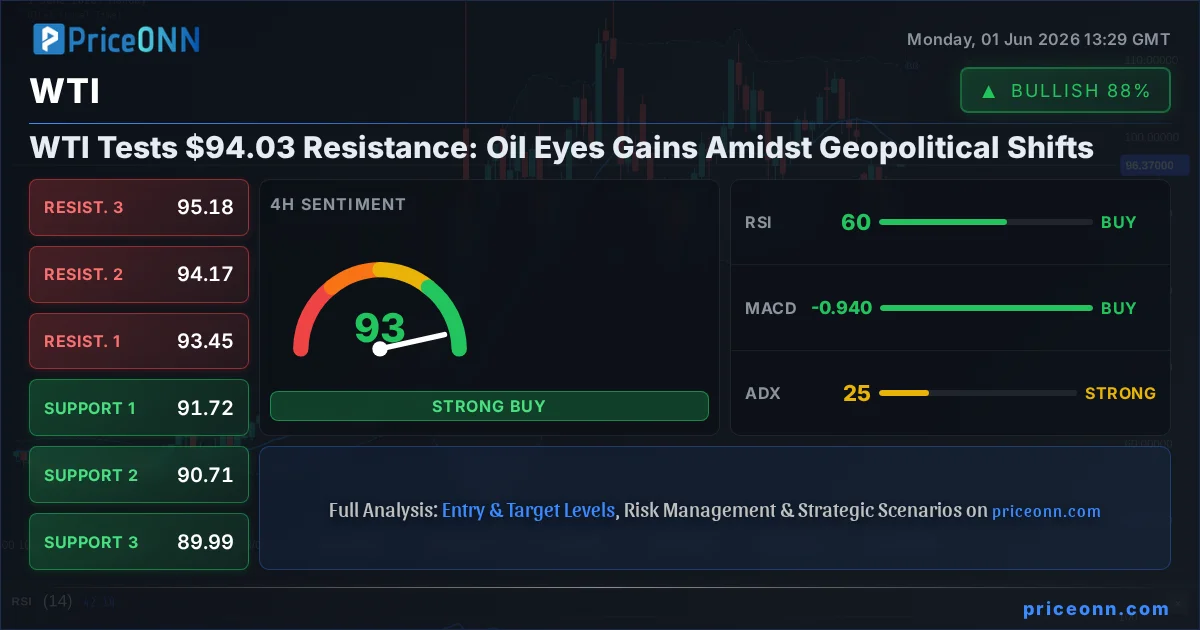
The escalating conflict in the Middle East has become a dominant factor, overshadowing earlier signs of moderating inflation. West Texas Intermediate (WTI) crude oil prices have surged to approximately $94 per barrel amid concerns over physical damage to energy infrastructure and a general opacity in data surrounding the region. This sharp rise in energy prices is poised to significantly erode real consumer spending in the coming months, casting a shadow over the Canadian economy.
Recent Canadian retail sales data for January indicated strong momentum, with real volumes posting a solid gain. The three-month annualized gain reached 7.7%, and preliminary estimates for February’s nominal figures suggested continued strength. This performance suggested that the economy might have been turning a corner after a period of volatility. However, the anticipated surge in gasoline and energy prices throughout March is expected to dampen these positive real spending figures.
Analysis & Drivers
The primary driver currently impacting the CAD is the volatility in global energy markets, directly linked to the Middle East conflict. The surge in oil prices to $94 presents a dual challenge: it acts as a significant cost increase for consumers and businesses, potentially leading to stagflationary pressures, while also complicating the inflation outlook for central banks. Analysts note that the persistence and magnitude of this energy shock are now the key variables to watch.
In the United States, Federal Reserve policymakers held interest rates steady, signaling a cautious approach. Their statement highlighted concerns that higher oil prices could complicate efforts to bring inflation back to target. This cautious stance from the Fed often has ripple effects across global markets, influencing currency valuations and risk appetite. Furthermore, softer housing data in the U.S. suggests increasing sensitivity to higher yields and tighter financial conditions, a trend that could eventually impact broader economic activity and demand for commodities.
From a domestic perspective, market data shows that core inflation measures in Canada had been showing signs of easing, and there was excess capacity within the economy. This provided the Bank of Canada (BoC) with some buffer against initial energy price shocks. However, the current geopolitical developments have significantly altered this scenario, introducing a new layer of complexity and potential inflationary pressure that was not fully anticipated just weeks ago.
Trader Implications
Traders monitoring the CAD should pay close attention to oil price movements and any further developments in the Middle East. A sustained price above $90-$95 for WTI could put significant downward pressure on the Loonie. Key support levels for USD/CAD might be tested if energy prices remain elevated and geopolitical risks persist. Conversely, any de-escalation in the Middle East or a clear signal of inflation cooling despite energy costs could provide a reprieve for the Canadian Dollar.
The divergence between easing domestic inflation signals and the external energy shock creates a challenging environment for forecasting. Traders should watch for upcoming Canadian inflation data and consumer spending reports to gauge the real impact of higher energy costs. The Bank of Canada's forward guidance will also be crucial; any hint of a pivot towards concerns about energy-driven inflation could lead to increased volatility for the CAD.
Key levels to watch for USD/CAD include resistance around 1.3700 and support near 1.3550. A decisive break above 1.3700, fueled by sustained oil price gains and geopolitical uncertainty, could open the door for further upside. Conversely, a move back below 1.3550 might indicate a temporary easing of inflationary fears.
Outlook
The outlook for the Canadian Dollar remains closely tied to the trajectory of oil prices and geopolitical stability in the Middle East. While underlying domestic economic signals had shown promise, the renewed inflationary pressures from energy costs present a significant headwind. Traders should brace for continued volatility as markets digest the implications of the conflict and its impact on global supply chains and inflation expectations. Upcoming economic data releases will be critical in determining whether the Canadian economy can withstand the energy shock or if the prospect of stagflation looms larger.
Frequently Asked Questions
What is the current impact of Middle East tensions on the Canadian Dollar?
Escalating Middle East conflict has driven WTI crude oil prices to around $94 per barrel. This surge in energy costs poses a risk to the Canadian Dollar by potentially reigniting inflation and dampening consumer spending, which had shown recent strength.
What were the recent positive economic signals in Canada before the oil price surge?
Prior to the recent energy shock, Canadian retail sales data for January showed strong momentum, with real volumes up 7.7% on an annualized basis over three months. Preliminary February data also suggested continued nominal strength, indicating a potential economic upturn.
What key levels should traders watch for USD/CAD?
Traders should monitor USD/CAD for resistance around the 1.3700 level. A sustained break above this point, driven by persistent high oil prices and geopolitical uncertainty, could signal further upward momentum. Support is noted near 1.3550.
Track markets in real-time
Empower your investment decisions with AI-powered analysis, technical indicators and real-time price data.
Join Our Telegram Channel
Get breaking market news, AI analysis and trading signals delivered instantly to your Telegram.
Join Channel PriceONN News
Markets are pricing in a potential de-escalation in the US-Iran conflict, leading to a significant drop in crude oil prices and a weakening US Dollar as diplomatic efforts appear to be gaining traction.
PriceONN News
USDJPY has returned to the area of previous interventions. The ECB is moving towards a rate hike in June. The US dollar retreated on Friday amid new record highs for stock indices and rumours of amendments to the US-Iran agreement. However, tit-for-tat exchanges between the adversaries pushed the dollar index back into the support zone […] The post Yen Braces for a New Storm appeared first on ActionForex.
PriceONN News
Canada's economy showed signs of weakness in early 2026, but upcoming May jobs data is expected to reveal a moderate uplift. Analysts anticipate job growth of around 25,000 positions and a potential dip in the unemployment rate to 6.8%.
PriceONN News
The USD/JPY pair is flirting with the 160 level as stalled US-Iran negotiations and hawkish Federal Reserve rhetoric fuel inflation concerns. Traders are closely watching upcoming US Non-Farm Payrolls and Eurozone CPI data.
PriceONN News
EUR/USD stalled below 1.1660 as the US Dollar defied expectations, refusing to weaken despite reports of a US-Iran ceasefire extension. Market participants remain cautious, awaiting concrete confirmation and assessing lingering inflationary pressures.
PriceONN News
EUR/USD closed at 1.1640, showing resilience amid mixed signals. Easing US-Iran tensions initially pressured the dollar, but persistent inflation concerns and political ratification hurdles are keeping the greenback surprisingly steady.
PriceONN News
The EUR/USD faces headwinds as core US PCE inflation unexpectedly rose to 3.3% year-over-year, reinforcing a 'higher for longer' interest rate narrative. Meanwhile, a US-Iran ceasefire extension boosted global risk appetite, potentially drawing capital away from safe-haven currencies.
PriceONN News
EUR/USD stabilized around 1.1640 as reports of a US-Iran ceasefire extension and potential Strait of Hormuz reopening eased inflation fears. However, the US Dollar's resilience suggests lingering caution among forex traders.
PriceONN News
The US Dollar experienced a notable decline last week as markets priced in a potential diplomatic resolution to the US-Iran conflict, leading to a drop in oil prices and Treasury yields. This shift in sentiment suggests a move away from stagflation fears towards a more stable economic outlook.
PriceONN News
Canada's labor market is showing signs of stabilization, with analysts predicting a dip in the unemployment rate to 6.8% in May, driven by an expected 25,000 new jobs. This follows a period of sluggish GDP growth and rising joblessness earlier in the year.
PriceONN News
Canada's economy showed signs of a slowdown in early 2026, but upcoming May jobs data is expected to reveal a modest uplift. Analysts anticipate the unemployment rate to fall to 6.8%.
PriceONN News
USD/CAD faces pressure as Canada's economy shows signs of stalling, with Q1 GDP contracting 0.1% and domestic demand weakening. This comes as trade negotiations and geopolitical shifts add layers of uncertainty.