
Yen Braces for a New Storm
 PriceONN Editorial Desk
Multi-source verification
PriceONN Editorial Desk
Multi-source verification
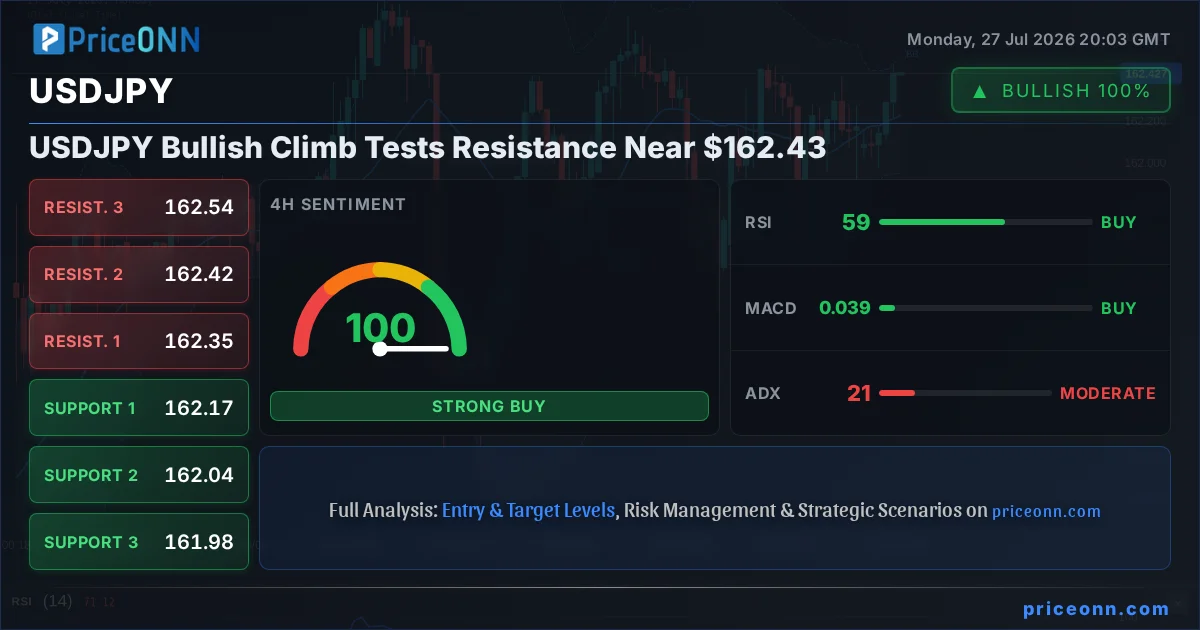
Yen at Intervention Brink
The USDJPY currency pair is once again flirting with the price zones that prompted direct market intervention from Japanese authorities. This critical juncture arrives as the market anticipates a potential rate hike from the European Central Bank (ECB) in June, a move that contrasts sharply with the Federal Reserve's more uncertain path.
Friday saw a brief retreat for the US dollar. This dip occurred against a backdrop of fresh record highs in major stock indices and whispers concerning potential adjustments to the US-Iran agreement. However, the narrative quickly shifted. Exchange of rhetoric between the US and Iran, though tense, ultimately nudged the dollar index back towards a familiar support area. This zone, observed over the past two weeks near the 99 level, offered a temporary reprieve.
Investor sentiment cautiously embraced the perceived de-escalation in the Middle East. While outright peace remains a distant prospect, the reduced immediate threat provided a stabilizing influence on the dollar. This calm allowed equities to continue their incremental ascent.
Central Bank Divergence Fuels Volatility
Federal Reserve official Michelle Bowman suggested that a resolution to the Middle East conflict could alleviate supply chain pressures. Such an outcome, in her view, would render the oil price shock a transient inflationary blip with minimal lasting damage to economic momentum. The futures market reflects this uncertainty, with a 50-50 probability assigned to a Fed rate adjustment by 2026. This suggests the Federal Open Market Committee (FOMC) has not entirely closed the door on potential rate reductions, a prospect that typically weighs on the dollar's strength.
In stark contrast, Isabel Schnabel of the ECB articulated a more hawkish stance. She emphasized that the central bank cannot afford to remain passive in the face of energy price shocks. Even if geopolitical tensions were to dissipate immediately, the ECB would still be compelled to act. Markets have largely priced in an ECB rate increase in June, with expectations of one to two further hikes by year's end.
This policy divergence, coupled with a waning demand for the US dollar as a traditional safe-haven asset, is creating an environment conducive to upward movement in the EURUSD pair. This trajectory, however, remains contingent on a sustained cessation of hostilities in the Middle East.
Traders Brace for Tokyo's Response
The dollar's wavering performance has not deterred bullish sentiment surrounding the USDJPY. Speculators are pushing the pair closer to the significant psychological barrier of 160. Data reveals that asset managers and hedge funds have amplified their net short positions against the Japanese Yen to their most substantial level since July 2024.
Japan's authorities have already deployed approximately ¥11.7 trillion, equating to roughly $74 billion, in currency interventions. This figure surpasses the ¥10 trillion threshold that many market participants had anticipated.
Finance Minister Satsuki Katayama has publicly stated the government's readiness to step in again should currency volatility escalate or signs of speculative positioning emerge. The market appears to be gearing up for another potential confrontation with Tokyo's financial authorities.
Reading Between the Lines
The recent retreat in gold prices, following a two-day advance, signals a shift in market sentiment. Deutsche Bank projects that the yield on 10-year Treasury notes will climb to 4.7% by year's end, assuming the Federal Reserve maintains its current interest rate stance. This economic backdrop, characterized by a stable dollar and rising sovereign debt yields, typically presents headwinds for precious metals like gold.
The narrative of potential Fed rate cuts, even if distant, alongside aggressive ECB tightening and the looming threat of Japanese intervention, creates a complex tapestry for currency traders. The yen's weakening trend, driven by interest rate differentials and speculative positioning, puts Japanese policymakers in a difficult spot. Their commitment to defending the currency, evidenced by substantial intervention spending, will be severely tested as USDJPY approaches the 160 mark.
Meanwhile, the dollar's broader performance is being influenced by global risk appetite and geopolitical developments. While Middle East de-escalation provided a temporary boost to risk assets, renewed tensions could quickly restore the dollar's safe-haven appeal, complicating the outlook for pairs like USDJPY and EURUSD.
Track markets in real-time
Empower your investment decisions with AI-powered analysis, technical indicators and real-time price data.
Join Our Telegram Channel
Get breaking market news, AI analysis and trading signals delivered instantly to your Telegram.
Join Channel PriceONN News
The ceasefire in the Middle East has disrupted the greenback’s plans. Strong PMI data and falling oil prices are helping the euro. The US dollar faced a downward gap at the start of the week as the Middle East de-escalation of the conflict came as an unwelcome surprise to speculators who had built up net […] The post De-Escalation Undermines the Greenback appeared first on ActionForex.
PriceONN News
USD/JPY soared to 163.81 on Friday, marking a new 40-year high. Repeated warnings of possible currency intervention have so far failed to halt the yen’s decline amid a broad strengthening of the US dollar. The market paid little attention to the Japanese Finance Minister’s statement that authorities are ready to take decisive action. Reports that […] The post USD/JPY Breaks Records: Nothing Slows the Yen’s Decline appeared first on ActionForex.
PriceONN News
EUR/USD enters the final week of July at 1.1369. Friday’s modest decline in energy prices reduced expectations that the Federal Reserve could raise rates as early as its upcoming meeting, scheduled for Tuesday and Wednesday. At the same time, the main currency pair remains very close to the monthly low recorded in late June. Markets […] The post EUR/USD Ahead of a Key Week: Holding Near Lows appeared first on ActionForex.
PriceONN News
The de-escalation of the conflict in the Middle East has sent Brent prices tumbling. The oil market could return to a surplus as early as the end of 2026. The US dollar and oil have lost their correlation. Brent recorded its worst daily fall in three months after reports of a ceasefire in the Middle […] The post Oil: A Surplus on the Horizon appeared first on ActionForex.
PriceONN News
The US stock market is not factoring in the existing risks. Investors are increasingly focusing on the cash flows of S&P 500 companies. US stock indices have closed in the red the last two weeks, something that hasn’t happened since March. The stock market has weathered both the armed conflict in the Middle East and […] The post It’s Time to Weigh Up the Risks for the S&P 500 appeared first on ActionForex.
PriceONN News
On 21 July, Stats NZ reported an acceleration in inflation: the Consumer Price Index rose 1.5% in the second quarter, while the annual inflation rate climbed to 4.1%, its highest level in more than two years and slightly above analysts’ consensus forecast of 4.0%. The increase was driven primarily by higher fuel prices amid tensions […] The post NZD/USD: Inflation Surge Meets Strong US Dollar Pressure appeared first on ActionForex.
PriceONN News
The Brent crude rally is a bigger ‘bearish’ factor for EURUSD than the ECB. The Fed may spring a surprise as early as July. The US dollar paid no heed to the ECB’s hawkish rhetoric and continued its advance against major global currencies, including the euro. The European Central Bank left its deposit rate at […] The post Dollar: Oil Leaves the Fed with No Choice appeared first on ActionForex.
PriceONN News
Gold fell to 4,047 USD per ounce on Tuesday, erasing gains from the previous session. Pressure on the metal is mounting amid fears that the Federal Reserve may raise rates as early as this week. Markets currently estimate the probability of such a move on Wednesday at over 33% – an unusually high level of […] The post Gold Declines, Focus on Fed and Falling Oil Prices appeared first on ActionForex.
PriceONN News
I am already riding two EURUSD sell entries. Another possible sell opportunity could be forming for traders that are not in yet. EURUSD Possible Bearish Scenario Watch for price to tap 4 Hour FVG (Purple) first. Watch for a bearish shift and bearish reversal signs in the FVG zone. Wait for all above to play […] The post Riding EURUSD Sellside appeared first on ActionForex.
PriceONN News
The Trump administration is weighing whether to extend access to some Chinese rare earth materials beyond the January 1, 2027 cutoff after U.S. producers acknowledged they cannot build sufficient domestic processing and magnet capacity before the deadline, Reuters reported on Monday. Industry executives and Pentagon suppliers told Reuters that U.S. processing and magnet manufacturing capacity remains insufficient to meet despite billions of dollars in federal support for new mines, separation...
PriceONN News
(RTTNews) - Gold prices traded higher on Monday as oil prices tumbled amid eased Middle East tensions, helping ease inflation and interest-rate concerns ahead of crucial Fed, BoE and BoJ central bank meetings due this week.
PriceONN News
The dollar heads into a pivotal week trading near 101.80, just off a 15-month high, with the Fed’s July 29 meeting standing as the clear focal point. Markets currently price roughly a 65% chance of a hold, though renewed Middle East escalation has kept a hike back on the table for later this year. Energy […] The post US Dollar Index: a Defining Week for the King of the Markets appeared first on ActionForex.